
Marine Anchor,Boat Bollard,Thru-Hull,Boat Cleat,Boat Seat,R&D Customized Marine Products,Seawater Strainers,Pull Rings,Marine Steering Wheel,Deck Filler,Pipe Stanchion,Hinge,BIMINI Fitting,Bow Chock,Boat Anchor Roller,Marine Ladder,Fishing Rod Holder,Deck Plate,Antenna Base,Cockpit Drain,Turning Lock,OEM/ODM Marine Hardware,Chain Stopper,Anchor Connector,Tank Vent,Boat Anchor,Copper Plated Marine Hardware,Brass Bronze Parts,Anchor Chain


There’s a certain rhythm to life on the water. The gentle lap of waves against the hull, the distant cry of seabirds, the way the horizon stretches endlessly in all directions. But that serene picture depends on one thing more than anything else: safety. When you step onto a boat, a dock, or any marine platform, your hand instinctively reaches for a railing. That railing is your anchor in an unpredictable environment. And if the connector holding that railing together fails, the consequences are unthinkable.
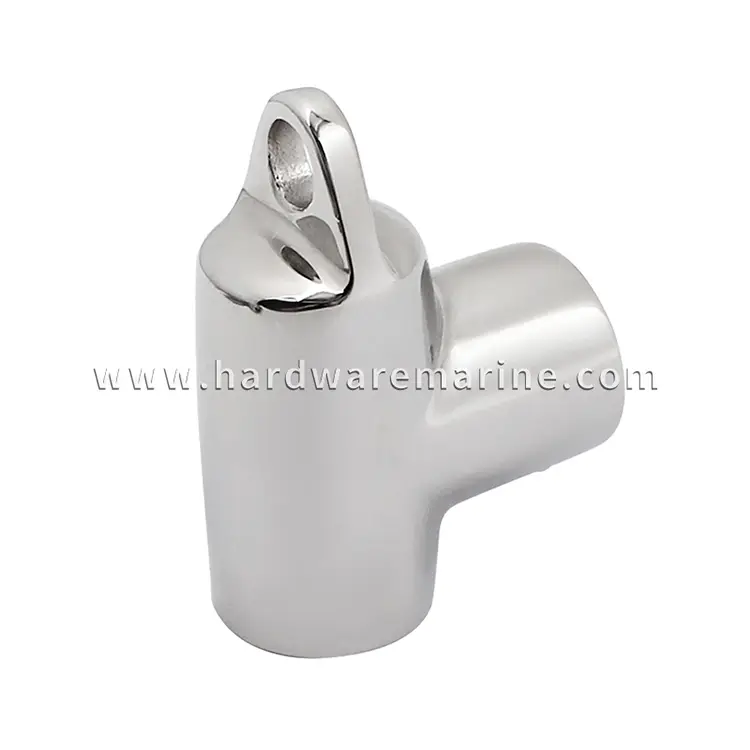
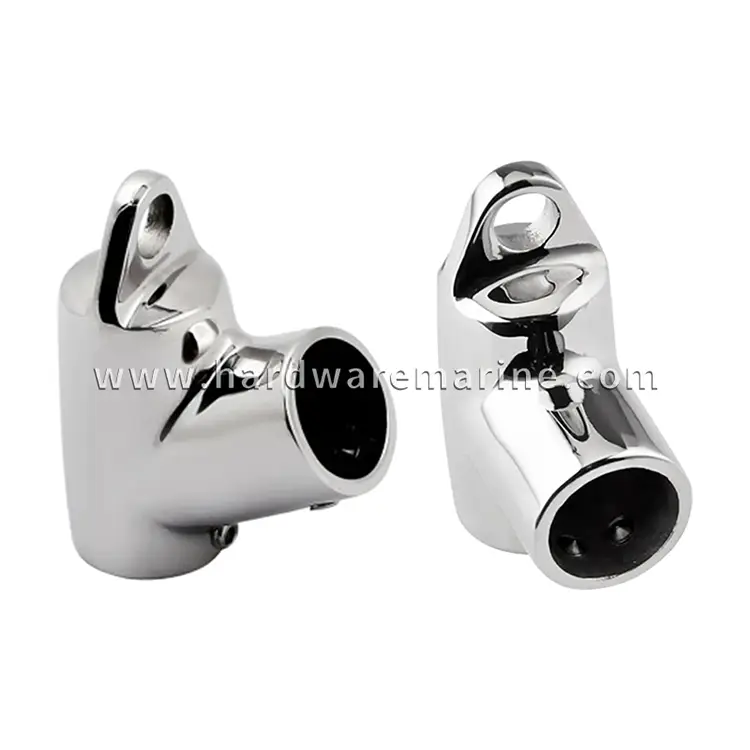 316 Stainless Steel Marine Handrail Fitting 60/90 Degree Tee Connector main view" style="max-width:100%; height:auto; margin:20px 0;">
Shandong Power Industry and Trade Co., Ltd. has spent years listening to sailors, dock builders, and marine engineers who face this exact challenge. They don’t just want a piece of metal that claims to hold rails together. They need a component that will stand up to salt spray, temperature swings, relentless UV exposure, and the constant vibration of engines and waves. They need a connector that delivers peace of mind in every joint. That’s why our 316 Stainless Steel Marine Handrail Fitting 60/90 Degree Tee Connector was born. It’s not an afterthought; it’s a meticulously engineered solution that redefines what a marine handrail fitting should be.
Let’s start with the material, because in a marine setting, the material is everything. Standard stainless steel might look shiny in a catalog, but put it near saltwater for a few months and pitting corrosion appears, and eventually structural integrity evaporates. We use only true 316 marine-grade stainless steel. This alloy contains molybdenum, which dramatically increases resistance to chloride-induced corrosion. The result? Our tee connector maintains its strength and flawless appearance season after season, even in the harshest offshore conditions. You won’t see rust streaks staining your beautifully maintained deck, and you won’t lie awake worrying about hidden degradation inside the fitting.
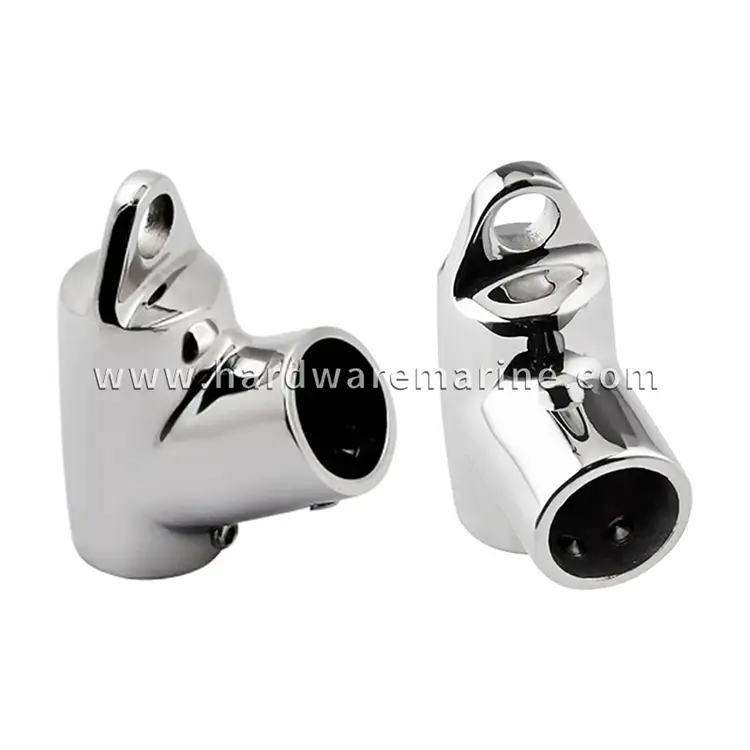
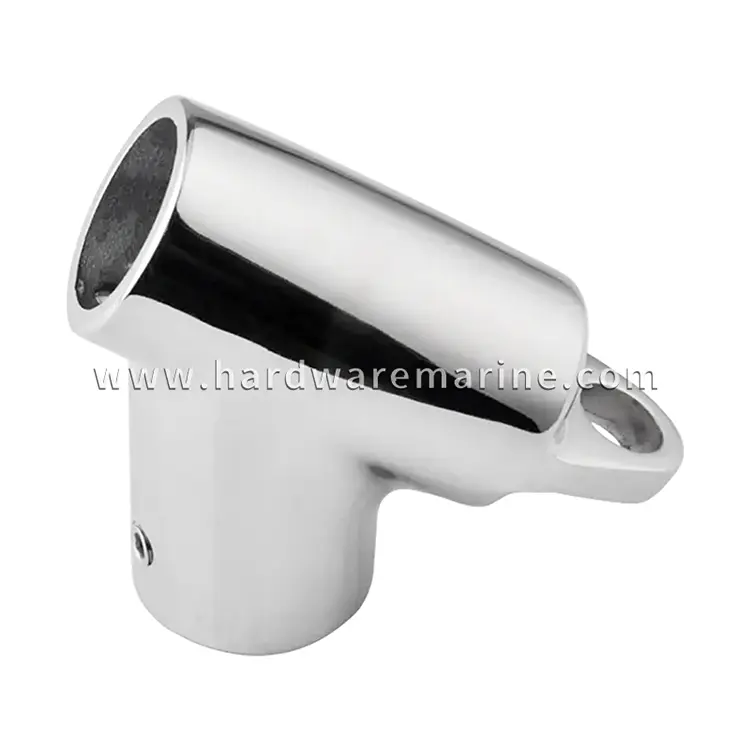
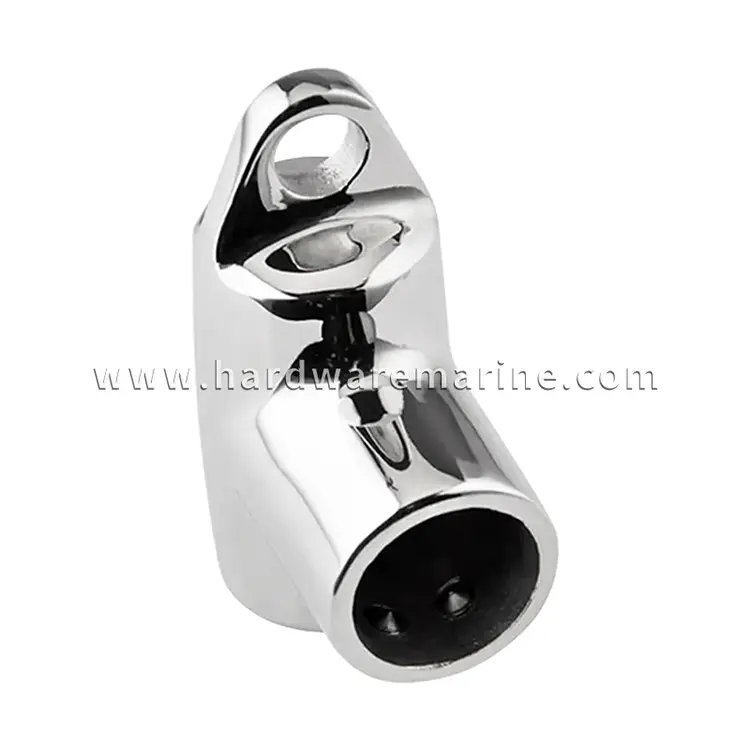
The design of the 60/90 degree tee connector addresses a fundamental problem in railing systems. Most handrail configurations require both vertical support posts and angled transitions. Without a versatile connector, you end up with messy welding, awkward adapters, or compromised angles that weaken the entire structure. Our fitting provides two precise angle options in one sleek body: 60 degrees and 90 degrees. This dual-angle capability means you can use it for straight right-angle joints at ladder points or platform corners, and also for sloped sections where a shallower angle creates a more natural, comfortable grip angle. The tee shape allows one tube to pass through while a second tube branches off at the chosen angle, creating a rock-solid mechanical connection.
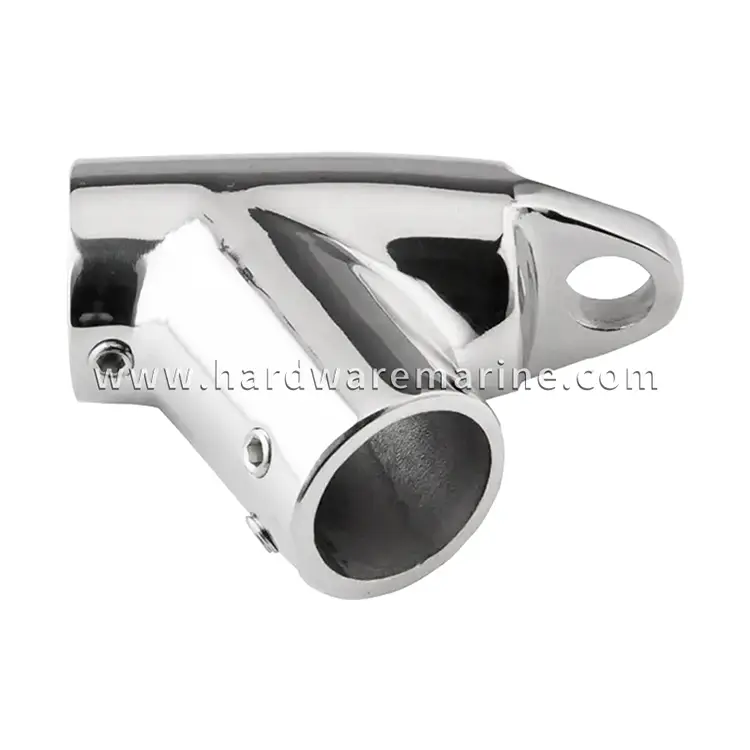
Installation is where many fittings reveal their true character. You’ve probably struggled with parts that don’t align, require exotic tools, or need a professional fabricator to get right. Shandong Power Industry and Trade Co., Ltd. understands that boat owners and marine contractors value time. This tee connector features precision-cast internal bores that accept standard 1-inch or 25mm OD tubing with a snug, slip-fit tolerance. A set of included stainless steel set screws (cleverly hidden for a seamless look) locks the assembly in place with an Allen wrench. No welding, no threading, no special jigs. In less than ten minutes, you can have a perfectly aligned, structurally sound connection that looks like it was custom-machined for your specific railing. The fittings are pre-polished to a mirror-bright finish, so there’s no secondary finishing required.
To give you a clear idea of what this product delivers, let’s walk through a typical pain scenario. Imagine a charter boat operator in the Caribbean. Salt is everywhere—in the air, in the water, even in the towels the guests bring on board. The existing handrail connectors on the flybridge are looking tired. There’s pitting on the surface, and one fitting has developed a hairline crack at a weld point. Every time a guest leans on that rail, the captain holds his breath. The risk of a lawsuit and the damage to his reputation are very real. He could order cheap replacements, but that just resets the clock on failure. He could hire a welder to fabricate custom joints, but that means weeks of downtime and an invoice that makes his eyes water. Instead, he discovers the Shandong Power Industry and Trade Co., Ltd. 316 Stainless Steel Marine Handrail Fitting 60/90 Degree Tee Connector. He orders a dozen. They arrive polished, stamped with the material grade, and with a simple instruction card. His crew replaces every suspect joint in an afternoon, using the existing tubing. The angles are spot-on, the stiffness of the railing improves because the mechanical lock is superior to the old welds, and the whole boat looks upgraded. Guests comment on the gleaming rails, and the captain can finally relax.
| Parameter | Specification |
|---|---|
| Material | 316 Stainless Steel (marine grade, low carbon) |
| Angle Options | 60° and 90° |
| Tube Compatibility | 1 inch (25.4mm) outer diameter standard; fits also 25mm OD |
| Wall Thickness Compatibility | Up to 16 gauge (1.5mm) tube wall |
| Finish | Mirror polished (8K grade) |
| Fastening Method | Internal hex set screws (316 stainless steel) with knurled cup points |
| Corrosion Resistance | Excellent resistance to pitting and crevice corrosion in chloride environments |
| Temperature Range | -50°F to 300°F (-45°C to 150°C) without degradation |
| Certifications | Compliant with ASTM A967 passivation standards; material mill certification available |
Who exactly needs this fitting? The answer might be broader than you think. First, there’s the obvious: marine professionals. Shipbuilders, naval architects, and marine surveyors who specify components for new builds and refits. They need traceability and consistency. Then there are marina operators maintaining long dock sections where hundreds of tee connectors keep people safe every day. There are also passionate DIY boat owners who take pride in their vessel and want to do the job once, correctly. And don’t forget about architectural applications: coastal homes with stainless steel cable railing systems, seaside restaurant terraces, or public boardwalks where the wind carries spray. Any place where a beautiful, indestructible 60 or 90-degree handrail junction is required, this product fits.
The emotional payoff of installing these fittings is hard to overstate. There’s a deep satisfaction that comes from knowing you’ve chosen the best material and the smartest design. When you run your hand along a securely joined rail and feel nothing but smooth, cool metal, you experience a sense of calm. You’re not worrying about the next maintenance cycle; you’re free to enjoy the sunset. For commercial operators, that peace of mind translates directly into better guest experiences and fewer liability headaches. The product almost disappears because it does its job so well; it blends into the railing system quietly elevating the whole structure.
Let’s talk about what truly sets this tee connector apart from other so-called “marine” fittings. The most obvious differentiator is the genuine dual-angle geometry. Many connectors are stamped or bent to approximate an angle, which introduces stress points. Our fitting is investment cast in a single piece, so the 60-degree and 90-degree pathways are integral to the design, with no weld lines or weak planes. This method also allows for thicker cross-sections at critical junctions without adding unnecessary bulk. Next, the passivation treatment we apply after polishing goes beyond a simple dip. We use a citric acid-based passivation process that removes all free iron from the surface and promotes the formation of a thick chromium oxide layer. This is the invisible shield that makes 316 stainless truly stainless. You won’t find that level of surface engineering on mass-market fittings.
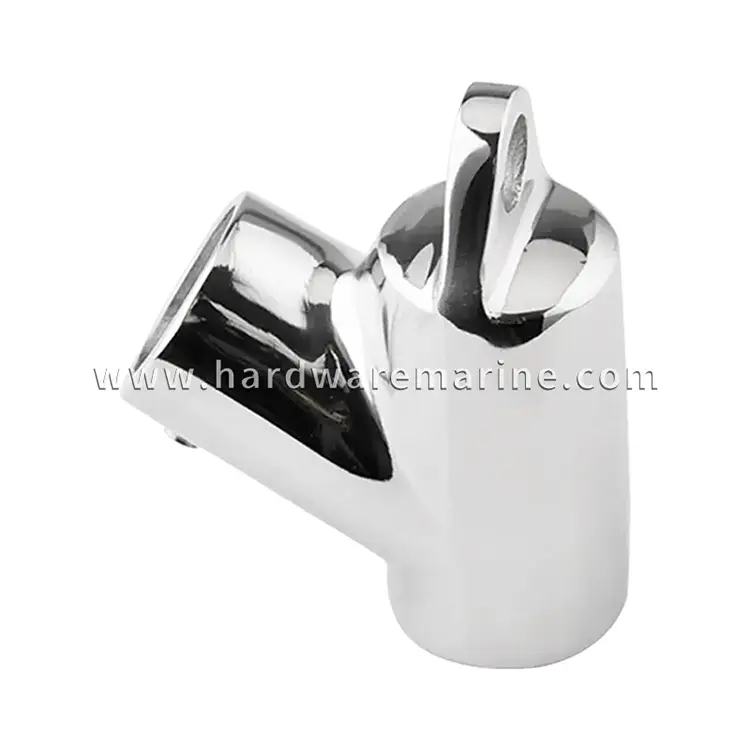
Another highlight is the attention to set screw design. We’ve all dealt with grub screws that round out or seize. Ours are made from the same 316 material with a deep hex socket that withstands high torque. The cup point is knurled to bite gently into the tube without gouging, providing a vibration-proof lock that won’t slip even under continuous engine thrum. And because the screws are flush with the fitting body, there are no sharp protrusions to snag lines or clothing.
We also know that modern boat design demands aesthetic flexibility. The mirror-polished finish is classic and matches virtually all railing systems, but for those who prefer a more subdued look, we offer a brushed satin option (available on request). The shape itself is elegant—clean lines, gentle radii, and a size that’s substantial enough to look robust but not clumsy. It complements both traditional teak-trimmed cruisers and stark minimalist sportfishers.
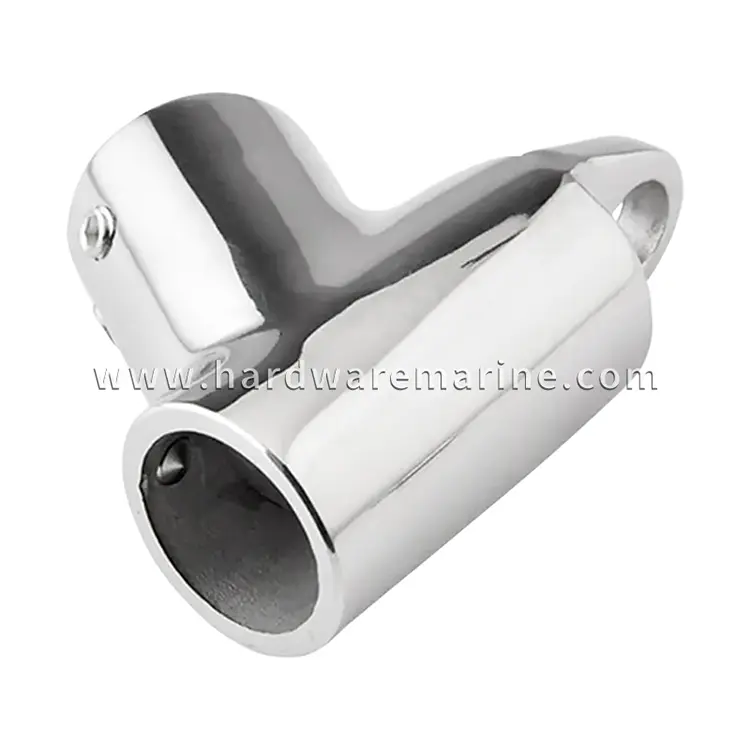
For those who care about the technical pedigree, every batch of our fittings comes from a factory in Shandong Province that operates under strict ISO 9001 quality management. The raw material is sourced from mills that provide full chemical analysis reports. We can supply 3.1 mill certificates upon request, so you can verify the exact chromium (16-18%), nickel (10-14%), and molybdenum (2-3%) content yourself. This traceability is essential for vessels that undergo regular classification society inspections, such as those by Lloyd’s Register or DNV.
In the real world, a product often has to survive conditions that are not just salty, but also chemically aggressive. Cleaning agents, fuel spills, bird droppings, and even the acidic residue from certain types of wood can attack inferior stainless steel. Our 316 alloy is formulated with low carbon content (grade 316L attributes) to resist sensitization and intergranular corrosion, which means it can handle these insults without becoming brittle or stained. So whether you’re hosing down the deck with a mild detergent or dealing with a seagull that’s had a little too much fish, you can wipe it clean and the fitting remains unblemished.
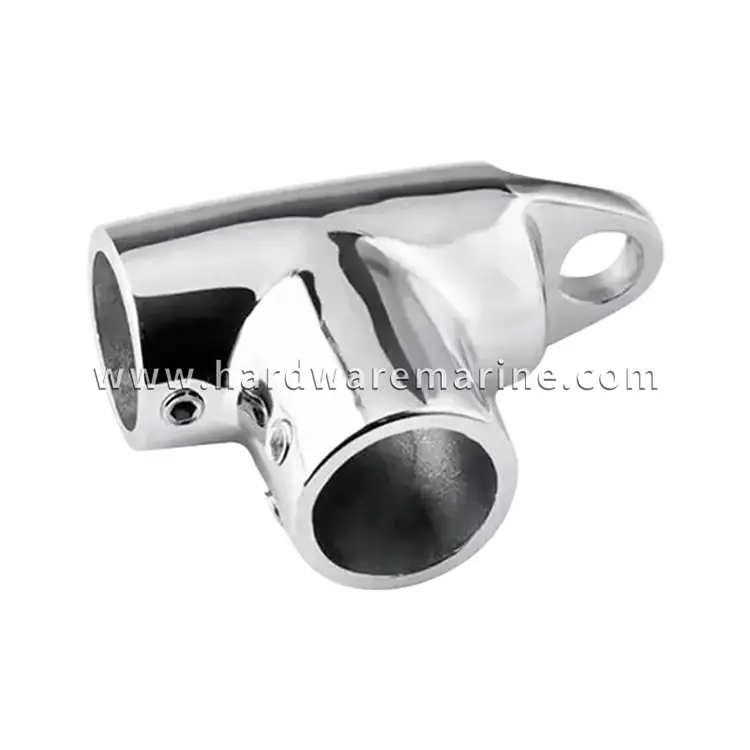
Now, let’s address some common questions that come up when people are considering a marine-grade fitting like this. Through years of direct feedback from customers, we’ve gathered the most pressing concerns and the detailed answers that set minds at ease.
Q: How do I know if this 60/90 degree tee connector will fit my existing tubing?
A: The fitting is designed for standard 1-inch (25.4mm) outer diameter tubing, which is by far the most common size for marine handrails. It also accommodates 25mm OD tubes perfectly, thanks to a slight internal tolerance. Simply measure your tube’s outer diameter with a caliper. If it falls within 0.995 inches to 1.005 inches (or 25.2mm to 25.5mm), the slip fit will be ideal. For tube wall thickness, it works best with schedule 10 or 16 gauge (around 0.065 inches/1.65mm wall). The internal bore is smooth and consistent, so installation is effortless.
Q: Can I use this fitting in an environment where it’s fully submerged in saltwater, like below the waterline?
A: While 316 stainless has excellent corrosion resistance, continuous submersion in stagnant seawater can eventually cause crevice corrosion if oxygen is depleted. We recommend this fitting for above-waterline applications such as deck rails, flybridge handrails, boarding ramps, and dock railings where it can get frequently washed and exposed to air. If you need a below-waterline solution, consider super-austenitic or duplex stainless steels. For typical marine handrail use, this product will last for decades.
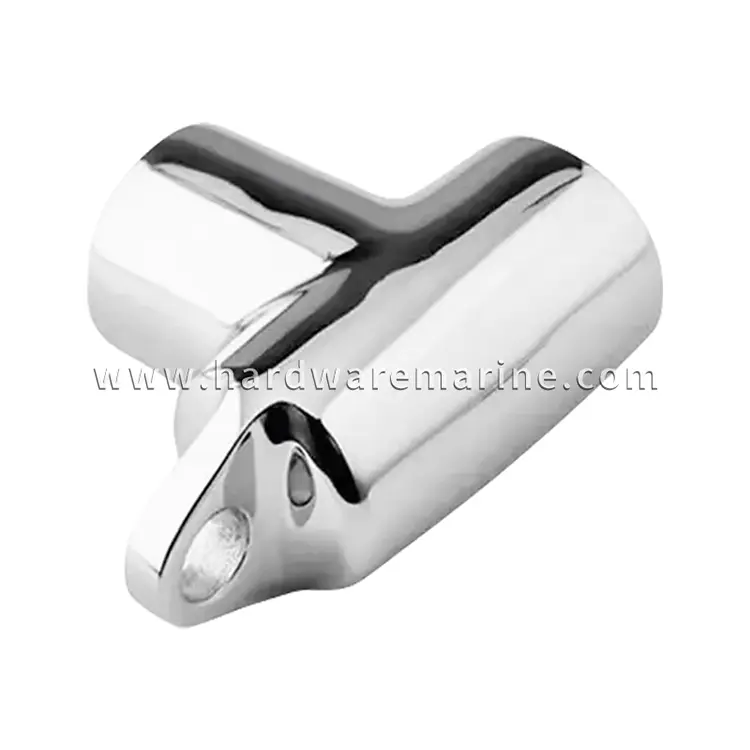
Q: Is the 60-degree angle really 60 degrees, or is it an approximation?
A: Precision is at the heart of our manufacturing. The as-cast angle is within ±0.5 degrees of the nominal 60° and 90°. This is verified with coordinate measuring machines (CMM) during quality control. When you design a railing layout, you can trust that the finished angles will match your CAD drawings exactly, avoiding unsightly gaps or forced assembly.
Q: How do I prevent the set screws from coming loose over time?
A: The knurled cup points on our set screws are specifically engineered to bite into the tube surface slightly, creating a mechanical lock. Additionally, we recommend applying a small amount of medium-strength threadlocker (like Loctite 242) to the threads before final tightening. This will secure the screws against vibration while still allowing removal with hand tools if you need to reconfigure the railing. Many installers also dimple the tube at the screw location with a drill point, creating a positive stop, but this is optional.
Q: Why should I choose Shandong Power Industry and Trade Co., Ltd. over a generic online seller?
A: When you buy from a generic source, you’re gambling with material composition, dimensional accuracy, and surface quality. There’s no accountability. We stand behind every fitting with full traceability, a dedicated customer support team that understands marine applications, and a factory-direct warranty against manufacturing defects. We’ve shipped thousands of these connectors worldwide, and the feedback is consistent: they fit perfectly, they look stunning, and they endure. Plus, by working with us, you’re supporting a company that invests in continuous process improvement rather than cutting corners.
Q: Can I paint or powder coat this fitting?
A: The mirror-polished surface is not an ideal base for painting because it lacks a mechanical tooth. If you require a colored finish, we suggest requesting our brushed satin version, which provides better adhesion. However, we generally advise against coating 316 stainless, as the natural passive layer is its best protection. If you must paint for aesthetic reasons, use an etching primer specifically formulated for stainless steel, followed by a marine-grade polyurethane topcoat. Keep in mind that paint may chip and require maintenance in ways the bare metal does not.
Q: What is the maximum load this tee connector can support?
A: The static load capacity depends on your tubing strength, installation angle, and the number of set screws engaged. As a reference, a properly installed tee joint on 1-inch 16-gauge 316 tube can typically withstand a concentrated vertical load at the branch end of over 500 pounds without permanent deformation. For railing system compliance with ABYC (American Boat and Yacht Council) standards, which requires 200-pound point loads at any direction, this fitting far exceeds the requirement when used within a properly designed system. We always recommend consulting a naval architect for critical load-path calculations.
Q: Does the fitting require any maintenance?
A: One of the joys of 316 stainless is its low maintenance. An occasional wash with fresh water and mild soap to remove salt deposits is all that’s needed to maintain the shine. If you notice tea-staining (a superficial brown discoloration that can occur in some tropical climates), use a stainless steel cleaner like Bar Keepers Friend and a soft cloth. The passivation layer will self-repair in the presence of oxygen, so the stain does not signal corrosion. Avoid steel wool, which can leave ferrous particles that rust.
Imagine the feeling of stepping back after a straightforward installation. The sun is glinting off a continuous line of handrail that you personally fitted into place. There’s no wobble, no creak, no ugly weld bead to cover up. Every angle flows naturally, guiding the eye along the boat’s lines. That’s the moment when you realize you didn’t just buy a fitting; you invested in a worry-free foundation for your marine adventures. And with Shandong Power Industry and Trade Co., Ltd.’s commitment to unshakeable quality, that feeling lasts for years.
Whether you’re tackling a complete refit, building a custom boarding dock, or simply replacing a few rusted connectors, this 60/90 degree tee connector will exceed your expectations. It’s a small piece of hardware that shoulders an enormous responsibility, and it does so with quiet confidence. The ocean deserves a fitting that’s as resilient as the people who work on it. That’s precisely what we’ve built.


