Marine Anchor,Boat Bollard,Thru-Hull,Boat Cleat,Boat Seat,R&D Customized Marine Products,Seawater Strainers,Pull Rings,Marine Steering Wheel,Deck Filler,Pipe Stanchion,Hinge,BIMINI Fitting,Bow Chock,Boat Anchor Roller,Marine Ladder,Fishing Rod Holder,Deck Plate,Antenna Base,Cockpit Drain,Turning Lock,OEM/ODM Marine Hardware,Chain Stopper,Anchor Connector,Tank Vent,Boat Anchor,Copper Plated Marine Hardware,Brass Bronze Parts,Anchor Chain


Every vessel tells a story, whispered through the groan of lines under tension and the gentle slap of waves against the hull. In the intricate ballet of docking, mooring, or towing, the silent, steadfast components are often the true heroes. These unsung guardians guide crucial lines, protect expensive ropes from catastrophic chafe, and bear immense loads without complaint. The integrity of your deck hardware is not merely a matter of convenience; it is the bedrock of safety, operational efficiency, and the profound peace of mind that allows a captain to rest easy. Neglecting this critical interface is not just an oversight; it's a gamble with the very security of the vessel and the well-being of all souls on board.
Picture this: you are executing a precise docking maneuver against an uncooperative crosswind. The engine hums with controlled power, the crew is poised and ready. All eyes are on the cleat on the dock, a single point of connection that will tame the vessel's inertia. You rely on a critical piece of deck hardware to flawlessly channel that heavy, surging line. A lesser component, made from inferior materials or with a flawed design, might seize, bend, or saw through your costly mooring lines under the immense friction. Alternatively, imagine being on a long, blue-water passage, a storm is brewing, and you need to rig a drogue or a Jordan Series Drogue. The attachment points and fairleads must be absolutely trustworthy, capable of enduring relentless, shock-loading cycles without deforming or failing. This is not just about hardware; this is about faith in your equipment when everything is on the line.
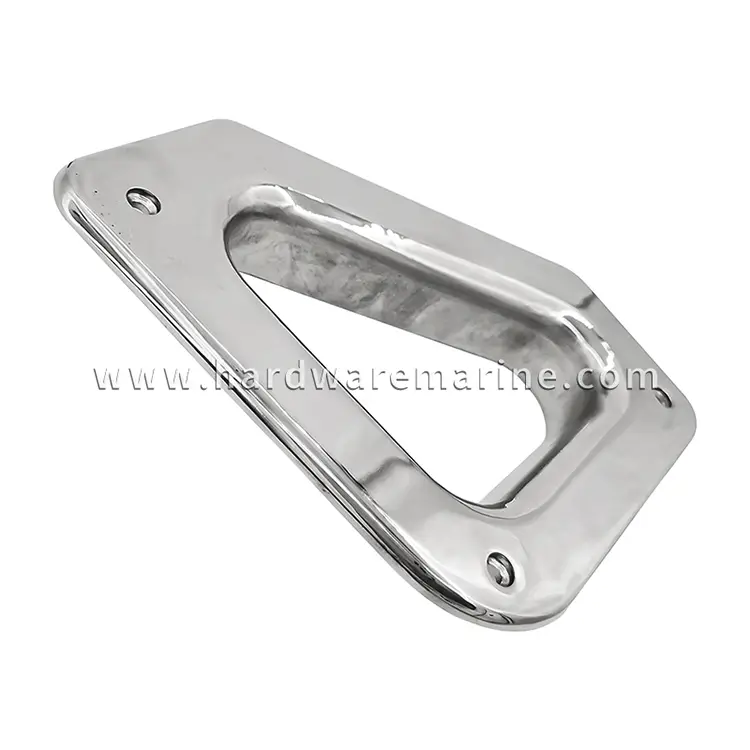
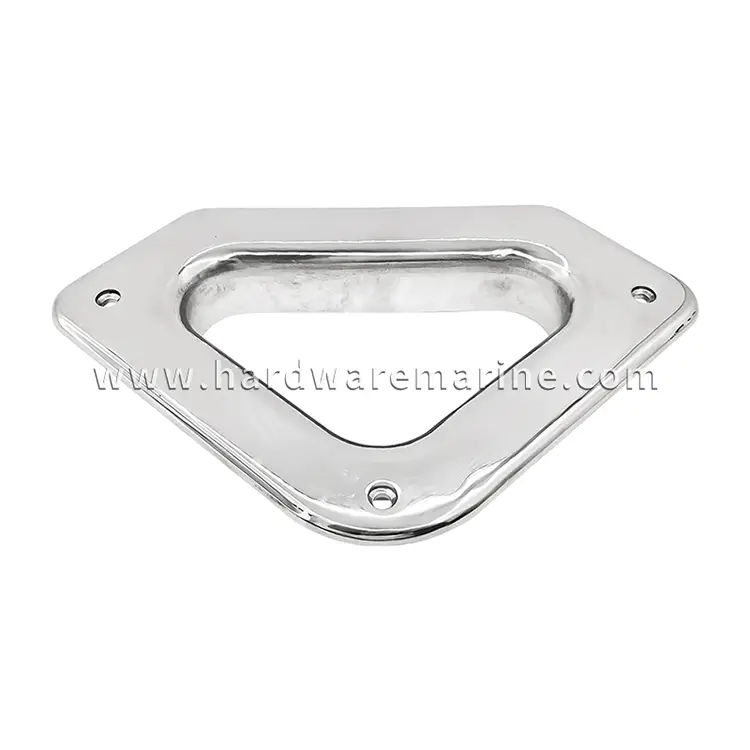
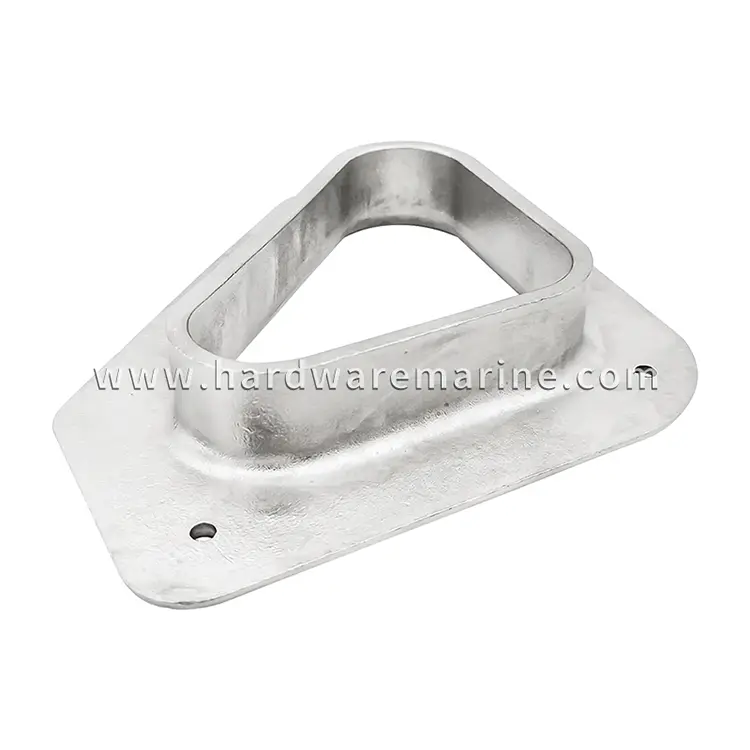
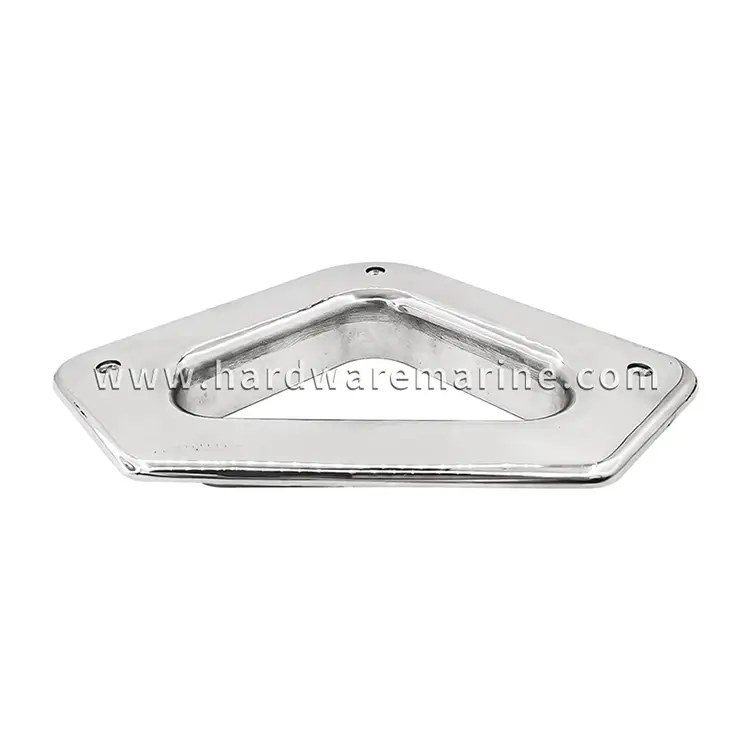
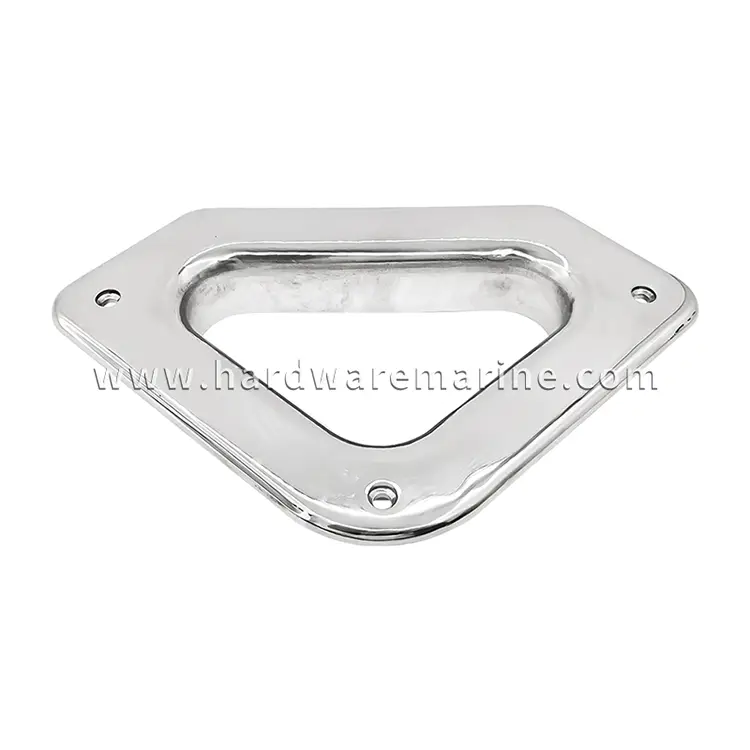 316 Stainless Steel Marine Triangular Fairlead Hole mounted on a boat deck showing line guidance" style="max-width: 100%; height: auto; margin: 20px 0;">
The solution to this fundamental marine challenge is not found in compromise. It's found in an unwavering commitment to metallurgical integrity and intelligent, purpose-driven design. Shandong Power Industry and Trade Co., Ltd. presents a product that redefines this category: the 316 Stainless Steel Marine Triangular Fairlead Hole. This is more than a simple piece of hardware; it’s a meticulously engineered portal of security, forged from the sea’s most resilient alloy. It represents a fusion of advanced manufacturing prowess and a deep understanding of the brutal, unforgiving marine environment. We don't just create components; we craft enduring solutions that stand as a testament to reliability, ensuring your lines run true, your stress is minimized, and your adventures on the water are defined not by what could go wrong, but by the boundless freedom of the horizon.
What transforms a simple geometric opening in stainless steel into a pinnacle of maritime engineering? The answer lies deep within the material’s soul and the deliberate precision of its geometry. Allow us to take you into the heart of the 316 Stainless Steel Marine Triangular Fairlead Hole, a product from Shandong Power Industry and Trade Co., Ltd. that embodies a relentless pursuit of excellence. Its story begins not in a drawing office, but in the harsh chemical realities of the ocean. The marine atmosphere is a corrosive cocktail of salt-laden air, intense ultraviolet radiation, and constant moisture. In this brutal environment, standard 304 stainless steel can pit, stain, and eventually weaken, a process known as crevice corrosion. This is a non-starter for a critical load-bearing component. Our 316 stainless steel alloy is fundamentally different. Its secret weapon is the addition of molybdenum, which dramatically enhances its resistance to chlorides. This makes an 316 stainless steel fairlead not just rust-resistant, but virtually immune to the corrosive attack that defines the marine world, ensuring a lifetime of structural integrity and a permanently brilliant, professional finish.
The choice of a triangular form is the next chapter in this story of design intelligence. A circular fairlead is common, but it forces a multi-directional line into a single, undefined curve, concentrating stress and chafe on one point of the rope’s circumference. Our marine triangular fairlead hole fundamentally solves this. The defining apex of the triangle provides a dedicated, deep seating point for the line under primary load. This anchors the rope securely, preventing it from rolling and twisting within the fairlead. The two flanking angular points then act as directional guides, smoothly feeding the line to its primary position without sharp turns. This geometry minimizes rope torque, reduces internal fiber abrasion, and ensures that the load is distributed with mechanical efficiency. Shandong Power Industry and Trade Co., Ltd. manufactures this triangular fairlead hole with a mirror-polished, burr-free interior rim. Every edge that contacts your valuable lines is contoured with a generous, consistent radius. This is the antithesis of chafe; it’s a gentle, guiding hand that dramatically extends the service life of your synthetic mooring and running lines, saving you money and preventing inopportune failures.
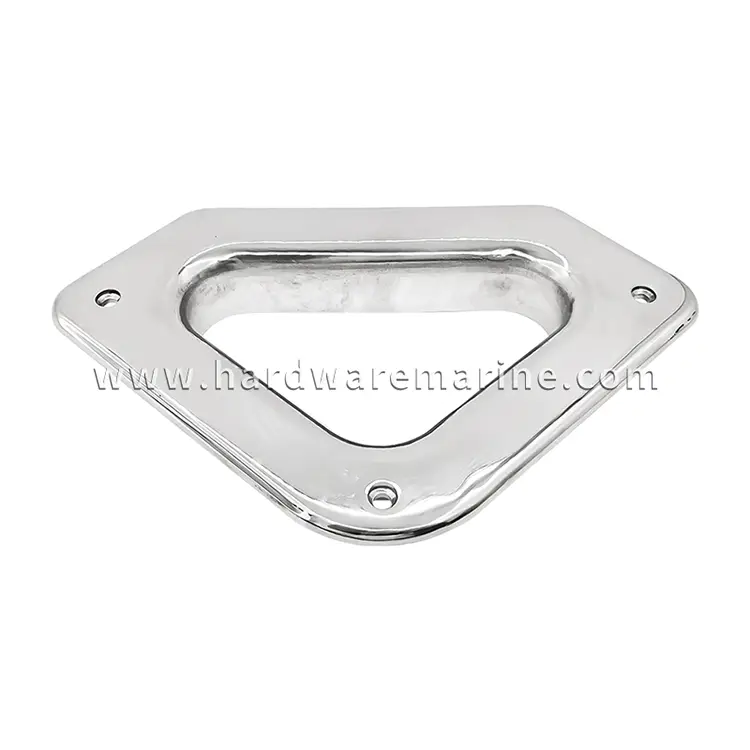
The pain point is universal among serious mariners: the slow, silent death of a mooring line from an unnoticed burr on a poorly made fairlead. A rope’s value is huge, but its replacement cost is a minor inconvenience compared to the potential for a catastrophic break at the worst possible moment. The 316 Stainless Steel Marine Triangular Fairlead Hole from Shandong Power Industry and Trade Co., Ltd. is the definitive antidote to this anxiety. Its creation is a journey through precision casting and finishing. Molten 316 stainless steel is poured into a meticulously crafted mold, solidifying into the base triangular shape with two integrated mounting lugs. These lugs are not afterthoughts; their thickness and angular placement are calculated to distribute shear and tension loads evenly across the fastener heads and into the deck substrate. The entire casting then enters a multi-stage finishing process. It is ground, machine-polished, and finally hand-buffed by skilled artisans who inspect every single piece under bright light. The result is a flawless, mirror-like finish that is not for vanity—it is a functional attribute that eliminates microscopic imperfections where corrosion could begin and where line fibers could catch.
To present the tangible specifications, a clear technical overview is essential. The following data represents a typical size in our range, engineered for vessels where robust, reliable hardware is non-negotiable. This is not a generic product; it’s a precision instrument for line management.
| Specification Parameter | Detailed Value | Operational Benefit |
|---|---|---|
| Core Material | Marine Grade 316 Stainless Steel (A4) | Absolute immunity to chloride pitting and crevice corrosion, ensuring multi-decade structural strength in saltwater environments. |
| Internal Aperture Shape | Precision Equilateral Triangle | Self-centering line geometry reduces torque, chafe, and uneven wear on synthetic ropes, dramatically extending their life. |
| Max Aperture Width | 52 mm | Accommodates mooring and running rigging lines up to 22 mm in diameter with a smooth, unimpeded lead. |
| Mounting Lug Configuration | Dual, Asymmetrically Angled Lugs | Directs pulling forces optimally into the deck plane, minimizing fastener stress and laminate fatigue. |
| Fastener Holes | 2 x Counterbored for M10 Flat-Head Bolts | Allows for a flush, snag-free deck installation perfect for high-traffic zones, preserving a clean aesthetic. |
| Surface Finish | High-Gloss Electro-Polish with Hand Finalization | Reduces microscopic surface peaks to create a non-abrasive, easily cleaned, and maximum corrosion-resistant surface. |
| Ultimate Tensile Strength | Material rated for >500 MPa | Provides a massive safety margin for dynamic shock loads encountered during heavy weather and towing operations. |
These parameters aren't just numbers on a page. They represent the quiet confidence you feel when a sudden squall hits. They’re the invisible force-multiplier for your crew, making every docking procedure smoother and more controlled. The counterbored mounting holes are a prime example of thoughtfulness in engineering. Shandong Power Industry and Trade Co., Ltd. understands that a deck is a working space. A protruding bolt head is a trip hazard, a line snagger, and an aesthetic eyesore. By counterboring the holes, the M10 flat-head bolts sit perfectly flush with the lug surface, creating a seamless integration with the deck. This detail protects your crew, your lines, and the visual harmony of your vessel’s outfitting.
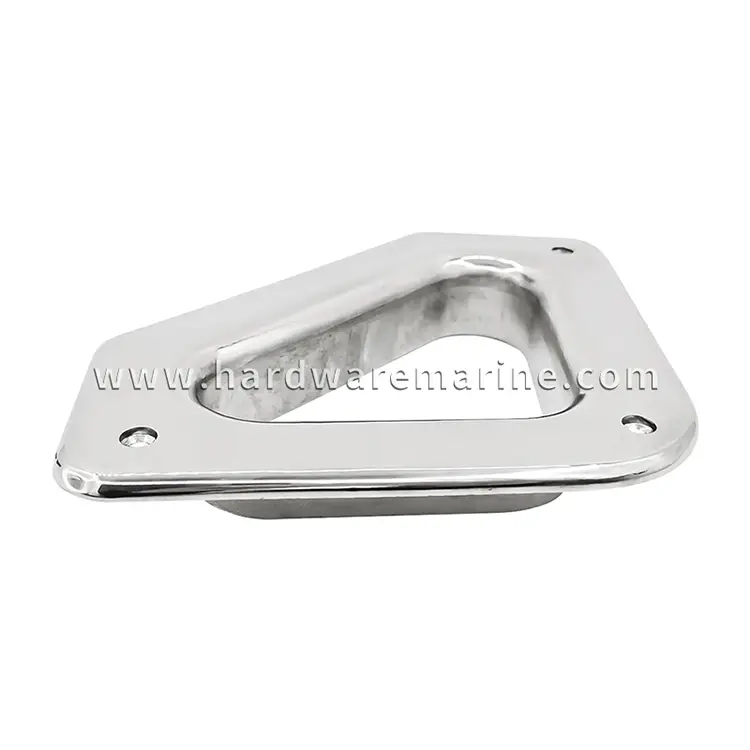
The 316 Stainless Steel Marine Triangular Fairlead Hole is a universally respected component, but its story is best told through the people who depend on it. From the professional captain to the weekend yachtsman, this piece of hardware solves a uniquely personal set of problems, making it an integral part of diverse marine narratives.
First, there is the world of the superyacht and luxury cruiser. For these vessels, perfection is the baseline expectation. The deck layout is a masterpiece of design, where every piece of hardware must look as immaculate as it performs. A poorly cast, dull, or rust-speckled fairlead is an unforgivable blemish. The mirror finish of our triangular fairlead hole complements the high-gloss gelcoat and teak decking, reflecting sunlight like a meticulously placed jewel. More importantly, the captain and crew, responsible for a multi-million-dollar asset, need absolute assurance in their ground tackle and docking systems. When maneuvering a 70-foot sailing catamaran into a tight Mediterranean marina berth, the fairleads guiding the stern lines must not chatter or bind. The smooth, defined geometry of the triangular aperture ensures the massive docking lines run silently and effortlessly, allowing the crew to concentrate on the delicate ballet of engines and thrusters without the distraction of hardware-induced friction or noise.
On the other end of the spectrum lies the offshore cruising sailor, the person who ventures far from the safety net of coastal services. For this type of user, equipment failure is not just an inconvenience; it’s a survival-threatening event. A couple sailing their steel ketch from the Falklands to South Georgia is completely self-reliant. They need a fairlead for their Jordan Series Drogue—a critical piece of heavy-weather gear that produces immense, rhythmic shock loads. Here, the absolute tensile strength and corrosion-proof nature of 316 stainless steel is non-negotiable. The triangular design’s ability to distribute loads evenly without pinching the drogue bridle is a life-saving feature. To this sailor, the Shandong Power Industry and Trade Co., Ltd. fairlead is a trusted partner, a silent watchman bolted to the stern that has been flawlessly polished to eliminate any sharp edge that could chafe through a bridle over hundreds of miles of towing in a storm.
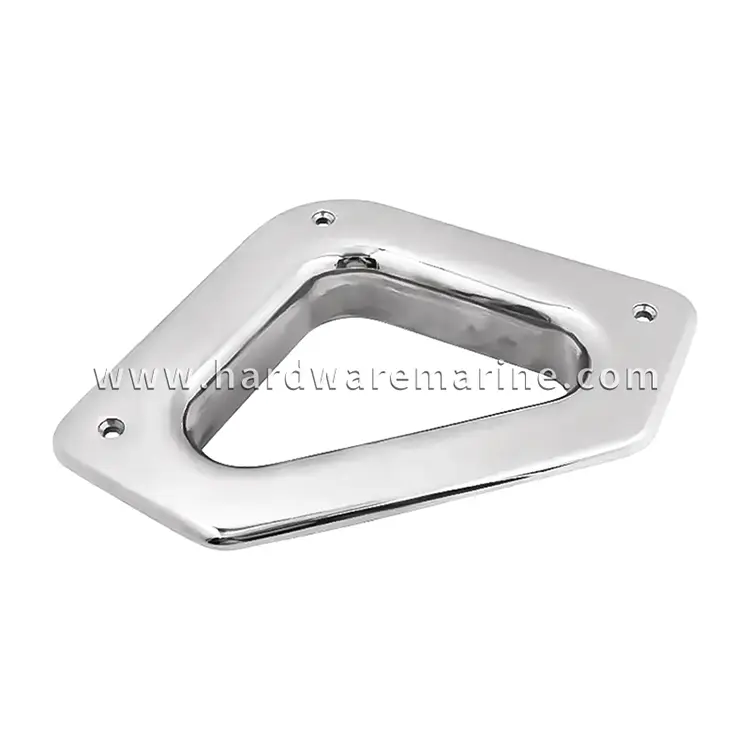
Then, there is the commercial workboat sector, where durability is measured in grueling cycles of daily abuse. Consider a high-speed pilot boat dispatcher, constantly pulling alongside massive ships in all weather, or a tugboat crew handling thick, abrasive towlines covered in mud and river silt. Their gear is battered, slammed, and submerged constantly. The fairleads are under relentless load, often at vicious angles. A standard galvanized steel fairlead will rust, snag lines, and eventually crack. A flimsy 304 stainless steel one will pit and become a chafe machine. The 316 Stainless Steel Marine Triangular Fairlead Hole from Shandong Power Industry and Trade Co., Ltd. thrives in this environment. Its thick cross-section resists deformation from impact. Its perfect electro-polish finish is non-porous, meaning grime and salt wash off with a quick spray of water, rarely getting a chance to start the corrosion clock. The triangular shape provides a definitive, self-centering lead for the heavy, unwieldy lines, preventing them from jumping out and causing dangerous snap-back situations. It's a piece of hardware that meets relentless demands with unwavering composure.
Finally, the classic wooden boat restorer finds a kindred spirit in this part. This individual is an artist, obsessing over the authenticity and aesthetic purity of their vessel. They refuse to use a shiny, modern-looking component that clashes with the soul of a lovingly restored mahogany launch or a gaff-rigged cutter. However, they also cannot compromise on modern levels of safety and corrosion resistance. Here, the fairlead’s design brilliance shines. The triangular form is a timeless geometric shape, often found on early 20th-century working craft. Its polished finish has a liquid quality that complements brightwork and varnish, looking both functional and elegant. They often pair it with custom-fabricated bronze cleats, creating a deck layout that is historically sympathetic yet metallurgically superior. It’s a discreet way to inject modern engineering into a classic soul, honoring tradition while silently ensuring that the old-world vessel can handle a modern squall. The fact that it comes from Shandong Power Industry and Trade Co., Ltd., a company that respects the gravity of these applications, assures them of its behind-the-scenes quality.
The profound connection between humans and the sea is built on a foundation of trust—trust in skills, trust in crew, and, fundamentally, trust in the vessel. This trust is not abstract; it is forged in specific, critical components that stand between safety and calamity. The 316 Stainless Steel Marine Triangular Fairlead Hole functions as a crucial node in this network of trust. The feeling it imparts is a deep, resonant calm. When a captain glances at a well-installed triangular fairlead, they don't just see shiny metal. Their mind transitions to a state of quiet assurance, knowing that the lines running through it will not be damaged, that the load path is predictable, and that the hardware will not become the weakest link in a challenging moment.
Consider the psychological weight lifted when hardware is utterly reliable. There’s a specific anxiety among sailors known as "chafe paranoia." It’s the nagging worry, especially at night on a windy anchorage, that an unseen rough spot is slowly sawing through a mooring bridle. You might get up several times to check, physically feeling the line and the fairlead. With this product, that anxiety evaporates. The hand-buffed, flawlessly smooth interior radius is a tactile guarantee. Running a finger along its inner edge provides immediate sensory feedback—there are no burrs, no rough casting seams, only liquid-smooth perfection. This sense of touch translates directly into emotional comfort. It allows the cruiser in a remote Pacific atoll to sleep soundly, knowing their floating home is securely tethered by a bridle cradled in a gentle metal cradle.
The installation process itself is also a source of profound satisfaction and pride. The component feels substantial in the hand, a testament to its dense, high-quality casting. The precise alignment of its counterbored holes with the meticulously drilled deck marks speaks of manufacturing consistency. As the M10 bolts are torqued down, the fairlead sits down flush, becoming one with the deck structure. It’s a permanent, upgrade-like modification. The owner of a production cruising yacht might replace a set of stamped, spot-welded 304 original-equipment fairleads with these solid 316 stainless steel marine triangular fairlead holes. The visual and physical transformation is dramatic. What was once an obvious cost-cutting measure is now a bespoke, professional-grade signal. This upgrade not only solves the practical problem of chafe and corrosion but also reinforces the owner’s pride of ownership, visually communicating that this vessel is maintained to a higher standard, in perfect harmony with the demanding marine environment it navigates.
The marine hardware market is a landscape often dominated by convention and cost-cutting. Walking through any chandlery, you'll see a sea of identically shaped, marginal-quality fairleads, casting an anonymous and uninspiring shadow. It is precisely here, in this ocean of the ordinary, that the 316 Stainless Steel Marine Triangular Fairlead Hole from Shandong Power Industry and Trade Co., Ltd. asserts its absolute distinction. The first, most obvious divergence is the shape itself. Most fairleads are elliptical or a simple open oval, a generic shape that accommodates a line but does not manage it. The triangular geometry is a statement of purpose. It is an active line management tool, not a passive hole. The apex of the triangle actively collects and centers the line, a feature that prevents the rope from wandering along the perimeter and creating uneven wear. This is a profound functional upgrade that reveals itself in the first moment of use.
The second critical differentiator is the manufacturing philosophy that underpins the brand. Shandong Power Industry and Trade Co., Ltd. operates on a model of vertical integration and rigorous quality control, a stark contrast to entities that simply rebrand generic, lower-grade castings. The traceability begins with the raw 316 stock, procured from certified mills with a verifiable chemical composition, ensuring the molybdenum content is precisely what is needed for superior corrosion resistance. The casting process is not a single, rough sand-cast; it's a precision investment casting method that yields a much finer, denser grain structure with tighter dimensional tolerances. This produces a part with inherently superior strength and a smoother surface right out of the mold. The subsequent finishing stages are then painstakingly executed. It is not a quick tumble-polish in a large, anonymous drum where parts collide with each other. Each fairlead is individually fixture-ground on its critical flat surfaces and hand-polished on its inner and outer radii by a skilled technician. This human element of craftsmanship ensures that the final product from Shandong Power Industry and Trade Co., Ltd. has a quality that is immediately visible and tangible, a lustrous, deep finish that mass-production logic cannot replicate.
Furthermore, the design addresses a weakness often overlooked by other manufacturers: the transition from the vertical load to the horizontal mount. On a weaker design, a sharp, right-angled transition between the main body and the mounting lugs can act as a stress riser, a perfect starting point for a fatigue crack under cyclical loading. Our engineering team designed a smooth, radiused fillet into this junction. This deliberate thickening and curving of the metal at this critical point dissipates stress along a curved path, vastly increasing the fatigue life of the part. It's a feature most competitors ignore because it adds a minor complexity to the casting and polishing, but for Shandong Power Industry and Trade Co., Ltd., this hidden architecture is non-negotiable. It's the difference between a part that looks strong and a part that scientifically proves its strength over years of punishing service. This holistic approach—where form, material, and finish are equally prioritized—is the definitive advantage. There are other fairleads, but none that deliver this precise confluence of a self-centering triangular form, the metallurgical nobility of true 316 stainless steel, and the functional art of a hand-polished, stress-optimized structure.
What makes the triangular shape superior to a standard round or oval fairlead?
The superiority of the triangular geometry lies in its active line-management capability. A round or oval fairlead allows a rope to freely slide, roll, and ride up along its entire circumference under varied load angles. This causes three problems: uneven wear on the rope’s cover, torque on the line that can cause hockling, and unpredictable chafe points. The triangular shape is a brilliant piece of functional engineering. When a line comes under load, it is immediately and naturally directed into the deep apex of the triangle. This point becomes a stable, definitive seating position that centers the rope, eliminates its ability to roll, and distributes the bearing surface evenly along two angles of the triangle. This reduces concentrated friction, minimizes internal rope abrasion, and ensures a predictable, fair lead every single time, extending rope lifespan and making load management far more predictable.
How does the 316 stainless steel from Shandong Power Industry and Trade Co., Ltd. differ from standard 304 for a fairlead?
The distinction is profound and chemically fundamental. A 304 stainless steel fairlead, while called "stainless," contains 18% chromium and 8% nickel, but no molybdenum. This makes it highly susceptible to chloride ion attack, which is the universal condition of the marine environment. Salt spray and moisture will cause pitting corrosion, which are microscopic, deep craters that severely roughen the surface. These pits then become aggressive chafe points that shred your lines. In contrast, our 316 stainless steel alloy incorporates a crucial 2-3% molybdenum. This addition creates a passive oxide layer that is dramatically more stable and resilient against chlorides. It is genuinely marine-grade, resisting pitting in a way 304 cannot. A Shandong Power Industry and Trade Co., Ltd. 316 fairlead maintains its smooth, line-friendly, and structurally sound surface for decades, safely outliving a 304 alternative many times over.
Is this fairlead suitable for both rope and chain, and can it be used as a mid-ship cleat fairlead?
This fairlead is meticulously optimized for synthetic and traditional fiber ropes, including nylon, polyester, Dyneema, and polypropylene. The smooth, radiused internal geometry is specifically engineered to protect these fibers. We do not recommend using it as a primary lead for anchor chain, as the hard links under extreme load can, over time, mar even the most highly polished stainless steel surface. However, for rope chain snubbers, it's ideal. As for use as a mid-ship or spring cleat fairlead, this is a perfect application. The triangular design is exceptionally effective at handling the acute, high-load angles characteristic of spring lines. It will smoothly funnel the line to the cleat, keeping the deck tidy, preventing the line from riding up on the toe rail, and ensuring the chafe protection is maximized right where the line works the hardest to keep a vessel parallel to the dock.
What is the proper installation procedure to ensure full strength and a watertight deck seal?
Correct installation is critical. First, use the fairlead's body as a precise template to mark the two fastener hole locations on your deck. The ideal tool is a drill press for a perfectly perpendicular hole, though a skilled hand with a high-quality drill and a level will suffice. Drill an appropriately sized hole for an M10 bolt clearance. Crucially, the holes and any exposed core material must be sealed. We recommend over-drilling the holes slightly, filling them entirely with a high-strength epoxy, and then re-drilling the correct bolt clearance hole through the cured epoxy. This creates a completely impermeable, watertight barrier that protects your deck core forever. Apply a generous bead of a high-quality marine-grade sealant, like a polyether or polysulfide compound, around each bolt hole on the deck and on the bottom of the fairlead lugs. Insert your M10 flat-head machine bolts, using large-diameter backing plates and self-locking nuts below-deck. Tighten steadily and evenly until the sealant slightly squeezes out, and the bolts are perfectly flush with the top of the lugs, then clean the excess sealant.
How does the finish stay so brilliant over time, and what maintenance is required?
The enduring brilliance is not a temporary coating; it is a permanent physical transformation of the metal surface. Our electro-polishing process removes a microscopic layer of the stainless steel, smoothing the surface at a molecular level far more effectively than mechanical polishing alone. This creates a supremely non-porous, ultra-smooth surface to which contaminants struggle to adhere. Maintenance is effortless simplicity itself. A routine fresh-water rinse is the single most powerful act you can perform, washing away salt crystals before they can concentrate in any microscopic depressions. For more thorough cleaning, a simple wipe-down with a soft cloth and a non-abrasive, mild soap solution, followed by a clear water rinse, will restore the full, liquid shine. The occasional application of a premium stainless steel cleaner and protectant can add an extra layer of protection, but the fundamental, unrivaled corrosion resistance is built into the metal’s very DNA by Shandong Power Industry and Trade Co., Ltd.
Given its high polish, can this fairlead be safely used with Dyneema or other high-modulus polyethylene lines?
Yes, absolutely. In fact, this is a scenario where the quality of the finish becomes critically important. Low-quality, rough-surfaced fairleads with sharp edges are the mortal enemy of high-end lines like Dyneema, which, despite their insane strength, are very susceptible to cutting and melting from friction on a hot, sharp edge. The fusion of a generous radius with a frictionless, mirror-polished surface on our 316 Stainless Steel Marine Triangular Fairlead Hole creates the ideal partner for these advanced fibers. The polish means heat generation from friction is dramatically minimized. The smooth radius prevents the line from being pinched or cut. This fairlead allows you to fully leverage the advantages of high-modulus running rigging without creating a chafe risk that would lead to dangerous and expensive premature line failure.