Marine Anchor,Boat Bollard,Thru-Hull,Boat Cleat,Boat Seat,R&D Customized Marine Products,Seawater Strainers,Pull Rings,Marine Steering Wheel,Deck Filler,Pipe Stanchion,Hinge,BIMINI Fitting,Bow Chock,Boat Anchor Roller,Marine Ladder,Fishing Rod Holder,Deck Plate,Antenna Base,Cockpit Drain,Turning Lock,OEM/ODM Marine Hardware,Chain Stopper,Anchor Connector,Tank Vent,Boat Anchor,Copper Plated Marine Hardware,Brass Bronze Parts,Anchor Chain


The salt-laced wind whipped across the foredeck, each gust carrying a fine mist that settled into every crevice. Below the waterline, the rhythmic slap of waves against the hull was a constant reminder of the relentless marine environment. For any vessel, from a modest fishing skiff to a majestic blue-water cruiser, the true test of its hardware isn't just about holding things together—it's about enduring an invisible war against corrosion, stress, and time. A failed hinge isn't a minor inconvenience; it's a hatch that won't seal in heavy weather, a locker door that flies open in a rolling sea, or a piece of deck furniture that becomes a dangerous projectile. This is where the conversation shifts from ordinary components to engineered resilience.
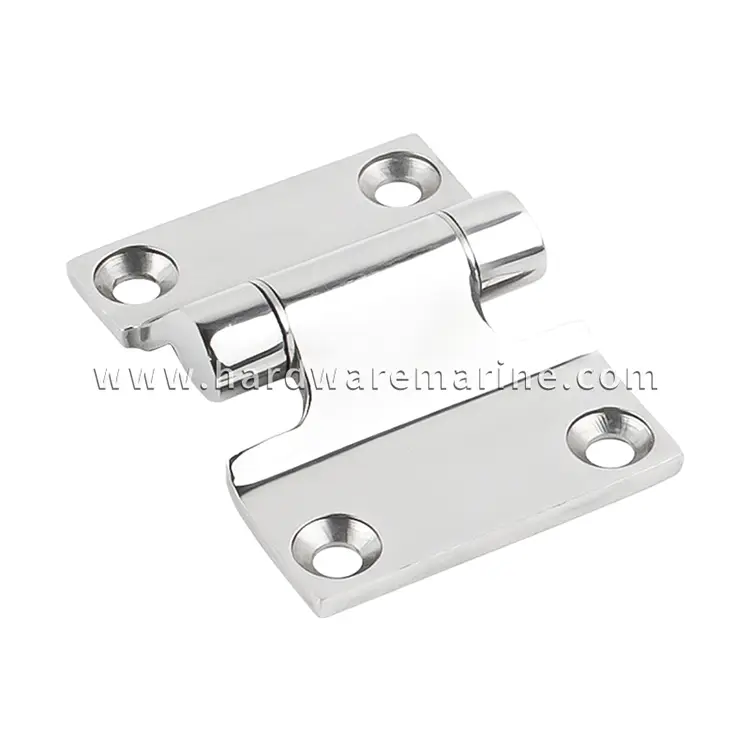
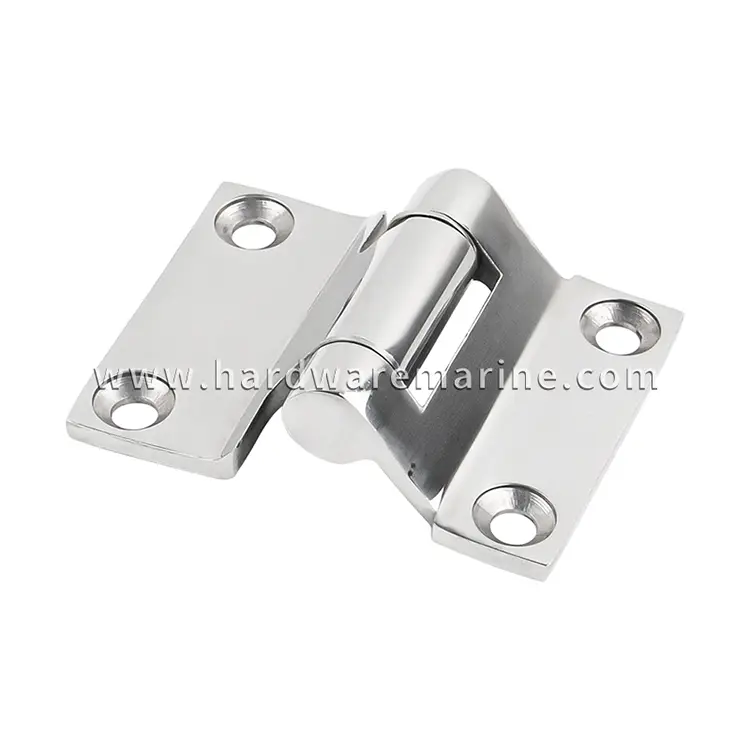 316 Stainless Steel Marine Cast Hinge displayed with a polished finish, showing its robust barrel and countersunk screw holes" style="max-width:100%; height:auto; display:block; margin: 30px auto; border-radius: 6px; box-shadow: 0 4px 16px rgba(0,0,0,0.1);" loading="lazy">
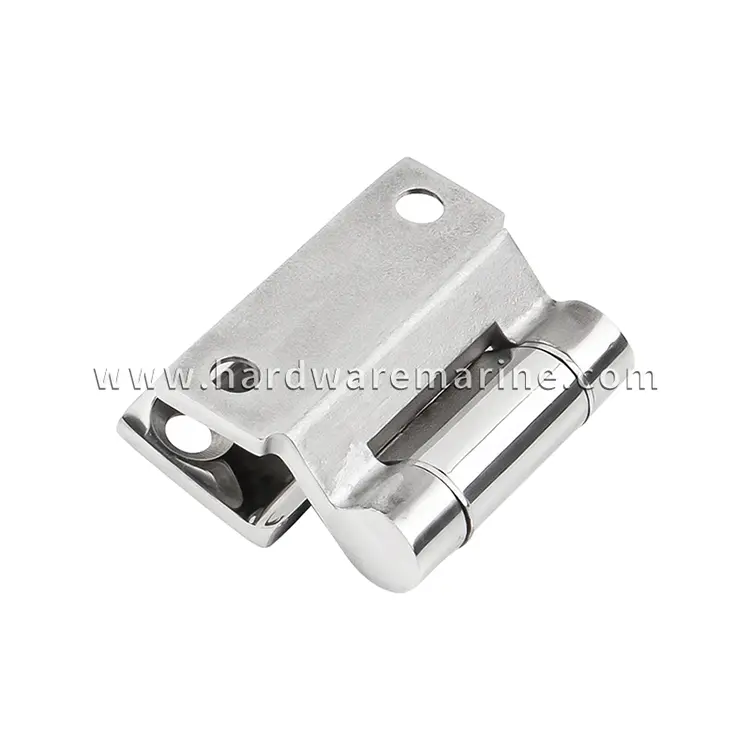
At Shandong Power Industry and Trade Co., Ltd., every hinge carries the weight of that understanding. The company has spent decades perfecting the art of producing marine-grade hardware that doesn't just meet specifications—it anticipates the brutal realities of saltwater, UV exposure, and dynamic loads. Their 316 Stainless Steel Marine Cast Hinge is a masterclass in material science and precision manufacturing, designed to be a quiet, unshakeable guardian for every opening on board.
Picture the typical morning at a marina: the sun glinting off varnished teak, the distant cry of gulls, and a boat owner discovering a streak of ugly brown rust weeping from what should be a gleaming hinge. That moment of disappointment, followed by the tedious task of sourcing a replacement, removing corroded fasteners, and questioning the integrity of the surrounding fiberglass or wood, is all too common. The culprit is almost always a subpar alloy that promised “stainless” but delivered only a short reprieve before the pitting began. The 316 Stainless Steel Marine Cast Hinge breaks that cycle entirely. Its very composition is a declaration of permanence, formulated with molybdenum to create a formidable barrier against chlorides, the primary agent of marine corrosion. This isn't a coating that wears away; it's the metal itself that resists attack at the molecular level.
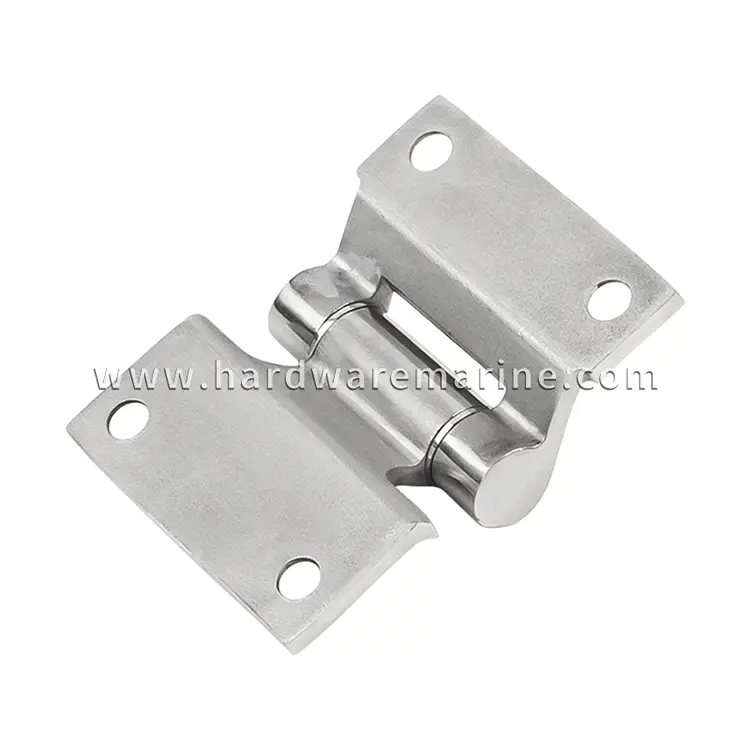
The manufacturing process elevates this hinge beyond a simple cut-and-formed piece of metal. Precision casting, often called investment casting or lost-wax casting, allows Shandong Power Industry and Trade Co., Ltd. to achieve geometries that would be impossible through stamping or extrusion. The result is a hinge with fully rounded edges, a seamlessly integrated leaf and barrel, and a consistency that ensures every unit is functionally identical. When you hold one, the heft and cool smoothness immediately convey a sense of quality that isn't just aesthetic—the dense grain structure of cast 316 stainless steel provides exceptional tensile and yield strength, distributing loads evenly to prevent the hairline cracks that can propagate under cyclical stress. Think of a heavy engine cover that gets opened and closed countless times in a season, or a boarding gate that takes the weight of crew members in rough conditions. This hinge doesn’t flex or fatigue; it operates with the same deliberate, fluid motion ten years later as it did on day one.
The visual character of this hardware also speaks volumes. The surface undergoes a multi-stage polishing regimen that removes any microscopic imperfections from the casting process, yielding a mirror-like brilliance that complements modern yacht aesthetics or classic wooden craft alike. Yet it's not a fragile shine; the hardness of the material means it resists scratching and will not dull quickly, even when exposed to gritty salt spray and frequent wiping. This marriage of form and function means your vessel’s hardware becomes a point of pride rather than an eyesore to hide.
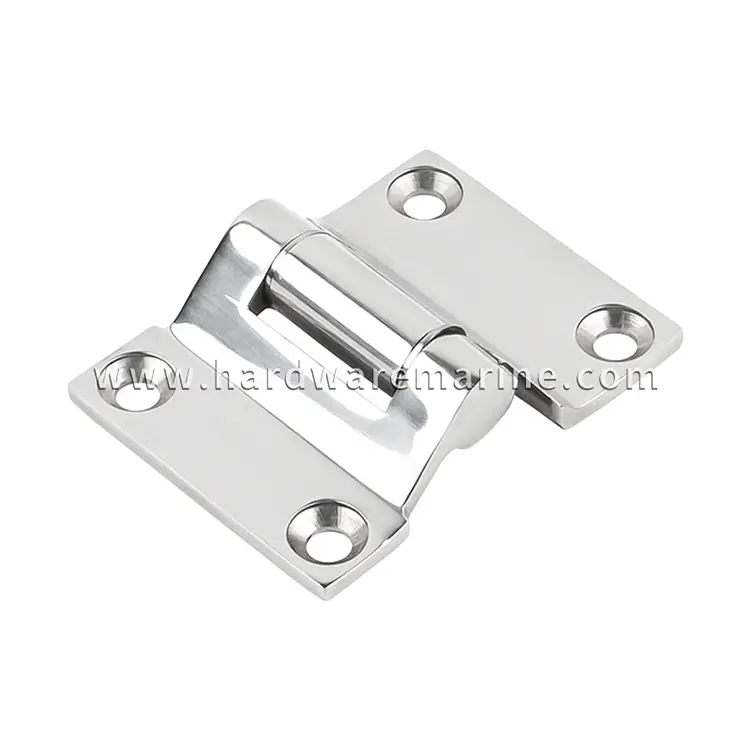
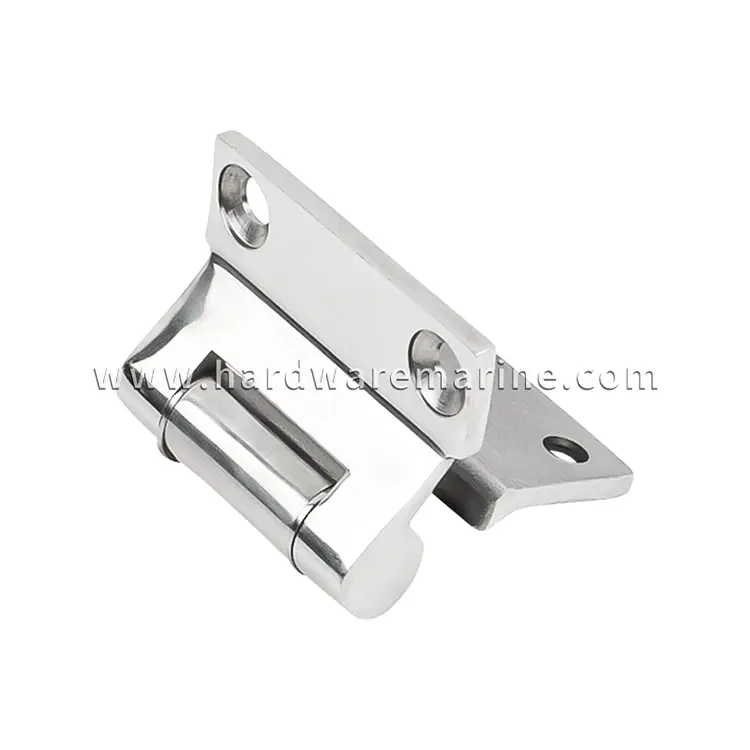
Beyond the basics, the design incorporates several thoughtful touches that only seasoned mariners might notice at first glance. The countersunk holes are precisely placed and consistently angled to accept flat-head fasteners, allowing for a flush installation that avoids protruding screw heads catching on lines, clothing, or skin. The hinge pin is a precision-ground rod of the same 316 alloy, interference-fitted to prevent any lateral play that could lead to uneven wear or rattling. Even the inside of the knuckle is polished to reduce friction, ensuring that the hinge will never bind or squeak—a small detail that brings daily, silent satisfaction.
To truly appreciate the engineering, it helps to contextualize the challenge with a structured comparison. Consider the common scenarios boat builders and owners face, and how the choice of hinge directly impacts the outcome.
When you select the right hinge, the result goes beyond functionality. Imagine anchoring in a quiet cove, the tide just beginning to paint the shoreline. You lift the cockpit locker to retrieve a piece of gear, and the lid glides up smoothly, stays exactly where you leave it, and closes with a solid, reassuring thump that says “secure.” No grinding, no wobble, no dimpled rust stains marring the gelcoat. This is the user experience crafted by Shandong Power Industry and Trade Co., Ltd.—an experience where the hardware simply disappears into the background of a perfect day on the water because it works as faithfully as the sunrise.
The people who find the most value in this product come from the full spectrum of the maritime world. Professional boatbuilders and refit yards appreciate the batch-to-batch consistency and the reputation of Shandong Power Industry and Trade Co., Ltd. as a supplier who understands lead times and quality assurance. For them, specifying these hinges is a straightforward way to elevate the perceived value of a build and eliminate callback issues. Marine maintenance technicians and surveyors often recommend them as direct replacements for factory-installed hardware that has failed prematurely, knowing that the upgrade will pass even the most stringent condition inspection. Passionate DIY cruising sailors and powerboaters who spend every free weekend polishing and perfecting their floating homes are drawn to the mirror finish and the tactile pleasure of operating a beautifully engineered component. They might not talk about tensile strength at the dock, but they feel the difference every time they open a seat locker or a battery compartment.
Then there are the less obvious applications where the durability of 316 stainless steel becomes critical. Aquaculture operations with constantly submerged cages and feed equipment, oceanographic research buoys with data ports, luxury waterfront resorts outfitting outdoor kitchens and dockside furniture, and high-end architectural firms designing coastal cliffside homes with panoramic doors all find common ground. In each case, the environment punishes shortcuts, and the hinge becomes a tiny but vital anchor of integrity. The ability to withstand not just the water but the combined effects of strong cleaning chemicals, high humidity, and thermal expansion makes this cast hinge a universal solution for any application that cannot afford corrosion-related failure.
From an emotional perspective, investing in hardware of this caliber is a form of self-care for the boat owner. It translates directly into reduced anxiety when the forecast calls for a blow, because you know your lockers are latched with hinges that haven't secretly wasted away inside. It means you spend less time with a grinder or a screwdriver in your hand and more time at the helm or on the hook. It means when you step aboard, your gaze doesn’t immediately find a blemish of rust that keeps you up at night planning a remediation project. The 316 Stainless Steel Marine Cast Hinge delivers the quiet confidence that your vessel is equipped to handle whatever the sea throws at it, and that peace of mind is priceless.
Now, let’s drill into the specific dimensions and options that make this hinge adaptable to a vast range of installations. While the company offers custom configurations, the core product line covers the most requested sizes in the marine market. The following table outlines the standard choices, helping you match the hinge to your specific thickness and load requirements.
These figures represent conservative ratings based on static, evenly distributed loads. The actual breaking strength is considerably higher, but the engineering team at Shandong Power Industry and Trade Co., Ltd. prefers to publish data that ensures a generous safety margin, allowing for the shock loads and cyclical fatigue that are unique to marine motion. The pins are also designed to be serviceable: should you ever need to remove a door for seasonal storage or maintenance, a simple punch and hammer (or a dedicated pin removal tool) allows the hinge to be separated without damaging the leaves.
So what makes this hinge genuinely different from another “marine grade” 316 casting you might find at a chandlery? The difference lies in the details that are easy to overlook but impossible to replicate without a rigorous quality system. First is the certification of the raw material. The foundry and finishing facility operated by Shandong Power Industry and Trade Co., Ltd. maintains full traceability from melt to finished part. A material certificate confirming the chemical composition of each heat of steel is available, showing the exact percentages of chromium (16-18%), nickel (10-14%), and the critical molybdenum (2-3%) that separates 316 from 304. This isn't just paper; it's an assurance that you are not getting a lower-grade alloy that has been misrepresented.
Second is the casting process itself. The investment casting used here allows for a surface finish that often rivals machined parts right out of the mold, drastically reducing the need for heavy grinding that can introduce stress risers. The dimensional accuracy is held to a standard that ensures interchangeability—if you buy six hinges today and two more a year from now, they will align perfectly with your existing mounting holes. Third, the final finishing goes beyond mere polishing. An electrochemical passivation treatment dissolves any surface iron contaminants and maximizes the chromium-to-iron ratio on the outermost layer, supercharging the natural corrosion resistance. This invisible armor is what gives the hinge its long-term, pit-free life, even in the shadow of a stainless steel anchor chain or when in contact with dissimilar metals via proper isolation.
Let’s also address the comparison to fabricated or stamped alternatives. A stamped 316 hinge can be a perfectly serviceable product for some interior uses, but it typically has a folded barrel that can trap moisture and is structurally weaker at the point where the leaf meets the knuckle. Under heavy load, that fold can begin to open up like a cardboard box, eventually shearing the screw heads or causing the door to sag. The cast hinge, by contrast, is one integral piece from the screw face to the knuckle. There’s no weld seam to fail, no fold to spread, no hidden crevice beyond what’s designed to be washed free by normal movement. For applications where failure would pose a safety risk—such as a cockpit locker that conceals a propane tank or a floor hatch over a deep bilge—the peace of mind provided by a solid casting is immeasurable.
Understanding that even the best product raises questions, we’ve compiled answers to the most common inquiries that arise during selection and installation.
Frequently Asked Questions
Can these hinges be used fully submerged, for example on a swim platform that stays underwater?
Yes, they are ideally suited for continuous immersion. 316 stainless steel was developed specifically for marine and chemical processing environments where prolonged contact with saltwater is unavoidable. However, it is important to note that even 316 relies on oxygen to maintain its passive protective layer. In very tight, stagnant crevices with zero water flow (such as under a tightly clamped gasket), crevice corrosion can eventually occur. For a submerged swim platform hinge that is periodically exposed to air when the boat is underway or cleaned, it will perform exceptionally. To maximize longevity, rinse with fresh water whenever practical and ensure good drainage around the mounting area.
What size screws should I use, and are stainless steel screws included?
The recommended screw size depends on the hinge model, as detailed in the specification table. For the 2-inch and 3-inch models, #8 or #10 flat-head wood or machine screws are typical; the larger models accept #12 or 1/4-inch fasteners. The hinges are not packaged with screws because fastener length and type vary dramatically depending on the mounting substrate (fiberglass, aluminum, plywood, etc.). We strongly recommend using 316 stainless steel fasteners from a reputable marine brand. Always use a pilot hole of the correct size, and apply an appropriate anti-seize compound or Tef-Gel when driving screws into aluminum or to isolate dissimilar metals.
How do I maintain the mirror finish over time? Will it turn yellow or cloudy?
The mirror finish is a mechanical polish, not a lacquer or coating that can yellow. Over years of exposure, the surface may develop a faint cloudy haze from micro-abrasion or salt deposits. This is easily restored with a non-abrasive marine metal polish and a soft microfiber cloth. For routine care, simply wipe the hinges with a damp cloth to remove salt spray, and dry them if possible. Avoid using steel wool or abrasive pads, which can embed iron particles and cause surface rust spotting. A light application of a quality marine wax or polymer sealant once a season will make maintenance even easier and preserve the gloss.
Are these hinges handed (left/right) or can they be mounted either way?
All standard models are symmetrical and non-handed. You can mount them on either the port or starboard side of a door, and orient the pin up or down as your installation requires. The only consideration is that if mounted with the pin facing downwards, it may be slightly more difficult to service in place, but performance is unaffected. If you require a left- or right-hand specific configuration for a custom project, Shandong Power Industry and Trade Co., Ltd. can arrange a special production run to meet your exact specifications.
What if I need a size or load rating not listed in the standard table?
Customization is a core strength of the company. The in-house engineering team can design and produce 316 stainless steel marine cast hinges to your dimensional requirements, incorporating unique hole patterns, leaf configurations, or even captive pins. The minimum order quantity for custom work is typically modest compared to other suppliers, because Shandong Power Industry and Trade Co., Ltd. operates its own foundry and finishing line, reducing tooling costs and lead times. Contact their sales department with your drawings or a detailed description, and they will provide a feasibility assessment and quotation.
How do I verify that I’m receiving genuine 316 stainless and not a lower-quality alloy?
With every order, you may request a material test report (MTR) that certifies the heat number and chemical analysis of the stainless steel used. Additionally, you can perform a simple spot test using a commercially available 316 identification kit (usually involving a drop of chemical reagent that turns a specific color in the presence of molybdenum). However, the easiest assurance is the vendor's reputation. Shandong Power Industry and Trade Co., Ltd. stands behind its product, and any authorized dealer will provide full transparency. A visual indicator, though not definitive, is that genuine 316 typically exhibits a slightly warmer, less “white-bright” reflection than 304, and over time it simply does not develop the surface rust spots that plague inferior alloys.
In the quiet moments aboard, when the engine is off and the anchorage is still, it’s easy to take for granted the hardware that keeps everything in its place. But in the back of a seasoned mariner’s mind, there’s always a checklist of things that could ruin a trip. Replacing every questionable hinge with the 316 Stainless Steel Marine Cast Hinge from Shandong Power Industry and Trade Co., Ltd. is an act of crossing off that worry forever. It’s a commitment to building or maintaining a vessel where every component, no matter how small, reflects the same dedication to excellence that you pour into your voyaging. The next time you lift a locker lid and feel the solid, silky operation follow through to a precise stop, you'll know that diligence not only pays off but also brings a quiet, profound pleasure to the daily rhythm of life on the water.