Upgrade to marine-grade 316 Stainless Steel Boat Cast Hinge by Shandong Power Industry and Trade Co., Ltd.Keywords:316 stainless steel boat hinge, cast stainless steel boat hinge, marine grade stainless steel hinge
Built for the Open Water: The Ultimate Marine Hinge Solution
Every boat owner knows that saltwater, sun, and constant motion punish hardware like nothing else on land. A hinge that works flawlessly on a kitchen cabinet can rust, seize, or snap within months on a deck hatch. That is exactly why discerning builders and riggers turn to a purpose-built component: the 316 Stainless Steel Boat Cast Hinge from Shandong Power Industry and Trade Co., Ltd. This is not a generic piece of stamped metal. It is a precision-cast, marine-grade hinge engineered to keep doors, hatches, and compartments operating smoothly in the harshest marine environments.
Imagine opening a storage locker after a rough offshore passage. The hinges should glide, not groan. They should hold firm under load, resist pitting from spray, and look as clean as the day they were installed. That is the experience this hinge delivers. Whether you are refitting a classic sailboat, building a fishing console, or maintaining a commercial vessel, the right hinge makes every access point safer and more reliable. Let’s explore why this cast 316 stainless steel hinge has become the trusted choice for marine professionals and serious DIYers alike.
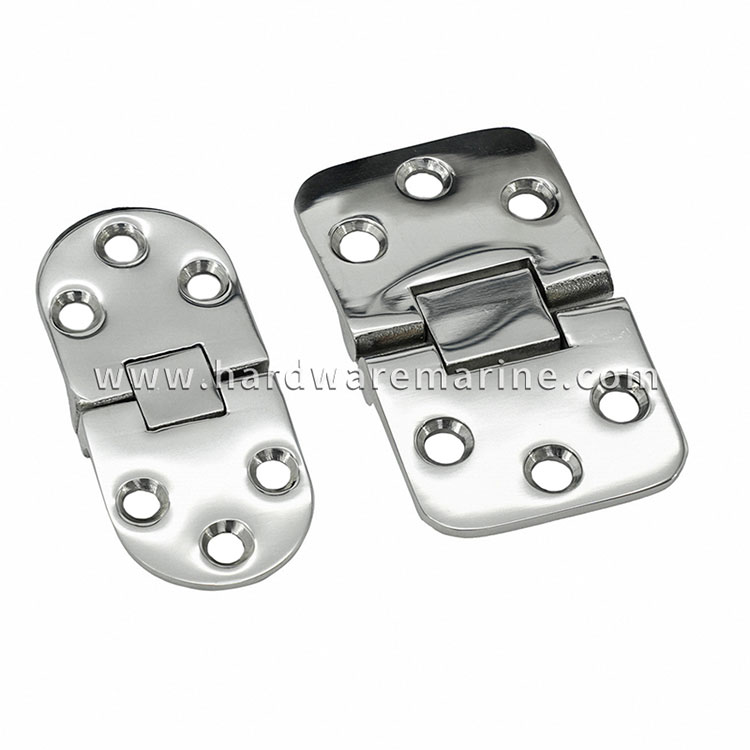
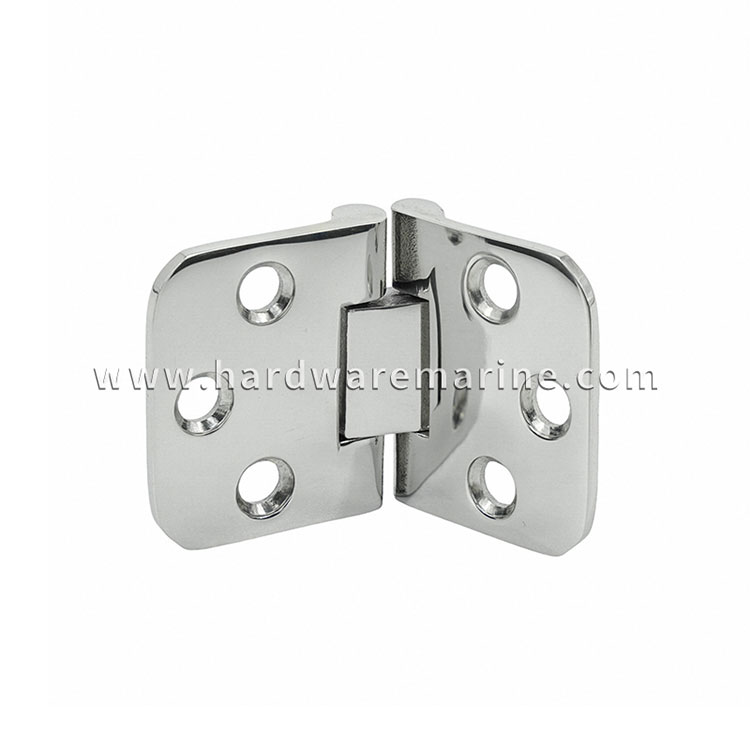
316 Stainless Steel Boat Cast Hinge close-up showing polished surface and robust construction" />
Why 316 Stainless Steel Matters at Sea
Marine hardware lives or dies by its material. Standard 304 stainless steel offers some corrosion resistance, but it can fall victim to chloride attack in saltwater environments. Pitting, rust staining, and eventual structural failure are common complaints. The 316 Stainless Steel Boat Cast Hinge solves this with a metallurgical upgrade that adds molybdenum to the alloy. That single element dramatically improves resistance to chlorides, making the hinge ideal for saltwater exposure, brackish harbors, and even acidic cleaning agents.
Beyond corrosion resistance, 316 stainless steel provides excellent tensile strength and toughness. The cast structure of this hinge offers a dense, uniform grain that resists cracking under load. Unlike stamped hinges that can bend or fatigue along thin sections, a cast hinge maintains its shape and load-bearing capacity over years of heavy use. You get the confidence of a component that will not let you down when a deck hatch slams shut or a locker door takes a wave.
For boat owners who have replaced rusty hinges season after season, switching to 316 cast stainless is a revelation. The polished surface also resists staining and cleans easily with fresh water. That means less maintenance time and more time on the water.
The Casting Difference: Strength You Can Feel
Many marine hinges are stamped from sheet metal. Stamping is fast and cheap, but it leaves thin cross-sections, sharp edges, and stress concentrations. A 316 Stainless Steel Boat Cast Hinge is produced using investment casting, also known as lost-wax casting. This process allows for a thicker, more uniform profile, rounded contours, and superior dimensional accuracy. The result is a hinge that feels solid in your hand and performs solidly under load.
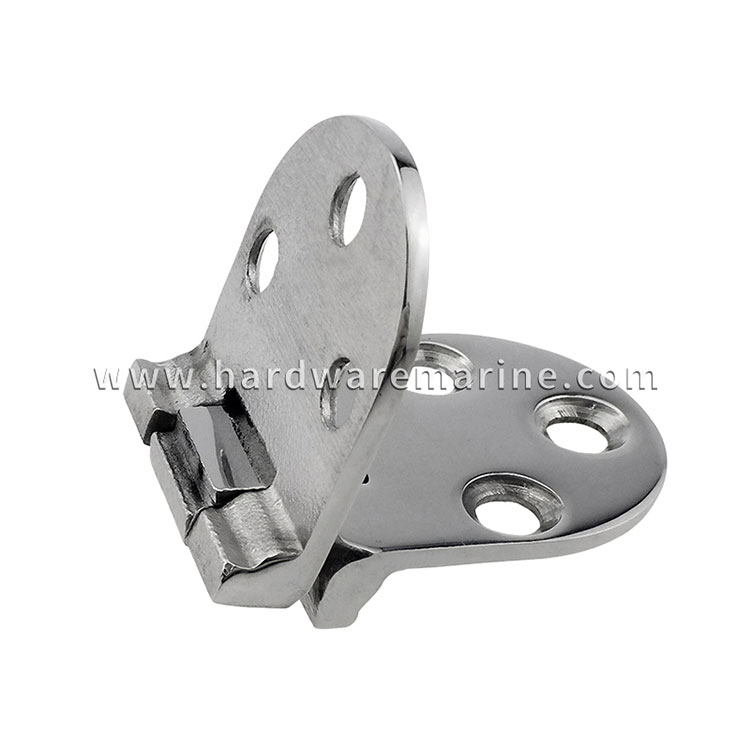
The casting process also permits design features that stamping cannot achieve. For example, the barrel is integrally cast with the leaves, eliminating weak weld points. The knuckles are robust and precisely aligned, ensuring a smooth swing with minimal play. This is critical for doors that must seal tightly against gaskets or for hatches that need to resist vibration. A cast hinge also resists deformation when a heavy lid is opened beyond its normal range, a common cause of failure in cheaper alternatives.
When you hold this hinge, you notice the weight. That weight is not a drawback; it is a sign of dense, high-quality metal that will endure. Boat builders appreciate this because it reduces callbacks and warranty claims. Owners appreciate it because they never have to think about their hinges again.
Design Features That Set This Hinge Apart
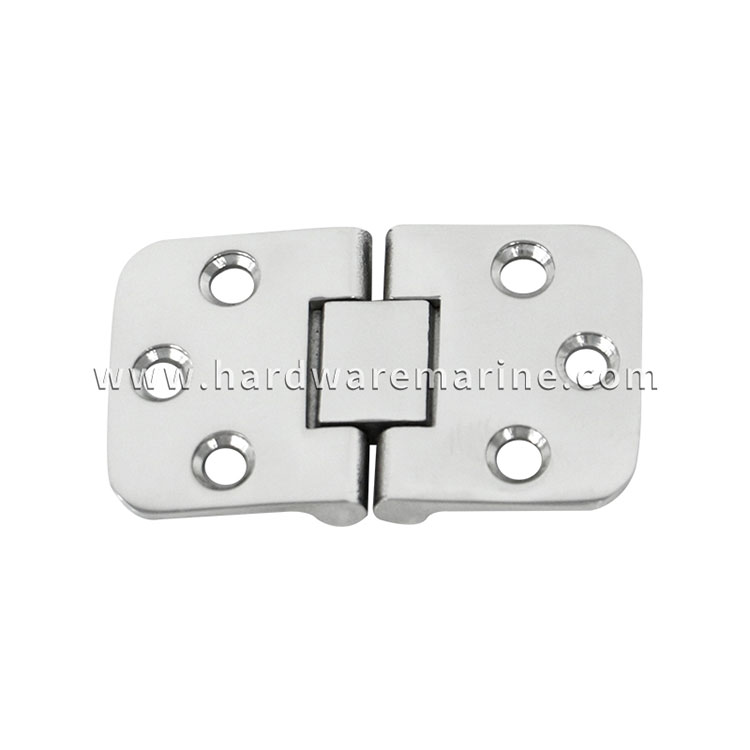
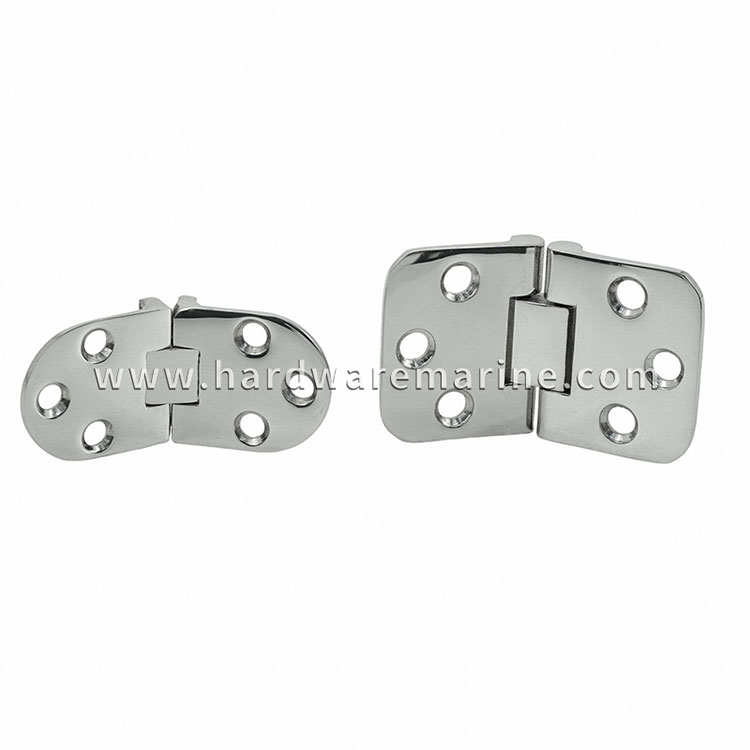
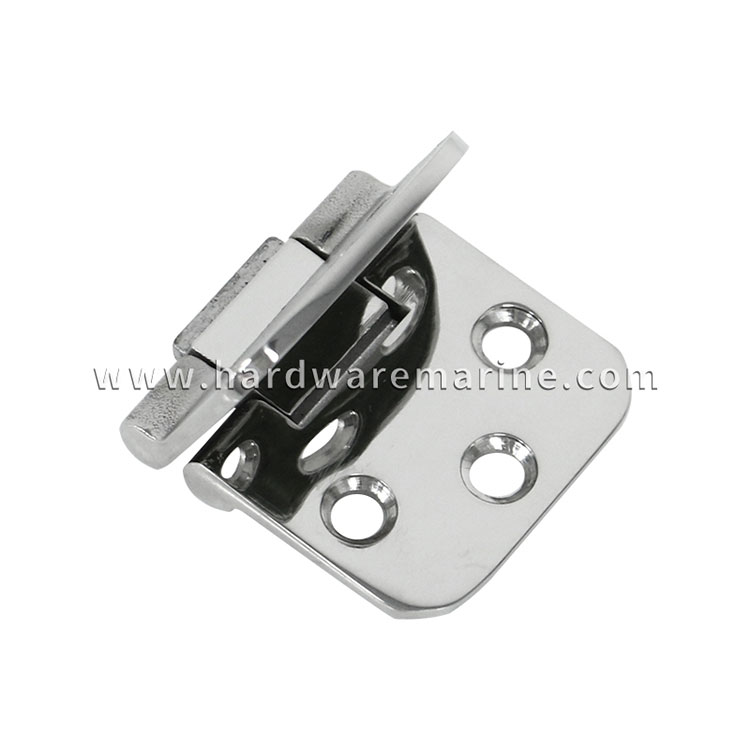
Every detail of the 316 Stainless Steel Boat Cast Hinge has been considered for marine service. The leaves are not merely flat plates; they feature a subtle taper that distributes stress evenly across the mounting surface. This reduces the chance of cracking around screw holes, even when the hinge is mounted on fiberglass or wood that flexes slightly.
The hinge pin is made from the same 316 stainless steel, ensuring uniform corrosion resistance. It is precision-ground for a close fit within the barrel, which minimizes lateral movement and wear. Some designs use plastic or brass bushings to reduce friction, but this hinge relies on the smoothness of its polished stainless surfaces. A light application of marine grease during installation will keep it operating effortlessly for years.
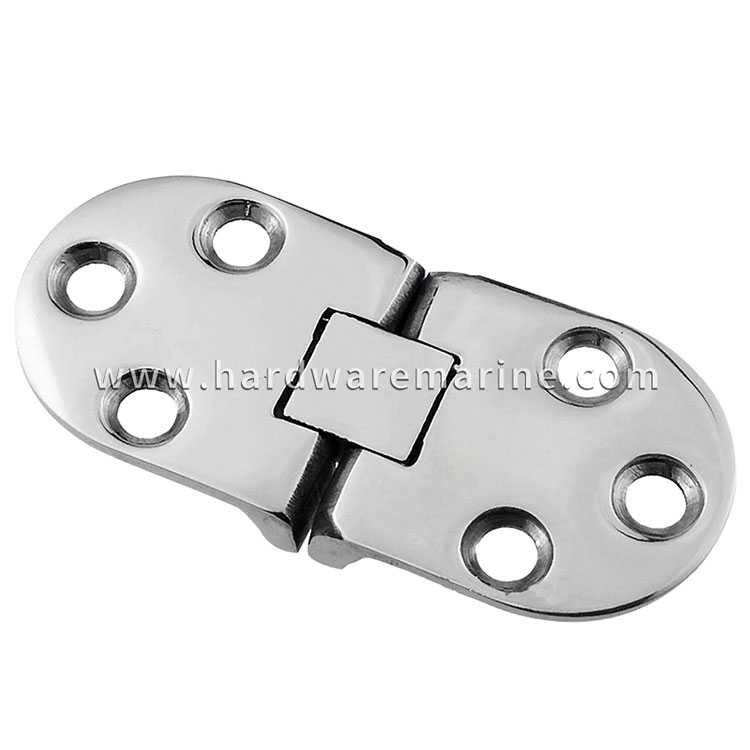
The mounting holes are countersunk to accept flat-head fasteners, allowing the hinge to sit flush against the mounting surface. This not only looks professional but also prevents water from pooling around the screws. The edges are gently radiused, reducing the risk of injury on a moving deck and eliminating sharp corners that can snag lines or clothing.
The aesthetic is clean and functional. The polished finish reflects light beautifully, adding a touch of quality to any installation. It pairs well with teak, fiberglass, painted metal, and starboard. Whether you are outfitting a high-end yacht or a rugged workboat, this hinge complements the vessel’s look.
Where This Hinge Excels: Real-World Marine Applications
The versatility of the 316 Stainless Steel Boat Cast Hinge makes it suitable for a wide range of onboard applications. Because it is cast and robust, it handles heavier loads than typical hinges of similar size. Here are some of the most common places you will find it in service:
Deck hatches and anchor lockers: Exposed to constant spray and foot traffic, these openings demand a hinge that cannot rust or break. The 316 stainless construction shrugs off salt and UV.
Cabin doors and companionway doors: Smooth operation is essential for safety and comfort. The precision barrel and pin ensure a quiet, controlled swing.
Bait wells and fish boxes: Constant moisture, fish slime, and cleaning chemicals attack lesser metals. This hinge resists them all while supporting heavy lids.
Engine room access panels: Heat, vibration, and oil vapors require a hinge that stays tight. The cast design maintains alignment even under harsh conditions.
Storage lockers and seat boxes: On fishing boats and cruisers, these see heavy daily use. A strong hinge prevents sagging and misalignment over time.
Head doors and shower enclosures: In damp, soapy environments, 316 stainless is the gold standard for hygiene and corrosion resistance.
Essentially, anywhere you need a hinge that combines corrosion resistance, load capacity, and long service life, this product fits the bill. It is equally at home on a trailerable fishing boat or a bluewater cruising yacht.
From Frustration to Confidence: Solving Common Hinge Failures
Marine hinge failures are not just inconvenient; they can be dangerous. A hatch that flies open because a hinge snapped can injure someone or allow water ingress. A locker door that will not close can turn gear into projectiles in rough seas. Understanding these pain points shows why the right hinge is critical.
Pain point 1: Rust and pitting. Inferior metals develop rust within months, staining fiberglass and seizing the hinge. Solution: The 316 stainless alloy resists chloride corrosion, so the hinge maintains its integrity and appearance. Even after years of salt exposure, it cleans up with a freshwater rinse.
Pain point 2: Bent or deformed leaves. Stamped hinges bend when a heavy lid is leaned on or dropped. Solution: The cast construction provides a thicker, stronger profile that holds its shape under load. You can stand on a hatch fitted with this hinge, and it will not twist.
Pain point 3: Loose or wobbly pins. Constant vibration wears out cheap pins, causing doors to sag and rattle. Solution: The precision-ground pin and tight barrel tolerance keep the hinge aligned. The movement remains smooth and controlled, eliminating play.
Pain point 4: Screw hole cracking. When a hinge flexes, it transfers stress to the mounting screws, which can crack fiberglass or wood. Solution: The rigid cast body distributes load evenly, reducing stress concentrations and preserving the mounting surface.
Pain point 5: Poor fit and finish. Sharp edges and uneven surfaces make installation difficult and look unprofessional. Solution: The polished, radiused edges and countersunk holes provide a clean, flush installation that enhances the boat’s appearance.
Technical Specifications at a Glance
For those who like to see the numbers, here are the key specifications for the 316 Stainless Steel Boat Cast Hinge. While dimensions can vary by specific model, the following table represents a typical configuration offered by Shandong Power Industry and Trade Co., Ltd. Always confirm exact measurements for your application.
Parameter
Specification
Material
316 stainless steel, investment cast
Finish
Polished mirror or satin
Leaf length (typical)
2.5 in to 6 in (custom sizes available)
Leaf width (open)
1.5 in to 3 in
Leaf thickness
0.12 in to 0.25 in
Pin diameter
0.25 in to 0.5 in
Load capacity (pair)
Up to 800 lb static, depending on size and mounting
Opening angle
270 degrees (fully open)
Mounting holes
Countersunk for #10 to 1/4 in flat-head screws
Corrosion resistance
Excellent in saltwater, brackish, and acidic environments
Operating temperature
-40°F to 600°F
These specifications reflect the robust nature of the cast design. The load capacity, in particular, is notable because it exceeds that of similar-sized stamped hinges. This makes the hinge suitable for heavy lids and high-traffic areas.
Manufactured by a Partner You Can Trust
When you buy marine hardware, the name behind the product matters. Shandong Power Industry and Trade Co., Ltd. has built a reputation for producing high-quality stainless steel hardware for the global marine industry. The company combines modern casting technology with rigorous quality control to ensure every hinge meets demanding standards.
Every 316 Stainless Steel Boat Cast Hinge begins as a precise wax pattern, which is then coated in ceramic shell and fired to create the mold. Molten 316 stainless steel is poured into the mold, capturing every detail of the design. After cooling, the casting is ground, polished, and inspected for defects. The result is a component with consistent dimensions and a flawless surface.
Quality control does not stop at visual inspection. Random samples undergo salt spray testing to verify corrosion resistance, and dimensional checks confirm the hinge will fit standard mounting patterns. This attention to detail means you receive a product that will perform exactly as promised. Whether you are a boat builder ordering in bulk or an individual owner replacing a single hinge, you benefit from the same rigorous standards.
The company also offers customization options. Need a specific size, hole pattern, or finish? The manufacturing team can work with you to produce a hinge that fits your exact requirements. This flexibility, combined with the inherent quality of 316 stainless steel, makes Shandong Power Industry and Trade Co., Ltd. a preferred supplier for marine OEMs and aftermarket distributors.
Installation Guide: Getting It Right the First Time
Installing the 316 Stainless Steel Boat Cast Hinge is straightforward, but a few best practices will ensure maximum performance and longevity. Follow these steps, and your hinge will provide decades of trouble-free service.
Choose the right size. For heavy doors or hatches, use a larger hinge or install three hinges instead of two. The load capacity should always exceed the actual weight of the door, including any dynamic forces from boat motion.
Position the hinge. Mark the mounting locations on both the door and the frame. Ensure the hinge is aligned so the pin is vertical (or horizontal for hatches) and the leaves sit flat against the surfaces.
Pilot drill the holes. Use a drill bit slightly smaller than the screw’s shank diameter. In fiberglass, use a countersink bit to prevent gelcoat cracking. In wood, drill pilot holes to avoid splitting.
Apply sealant. For installations exposed to water, apply a marine-grade sealant to the back of the hinge leaf and around the screw holes. This prevents water intrusion into the core material.
Fasten securely. Use 316 stainless steel flat-head screws to match the hinge. Tighten them evenly, but do not over-torque, which can strip the holes or distort the hinge.
Check the swing. Open and close the door several times. The hinge should move freely without binding. If there is resistance, check for misalignment or sealant that may have squeezed into the barrel.
Lubricate if desired. A light coat of marine grease on the pin will enhance smoothness and add another layer of corrosion protection. This is especially recommended in saltwater environments.
With these steps, your hinge will be ready to handle whatever the sea throws at it. Proper installation is the final piece of the puzzle for a reliable, long-lasting hardware setup.
Simple Maintenance for a Lifetime of Service
Even the best marine hardware benefits from a little care. The 316 Stainless Steel Boat Cast Hinge is designed to be low-maintenance, but a few routine habits will keep it looking and functioning like new.
Rinse with fresh water. After every outing in saltwater, hose down the hinges along with the rest of the boat. This removes salt crystals that can attract moisture and cause surface staining over time.
Wipe dry occasionally. In humid climates, a quick wipe with a soft cloth prevents water spots and mineral deposits from forming on the polished surface.
Inspect annually. Check the screws for tightness and the pin for any signs of wear. If the hinge feels loose, tighten the fasteners or replace the pin if necessary.
Use a stainless steel cleaner. For stubborn stains or light surface rust (which can occur from iron contamination), apply a non-abrasive stainless steel cleaner. Avoid steel wool, which can embed particles and cause rust.
Lubricate the pin. A small drop of marine oil or grease every few seasons keeps the movement buttery smooth and prevents any galling between the pin and barrel.
These simple steps take only minutes but extend the life of your hardware dramatically. With proper care, your cast 316 stainless hinges will remain a reliable part of your boat for decades.
How It Compares to Alternatives
To understand the value of the 316 Stainless Steel Boat Cast Hinge, it helps to compare it to the other options you might encounter. This is not to say other materials have no place, but for demanding marine applications, the differences are stark.
Cast 316 vs. stamped 304 stainless: Stamped 304 hinges are lighter and cheaper, but they lack the molybdenum content that fights saltwater corrosion. They also have thinner sections that bend under load. The cast 316 hinge wins on both corrosion resistance and strength, making it the better long-term investment.
Cast 316 vs. cast 304 stainless: While cast 304 is stronger than stamped, it still falls short in chloride environments. Pitting can occur, especially in warm, salty conditions. The added molybdenum in 316 provides a significant upgrade that is worth the small price difference.
Cast 316 vs. plastic or composite hinges: Plastic hinges are inexpensive and corrosion-proof, but they cannot handle heavy loads or high temperatures. They also degrade under UV exposure and can become brittle. For serious marine use, metal is the only choice.
Cast 316 vs. brass or bronze hinges: Brass and bronze offer good corrosion resistance and a traditional look, but they are softer and more expensive. Stainless steel provides higher tensile strength and a more modern appearance, making it ideal for performance-oriented boats.
In short, if you want a hinge that combines strength, corrosion resistance, and a clean look, the cast 316 stainless option is the clear winner. It is the reason so many boat builders specify it as original equipment.
Frequently Asked Questions
What makes 316 stainless steel better than 304 for marine hinges?
316 stainless steel contains molybdenum, typically 2-3%, which significantly improves resistance to chlorides found in saltwater. 304 stainless lacks this element and is prone to pitting and crevice corrosion in marine environments. For any hardware exposed to salt spray, 316 is the recommended grade because it maintains structural integrity and appearance far longer.
Can this hinge be used on a boat that stays in saltwater year-round?
Yes. The 316 stainless steel composition is specifically designed for continuous saltwater exposure. The cast construction adds strength and eliminates thin sections where corrosion could accelerate. Regular rinsing with fresh water will further extend the life, but even without it, the hinge will resist rust far better than 304 or lower grades.
How much weight can this hinge support?
Load capacity depends on the specific size and how the hinge is mounted. Typical models in the product line support static loads up to 800 pounds per pair when properly installed into solid backing. For heavy applications, using three hinges or selecting a larger size provides additional margin. Always consider dynamic forces from boat motion, which can multiply the effective load.
Is the hinge pin removable for maintenance or replacement?
Most models feature a removable pin that can be driven out with a punch. This allows you to separate the leaves for cleaning, lubrication, or replacement. The pin is made from the same 316 stainless steel, so it will not corrode or wear prematurely. If the pin ever becomes damaged, a replacement can be sourced from Shandong Power Industry and Trade Co., Ltd. or a marine hardware supplier.
What type of screws should I use with this hinge?
Use 316 stainless steel flat-head screws to match the hinge material and corrosion resistance. The countersunk mounting holes are designed for standard flat-head fasteners, which sit flush with the leaf surface. Avoid using zinc-plated steel screws, as they will rust quickly and can cause galvanic corrosion at the contact points.
Can this hinge be used on a wooden boat?
Absolutely. The hinge works well on wood, fiberglass, metal, and composite materials. When mounting on wood, always pilot drill to prevent splitting and consider using a bedding compound to seal the screw holes. The polished stainless finish complements both traditional and modern wooden boat construction.
Does the hinge require any special tools for installation?
No special tools are required. You will need a drill with appropriate bits, a screwdriver or driver bit, and optionally a countersink for fiberglass. A sealant and marine grease are recommended but not mandatory. The entire installation can typically be completed in under fifteen minutes per hinge.
How does the cast construction differ from a forged or stamped hinge?
Casting involves pouring molten metal into a mold, which produces a near-net shape with complex geometry and thick sections. Forging hammers metal into shape, which also creates strength but limits design flexibility. Stamping cuts and bends sheet metal, resulting in thin, uniform sections. The cast hinge offers a superior combination of strength, dimensional accuracy, and smooth aesthetics compared to stamped alternatives, and it allows for integrated features like thickened barrels.
What finishes are available for this hinge?
The most common finish is a polished mirror finish, which provides a bright, reflective surface that enhances the boat’s appearance. A satin or brushed finish is also available for applications where a lower-glare or more industrial look is desired. Both finishes are achieved through mechanical polishing and passivation to maximize corrosion resistance.
Can I order custom sizes or hole patterns from Shandong Power Industry and Trade Co., Ltd.?
Yes. The company offers customization services for OEM and bulk orders. You can specify leaf dimensions, hole spacing, pin diameter, finish, and even packaging. This flexibility makes it possible to match existing hardware or design a unique component for a new boat model. Contact the sales team with your requirements for a quotation.
Upgrade Your Boat with Hardware That Lasts
The 316 Stainless Steel Boat Cast Hinge represents a smart investment in safety, reliability, and aesthetics. Every time you open a hatch or close a locker, you will appreciate the smooth, solid feel of quality hardware. No more fighting with rusted pins or worrying about a hinge that might give way. Instead, you get the peace of mind that comes from knowing your boat is equipped with components built for the sea.
From Shandong Power Industry and Trade Co., Ltd., this hinge embodies decades of manufacturing expertise and a commitment to marine-grade excellence. Whether you are replacing a single failed hinge or outfitting an entire vessel, choosing cast 316 stainless is a decision you will not regret. Your boat deserves the best, and your time on the water should be spent enjoying the journey, not maintaining substandard hardware.
When you are ready to upgrade, look for the hinge that professional builders trust. It is the one that feels heavy in your hand, shines like a mirror, and refuses to rust. It is the hinge that keeps working long after cheaper alternatives have been thrown overboard. That is the difference of cast 316 stainless steel, and it is available now for your next project.


 316 Stainless Steel Boat Cast Hinge close-up showing polished surface and robust construction" />