
Marine Anchor,Boat Bollard,Thru-Hull,Boat Cleat,Boat Seat,R&D Customized Marine Products,Seawater Strainers,Pull Rings,Marine Steering Wheel,Deck Filler,Pipe Stanchion,Hinge,BIMINI Fitting,Bow Chock,Boat Anchor Roller,Marine Ladder,Fishing Rod Holder,Deck Plate,Antenna Base,Cockpit Drain,Turning Lock,OEM/ODM Marine Hardware,Chain Stopper,Anchor Connector,Tank Vent,Boat Anchor,Copper Plated Marine Hardware,Brass Bronze Parts,Anchor Chain


There’s a certain calm that settles over a marina at dawn. The water is glassy, the air is sharp with salt, and everything hangs in perfect silence except for the gentle creak of a dock line. That sound, as comforting as it is to any boater, also carries a quiet question: is the gear you trust holding fast really up to the task? When a sudden squall blows in or a passing wake slams your vessel against the dock, the difference between a secure night and a costly repair often comes down to a single piece of hardware—the mooring cleat. If you’ve ever second-guessed a rusty, undersized cleat, or watched a line slip at the worst possible moment, you know exactly why the 316 Stainless Steel Heavy Duty Open Base Marine Cleat exists.
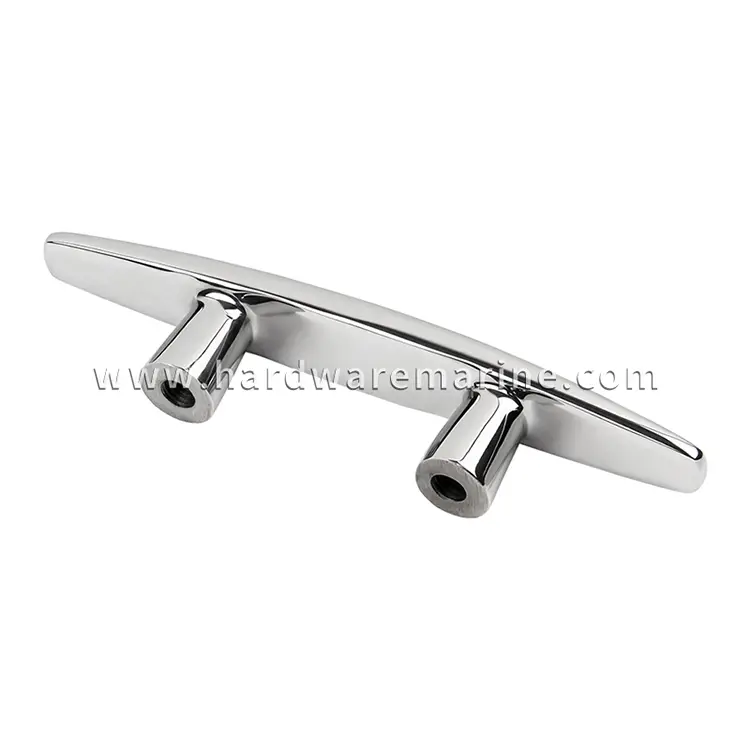
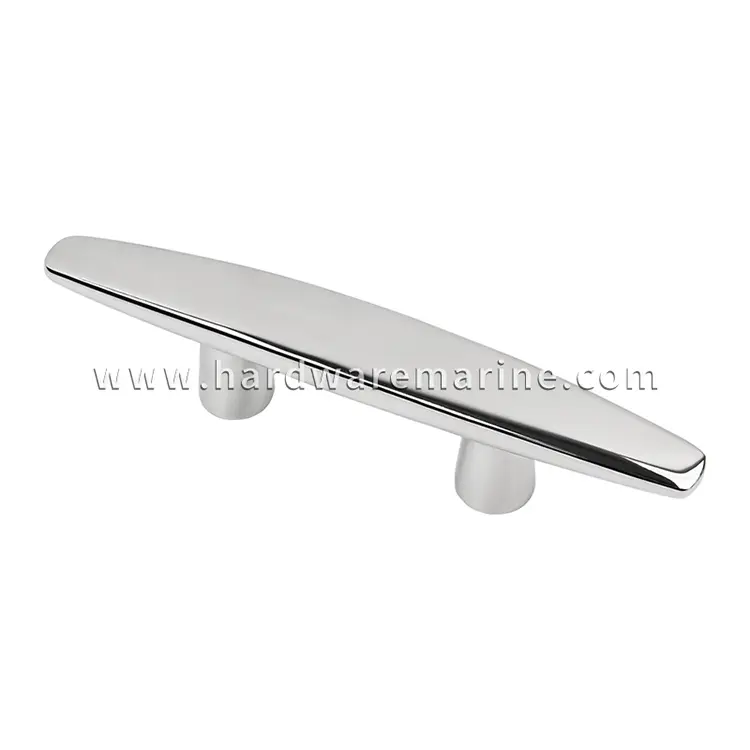 316 Stainless Steel Heavy Duty Open Base Marine Cleat main view showing robust build and polished finish" style="max-width:100%; height:auto; display:block; margin:20px 0;">
Produced with meticulous attention by Shandong Power Industry and Trade Co., Ltd., this cleat is forged from marine-grade 316 stainless steel, the material mariners and marine engineers consistently choose for environments where corrosion is relentless. Unlike 304 stainless, which can eventually show pitting and tea-staining in saltwater, 316 alloy contains molybdenum, giving it superior resistance to chlorides. That means whether you’re mooring in a tropical lagoon, tying up at a rough-hewn commercial dock, or securing your tender while you explore a rocky cove, the cleat stays smooth, strong, and visually clean, season after season.
It’s easy to overlook a cleat until it fails. Maybe you’ve been there: a line chafes against a sharp edge left by a poor casting. Or the base starts to flex under load because the metal is just a hollow shell. Worse, you might have seen a cleat ripped clean off a dock or deck, its fasteners corroded to dust. These aren’t just inconveniences—they’re safety hazards. A boat that breaks free can damage itself, other vessels, and even injure people. The open base design on this 316 stainless steel model directly addresses these pain points. Rather than a closed, boxed-in shape that traps moisture and debris, the open base allows water to drain freely and makes cleaning effortless. No hidden pockets of saltwater accelerating hidden corrosion, no organic muck breeding crevice attacks.
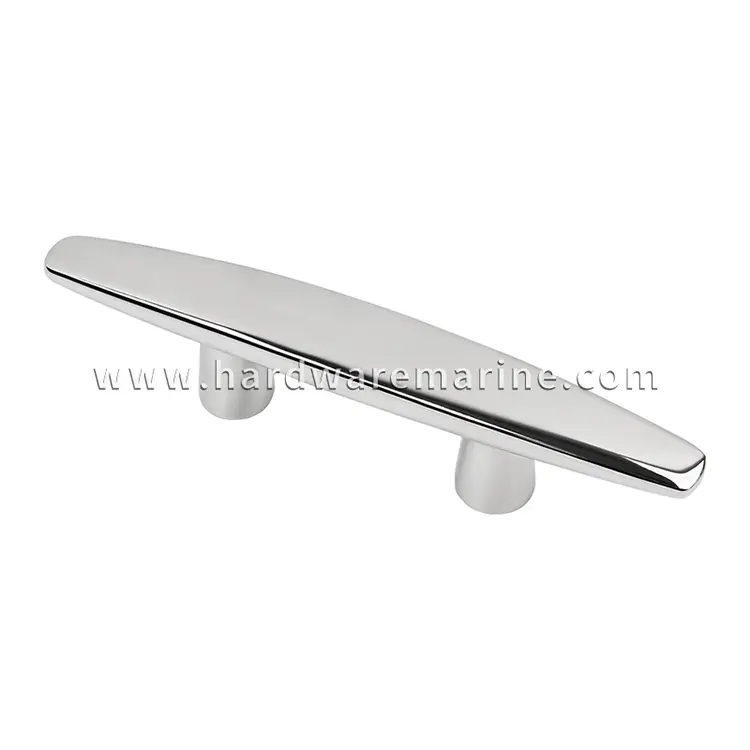
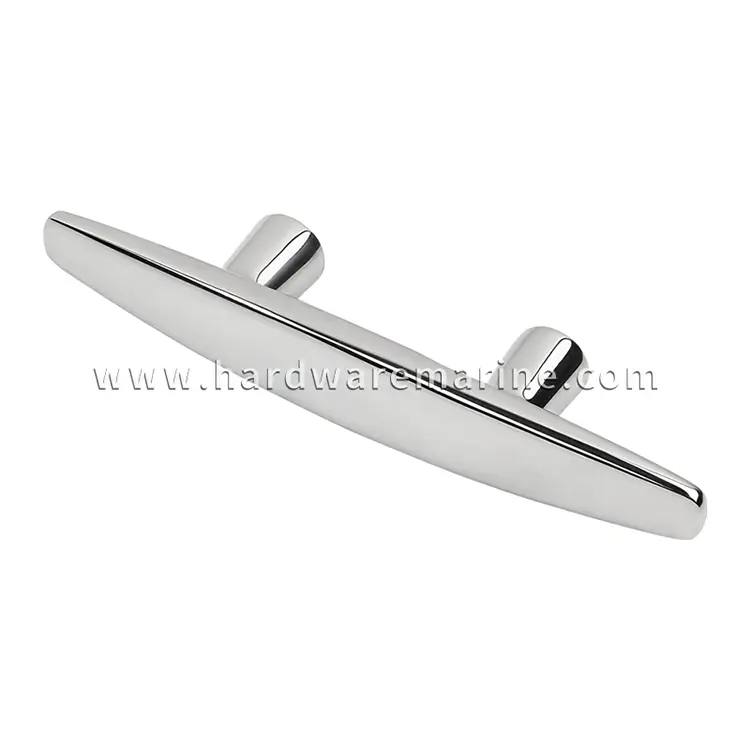
Picture this: you’re returning to your home slip after a long day offshore. The wind has picked up, and the current is pushing you sideways. Your crew tosses a spring line over a cleat, and all the force of a ten-thousand-pound vessel pivots on that single point. If the cleat is cast from cheap alloy, this is where it could snap or deform. If the mounting holes are too small for substantial bolts, the entire unit could lever out of the deck. The 316 Stainless Steel Heavy Duty Open Base Marine Cleat is engineered with a solid, thick cross-section and generously sized mounting points for bolts up to 3/8 inch or larger, depending on the model. The horn shape is swept and rounded to prevent line damage, and the overall height provides generous space for multiple wraps of line, even in a hurry.
Boaters who make the switch often notice immediately that the cleat doesn’t “sing” or vibrate under tension. The mass of solid 316 stainless dampens vibration and gives a feeling of absolute certainty. In a storm, that peace of mind is priceless. You can sleep aboard knowing the cleats are doing their job silently, without drama.
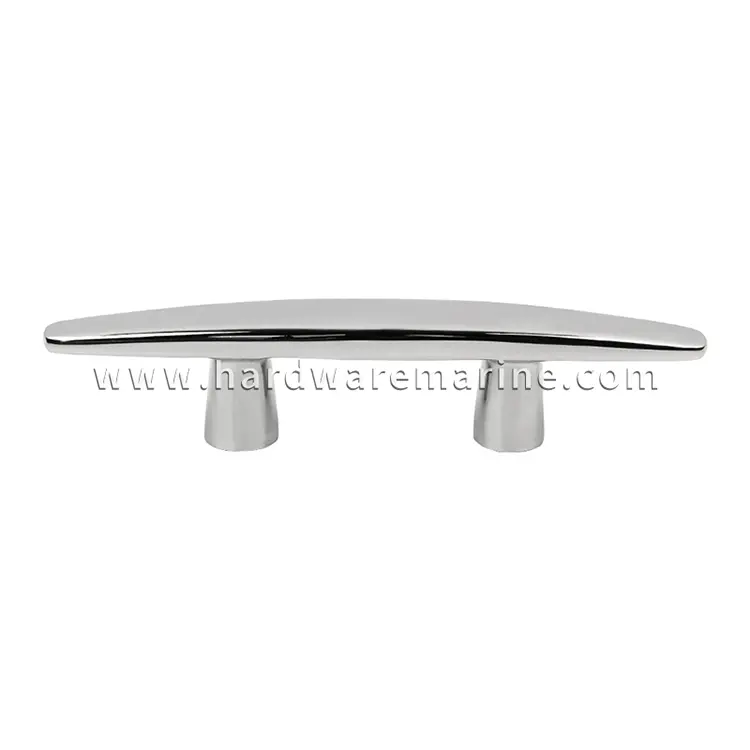
What does “316 stainless steel” really mean for you at the dock? It’s the difference between polishing a cleat once a year or replacing it every three. It’s the subtle confidence when you see a tiny scratch on the surface—in 316, that scratch won’t blossom into a pit of red rust because the material forms a self-repairing chromium oxide layer. This cleat is also resistant to the mild acids found in rainwater and airborne pollutants, so even in urban harbors or industrial waterways, it retains its mirror polish or satin finish far longer than plated brass or lower grades of stainless. For commercial vessels, charter fleets, and anyone who simply doesn’t have time for constant maintenance, that longevity translates to a lower total cost of ownership.
While the emotional appeal of reliability is compelling, hard numbers often make the decision. Below are the measured specifications for the standard 8-inch open base cleat from Shandong Power Industry and Trade Co., Ltd. (other sizes are available, sharing the same material and design philosophy).
| Parameter | Value |
|---|---|
| Overall Length (A) | 8 inches (203 mm) |
| Width (B) | 2-1/4 inches (57 mm) |
| Height (C) | 1-3/4 inches (44 mm) |
| Fastening Hole Diameter | 3/8 inch (9.5 mm) for each of 2 holes |
| Material | Solid 316 stainless steel, precision cast |
| Finish | High polish (mirror) or satin brushed |
| Safe Working Load (SWL) | 2,200 lbs (1,000 kg) vertical pull |
| Breaking Strength | 8,800 lbs (4,000 kg) minimum |
| Corrosion Resistance | Passivated 316, salt spray tested per ASTM B117 |
| Base Plate Thickness | 0.31 inch (8 mm) solid |
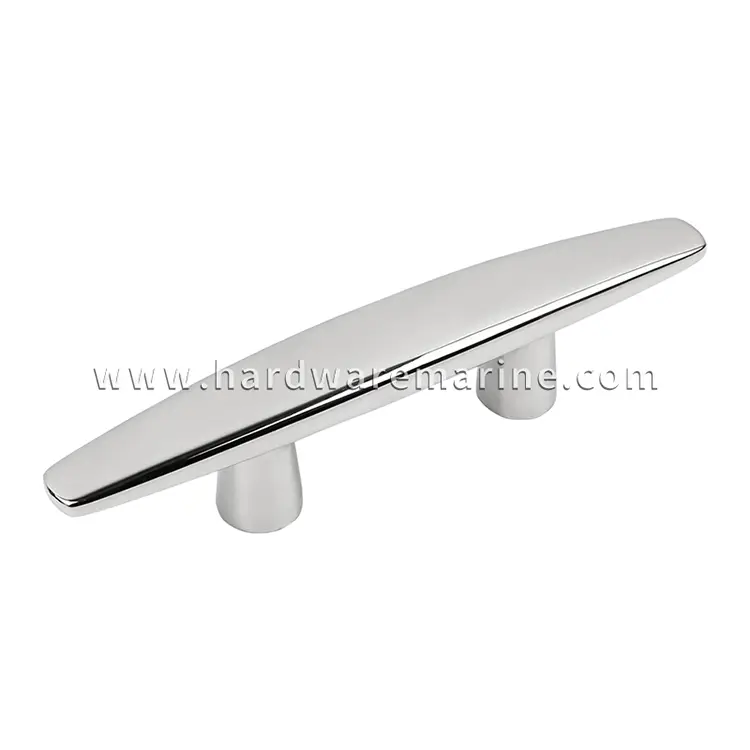
These numbers matter when you’re caught off guard. The safe working load of over a ton means you can confidently use this cleat for spring lines, breast lines, or even as a temporary tow point in an emergency. The breaking strength far exceeds what most recreational boats will ever impose, which is a deliberate safety factor. Marine hardware is not the place to trim margins.
The obvious answer is any boat owner, but let’s be specific. If you own a center console fishing boat that lives on a lift, you need cleats that won’t crumble from constant salt spray and UV. If you have a classic cruiser or a modern sailing yacht, the cleat’s polished finish complements your brightwork and stainless rails, while its reliable function protects your investment. Owners of pontoons, rigid inflatable boats, and even smaller runabouts find that upgrading to 316 Stainless Steel Heavy Duty Open Base Marine Cleats eliminates the annual ritual of touching up rust spots or retightening bolts that have eaten away at the deck. Dock masters and marina operators who are specifying hardware for finger piers and main walkways choose this design because the open base reduces standing water, keeping the dock surface drier and safer underfoot.
There’s also the discerning DIY boat builder, the person who’s spent hundreds of hours fairing a hull and carefully laying teak decking. That builder knows that hardware is jewelry for a boat. A beautifully cast, hand-polished 316 cleat from Shandong Power Industry and Trade Co., Ltd. doesn’t just hold a line—it announces to the world that this vessel is cared for down to the last fastener.
There’s a subtle shift in your relationship with your boat when you replace key hardware with something you truly trust. The anxiety that hummed in the background during gusty nights at anchor fades. You start inviting friends and family aboard with more ease because you know the cleats will look as good as they perform. There’s pride, too. When a neighboring skipper leans over and asks where you found such substantial cleats, you can share the story of how you researched the metal grade, the casting quality, and the brand behind it. That quiet pride is a form of self-respect—an affirmation that you chose the path of fewer compromises.
Moreover, for liveaboards and long-distance cruisers, security is emotional. The cleat becomes a touchstone in the daily rhythm of life afloat. Tying up after a passage, the click of the line over the horn, the snug set of the hitch—these small rituals gain weight when the hardware is trustworthy. It’s a home on the water, and every detail matters.
Walk through any chandlery and you’ll see a wall of cleats. Most are either cheap zinc-alloy castings with a thin chrome veneer, or 304 stainless that’s fine for freshwater but a gamble in the ocean. The 316 Stainless Steel Heavy Duty Open Base Marine Cleat differs in several important ways:
Shandong Power Industry and Trade Co., Ltd. maintains strict quality control over every batch. Random samples are dimensionally checked, load tested to destruction, and subjected to salt spray chambers far beyond what any normal marine environment dishes out. This commitment to integrity is why commercial fleets and naval architects repeatedly specify their hardware for demanding projects.
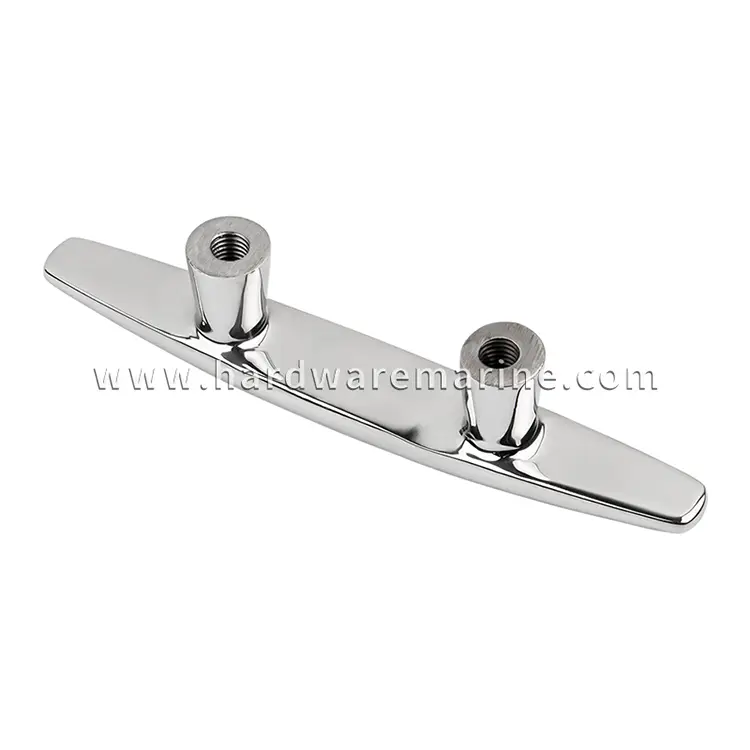
Mounting the cleat is straightforward for anyone comfortable with basic drilling and sealing. The open base requires through-bolting with a backing plate (recommended) or at minimum large fender washers on the underside of the deck. Because the base is flat and true, it beds evenly on a thin layer of marine sealant. Two 3/8-inch stainless bolts do the job, but the holes will accommodate up to 1/2-inch bolts if you want even more shear strength on a heavy vessel. Many installers choose to counterbore and plug for a pristine, flush look on a wood deck, while on fiberglass, a simple bed of polysulfide or polyether sealant ensures no water intrusion.
For those replacing older cleats with different hole spacing, the generous length of 8 inches often covers the old footprint. But if your existing center-to-center distance differs, the company offers additional sizes upon request, all built to the same heavy-duty standards.
The beauty of a well-made cleat is that it’s not limited to one job. Certainly, it secures your boat to a dock, but it also serves as an anchoring point for a stern anchor line when you’re set up on a beach. It can handle a tow bridle when you need to move a disabled boat. Fishermen often use the forward cleats to rig outriggers or secure a trolling harness. In each of these scenarios, the load angle varies dramatically. The solid 316 stainless and robust mounting scheme shrug off off-axis pulls that would crack brittle cast iron or bend thin stamped steel. The open base design further ensures that no matter which direction the strain comes from, the cleat maintains its integrity.
Will the polished finish show scratches easily, and how do I maintain it?
Like any polished metal, a mirror-finish 316 stainless cleat can develop fine swirl marks over time from contact with ropes and fenders. However, these are cosmetic and do not affect strength. Maintenance is refreshingly simple: wash with mild soap and fresh water, then dry. If you desire a flawless mirror sheen, occasional hand buffing with a quality stainless polish and a microfiber cloth restores the original brilliance in minutes. The metal itself will never flake, peel, or rust through.
Is the cleat suitable for saltwater moorings that stay submerged part of the time?
Absolutely. 316 stainless is the gold standard for submerged and salt-splash environments. The open base design adds an extra layer of protection by allowing the metal to fully dry between tides, which prevents the biofilm buildup that can lead to crevice corrosion even on lower-grade stainless. For permanently submerged installations, periodic inspection is wise, but thousands of these cleats serve on floating docks and mooring buoys without issue.
How does the open base compare to a closed base when it comes to strength?
Some people worry that an open base might be less rigid than a solid flat base. In reality, the arched feet distribute the load directly to the edges of the base, which is where the fasteners are. A closed base would only add unnecessary material in the middle where it does little structural work but would trap water. Finite element analysis and real-world load tests confirm that this design meets or exceeds the pull strength of closed-base models of similar size, while offering superior longevity.
Will the cleat work on a tin boat or aluminum deck without creating galvanic corrosion?
When dissimilar metals are in contact in an electrolyte (like seawater), galvanic action can occur. Stainless steel is more noble than aluminum. However, by isolating the cleat with a plastic or nylon isolation pad and using stainless bolts with nylon washers, direct electrical contact is prevented. Proper installation with sealant also helps. Many aluminum boat owners use 316 cleats successfully for decades following these precautions.
What if the rope size I use is much smaller or larger than typical?
The cleat’s horn profile and generous opening accommodate a wide range of line diameters, from 3/8-inch (10 mm) double braid up to 3/4-inch (19 mm) three-strand. For very small lines, simply ensure you take enough turns to fill the space so the hitch doesn’t jam. For larger lines, the long horns allow a full figure-eight pattern followed by a secure hitch. The flared tips prevent the line from riding up and off, even with a heavy surge.
Can I get this cleat in a satin or brushed finish instead of polished?
Yes, Shandong Power Industry and Trade Co., Ltd. offers both high-polish mirror and attractive brushed satin finishes. The satin version is popular on commercial vessels and modern designs where reduced glare is desired. Both finishes share the same corrosion resistance and durability.
Every time you reach down to clear a line or make fast for the night, the hardware under your fingers tells a story. With a solid piece of 316 stainless crafted by a team that understands the sea’s demands, that story is one of unwavering reliability. The tide will keep rising and falling, weather will come and go, but your cleat will simply be there—straight, strong, and ready for the next adventure. Choose the 316 Stainless Steel Heavy Duty Open Base Marine Cleat and feel the confidence that comes from real quality, delivered by Shandong Power Industry and Trade Co., Ltd.


