
Marine Anchor,Boat Bollard,Thru-Hull,Boat Cleat,Boat Seat,R&D Customized Marine Products,Seawater Strainers,Pull Rings,Marine Steering Wheel,Deck Filler,Pipe Stanchion,Hinge,BIMINI Fitting,Bow Chock,Boat Anchor Roller,Marine Ladder,Fishing Rod Holder,Deck Plate,Antenna Base,Cockpit Drain,Turning Lock,OEM/ODM Marine Hardware,Chain Stopper,Anchor Connector,Tank Vent,Boat Anchor,Copper Plated Marine Hardware,Brass Bronze Parts,Anchor Chain


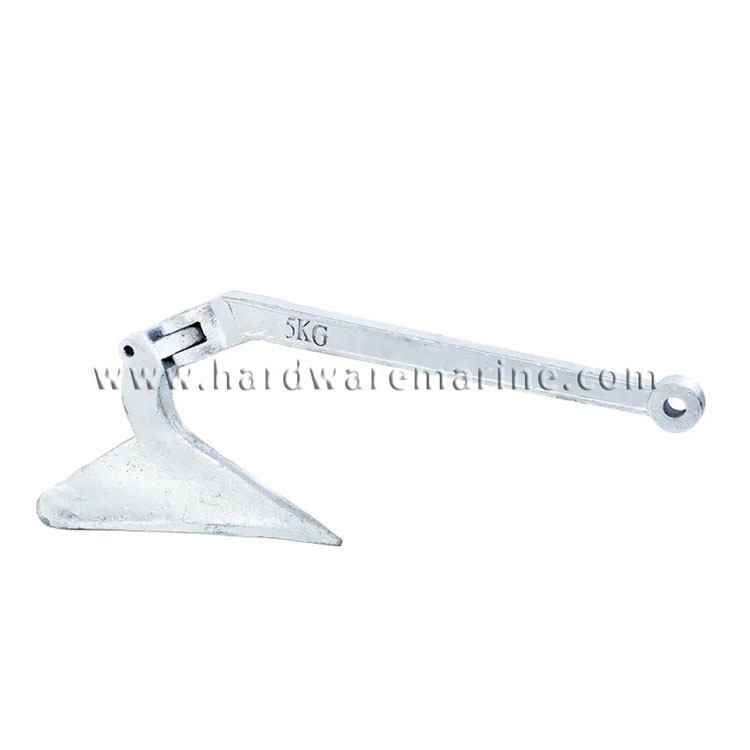
When the sea turns restless and the wind picks up without warning, the one piece of equipment standing between a secure hold and a slow drift into danger is the anchor. For sailors, fishermen, and weekend cruisers alike, nothing matters more than knowing the vessel will stay exactly where it was set. The Hot Dip Galvanized Plough Anchor from Shandong Power Industry and Trade Co., Ltd. is built for that exact moment — when reliability is not a preference but a necessity. Designed to bite into seabeds of every texture and hold firm under shifting loads, this anchor combines rugged materials, smart engineering, and a protective finish that shrugs off salt, sand, and time. Whether you are equipping a small fishing skiff, a family cruising yacht, or a commercial workboat, this is the kind of hardware that earns trust on the first deployment and keeps earning it for years.
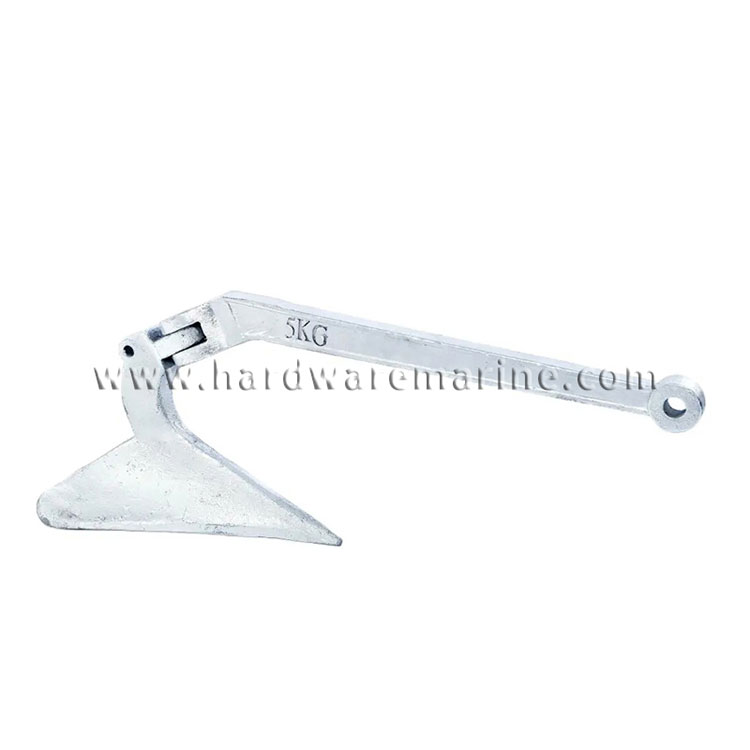
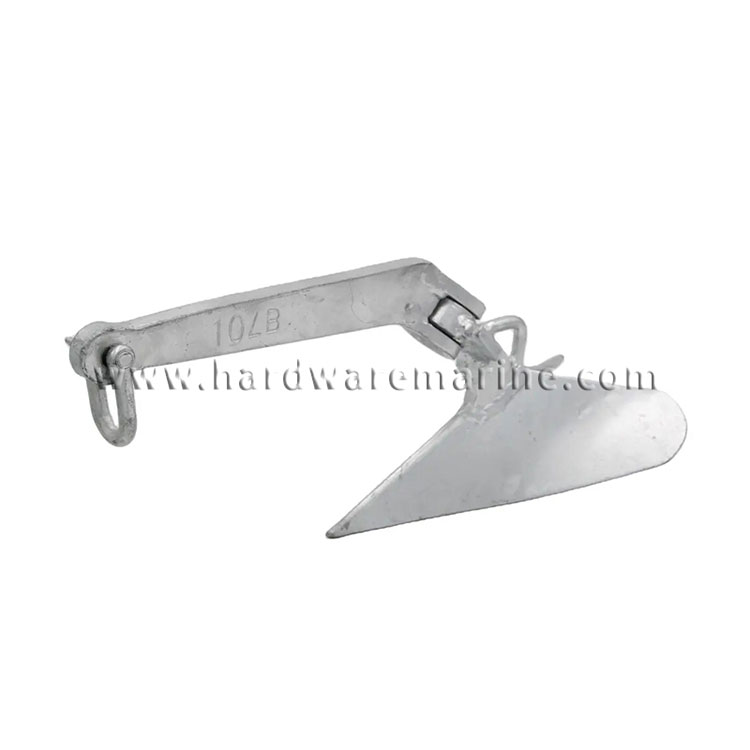
What makes a plough anchor so widely respected is the way it mimics the action of a farmer's plough slicing into soil. The weighted tip drives downward as soon as it touches bottom, and the broad fluke area rotates to find its set. Unlike flat anchors that skip across hard sand or claw types that can clog in thick mud, the plough shape cuts through surface debris and buries itself deep, creating a hold that resets automatically if the boat swings with tide or wind. The Hot Dip Galvanized Plough Anchor takes this proven geometry and elevates it with a finish that protects every weld, edge, and surface from the corrosive marine environment.
Shandong Power Industry and Trade Co., Ltd. has spent years refining marine anchoring solutions for customers across the globe. Every Hot Dip Galvanized Plough Anchor leaving the factory passes through strict dimensional checks, weld inspections, and coating thickness tests before it is packed for shipment. The result is a product that not only meets common marine standards but often exceeds the expectations of professional skippers who depend on their ground tackle day after day.
Many anchors promise holding power, but the real test comes when conditions turn ugly. A sudden squall can swing the boat 180 degrees in seconds, pulling the anchor sideways. Cheaper designs often pop free and skip, forcing a reset at the worst possible moment. The plough anchor’s shape solves this by staying buried during rotation. The shank is attached to the fluke at an optimized angle, so lateral loads force the tip deeper rather than prying it loose. This self-burying behavior is invaluable for overnight anchoring, unattended moorings, or situations where quick re-anchoring is impossible.
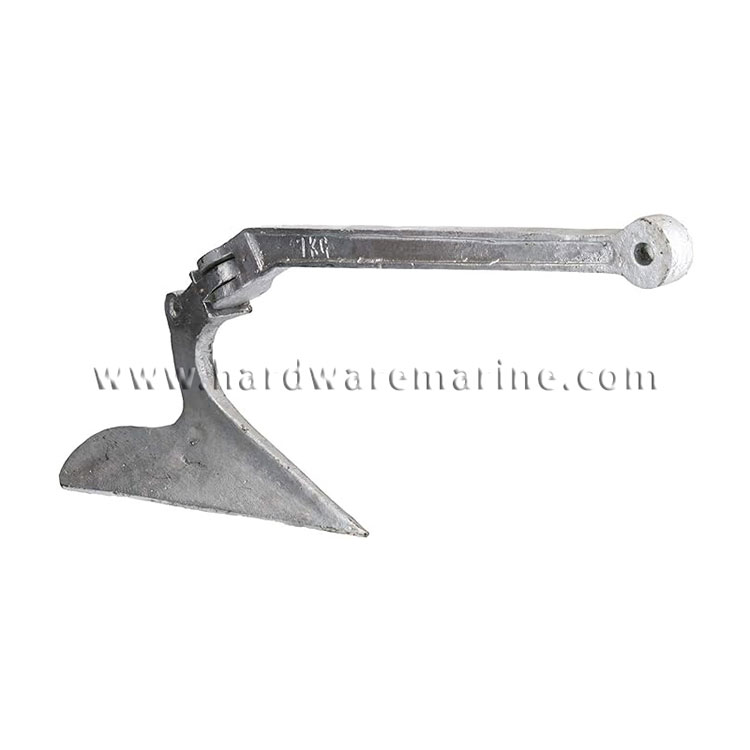
The Hot Dip Galvanized Plough Anchor uses a one-piece forged or cast steel body in most models, eliminating weak points where separate parts might loosen or fail. The shank runs solidly into the fluke, and the leading edge is sharpened enough to penetrate packed sand, clay, gravel, and even light weed. Once set, the broad surface area spreads the load across a large wedge of seabed, giving exceptional grip-to-weight performance. A lighter anchor can therefore hold a heavier boat, which means less weight on the bow roller and easier manual handling.
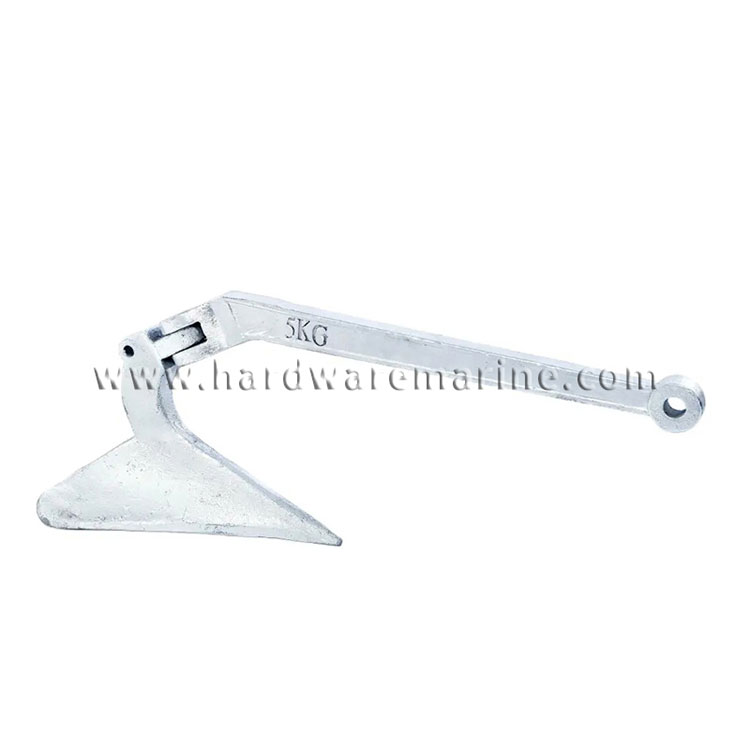
Unlike Danforth or fluke anchors that rely on long, thin plates, the plough shape has no protruding parts that can bend under extreme load. The compact, streamlined profile also stows well on bow rollers, in anchor lockers, or on deck brackets. There are no sharp corners to snag fishing lines or bruise toes, and the balanced weight makes it easier to launch and retrieve by hand when no windlass is available.
Saltwater is merciless. Bare steel left in a marine environment can lose structural integrity within a single season, developing rust blooms that weaken the metal and stain the deck. Powder coating looks nice in a showroom but chips easily when dragged over rocks, leaving exposed steel ready to corrode. The Hot Dip Galvanized Plough Anchor from Shandong Power Industry and Trade Co., Ltd. uses a different approach: the entire anchor is dipped into molten zinc at around 450°C, forming a metallurgical bond with the steel. This creates a thick, uniform coating that cannot peel like paint because it becomes part of the outer layer of the metal itself.
That zinc layer does two jobs. First, it acts as a physical barrier, isolating the steel from moisture and oxygen. Second, it provides sacrificial protection — if the coating is scratched or gouged down to bare steel, the surrounding zinc corrodes preferentially, protecting the damaged spot from rust. This means a Hot Dip Galvanized Plough Anchor can suffer real-world abuse: dragging across gravel, bouncing in a locker, scraping against a rocky bottom — and still keep its protective integrity for a decade or more.
The galvanized surface also has a practical advantage in handling. It is not slick like polished stainless, so wet hands maintain a better grip. The matte silver-gray finish reflects heat, keeping the anchor cooler on sunny decks, and it does not require touch-up paint after every trip. Rinse it with fresh water when convenient, and it is ready for the next launch.
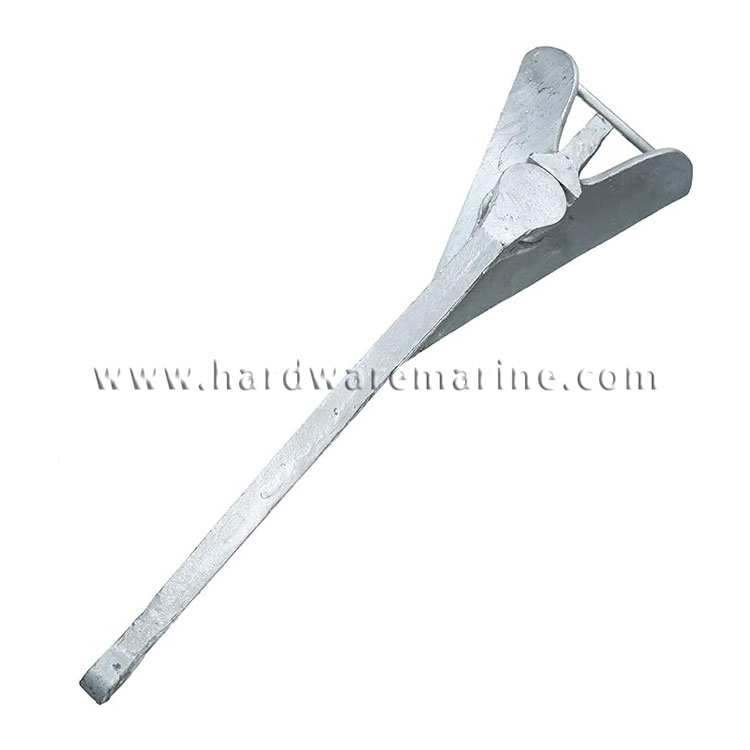
Different cruising grounds demand different anchoring strategies. Soft Chesapeake mud, hard-packed Caribbean sand, weedy New England coves, gravelly Pacific Northwest bottoms — the same boat often encounters all of them in a single season. Carrying three specialized anchors is expensive and crowded. A plough anchor is widely considered the best all-round compromise because its geometry adapts well to varied substrates. It penetrates soft bottoms quickly, finds enough grip in hard sand, and its weight helps it push through moderate weed where lighter designs fail to set.
The Hot Dip Galvanized Plough Anchor takes this adaptability further with carefully chosen fluke angles and tip geometry. The toe is not so blunt that it skates over hard ground, and not so sharp that it dives too quickly in soft mud, which could cause clogging around the shank. The result is a predictable, reliable set across a wide spectrum of bottom types. For boaters who cruise unfamiliar waters and do not have time to test the bottom composition before every anchorage, this predictability is worth more than any single specialized anchor.
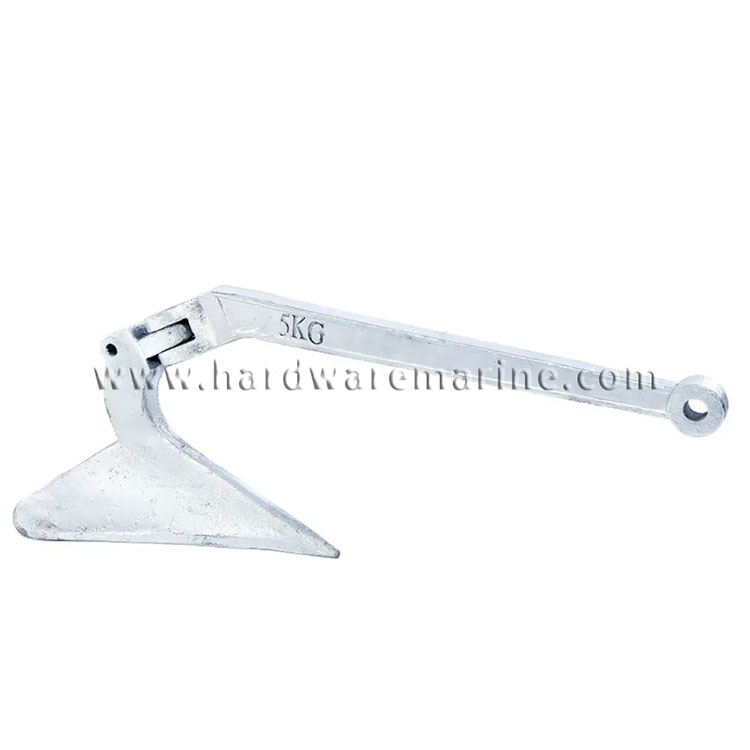
Choosing the correct anchor size is critical. Too small, and the boat drags in a moderate breeze. Too large, and the bow roller groans under the weight, making handling difficult. The table below offers a practical guide based on boat length and typical displacement. Shandong Power Industry and Trade Co., Ltd. manufactures the Hot Dip Galvanized Plough Anchor in a wide range of weights and dimensions, so there is a match for nearly every vessel type. All values are approximate and intended for normal anchoring conditions in winds up to 30 knots; for storm conditions or exposed anchorages, select one size up.
| Model | Nominal Weight (kg) | Overall Length (mm) | Fluke Width (mm) | Recommended Boat Length | Typical Bottom Types |
|---|---|---|---|---|---|
| PA-6 | 6 | 610 | 330 | Up to 6 m / 20 ft | Sand, mud, clay |
| PA-10 | 10 | 760 | 410 | 6–8 m / 20–26 ft | Sand, mud, light weed |
| PA-15 | 15 | 900 | 490 | 8–10 m / 26–33 ft | Mixed, gravel, weed |
| PA-20 | 20 | 1020 | 555 | 10–12 m / 33–39 ft | Hard sand, mixed |
| PA-25 | 25 | 1130 | 615 | 12–14 m / 39–46 ft | All round |
| PA-35 | 35 | 1310 | 715 | 14–16 m / 46–52 ft | All round, heavy displacement |
| PA-50 | 50 | 1520 | 830 | 16–19 m / 52–62 ft | Commercial, workboats |
Each model is supplied with a matching galvanized shackle hole and clear marking of weight and manufacturer on the shank. The dimensions are designed to fit common bow roller configurations without modification on most vessels. If in doubt about sizing, always err on the side of a heavier anchor — the extra weight adds only a small penalty in handling but greatly increases holding reserve when the weather decides to test you.
The Hot Dip Galvanized Plough Anchor from Shandong Power Industry and Trade Co., Ltd. serves a remarkably broad audience. Weekend cruisers appreciate its all-around performance and low maintenance. Serious offshore sailors trust its ability to reset after a wind shift while they are asleep below. Commercial fishermen need an anchor that will not fail when they are working pots or lines in a tidal race. Charter boat operators want gear that survives constant use by different crews, including those who may not treat equipment gently. Even owners of small trailerable sailboats benefit because the plough shape stows neatly in a locker and does not require a dedicated roller.
Picture a family on a 30-foot cruising yacht anchored in a quiet bay. The parents have taken the dinghy ashore with the kids, leaving the boat unattended for several hours. A thermal breeze builds, swinging every boat in the anchorage. The plough anchor stays buried, the bow points into the new wind, and when the family returns, the boat is exactly where they left it. That is not luck — it is the deliberate result of a shape that refuses to let go.
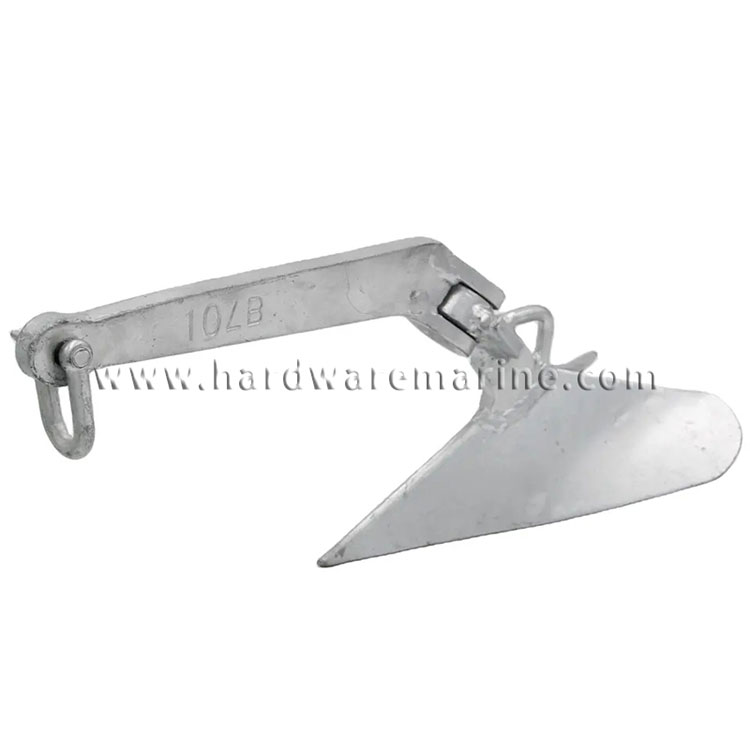
For commercial users, the calculations are different but the demands are higher. A workboat at anchor is often a platform for lifting, diving, or transferring cargo. Sudden movements of equipment can shock-load the anchor rode. A weak anchor may trip and drag, creating a hazard for crew and nearby vessels. The robust shank and deep-set fluke of this plough anchor absorb those shocks without breaking free. The hot dip galvanized finish also means the anchor survives repeated deployments onto rocky bottoms where lesser coatings would fail in months.
There is a deep, unspoken comfort in letting out the chain, feeling the anchor dig in, and knowing the boat has made peace with the bottom. That feeling changes the entire character of a voyage. Instead of waking every hour to check the GPS position, you sleep. Instead of shortening shore trips because you are worried about the boat swinging, you linger over dinner at the beach. The Hot Dip Galvanized Plough Anchor provides that peace of mind not through clever marketing but through honest, brute competence. It holds because it is heavy where it matters, sharp where it counts, and shaped to do one job exceptionally well.
Many boaters describe a turning point in their confidence after switching to a plough anchor from a lightweight alternative. The first night in a stiff breeze, they feel the gentle tug of the rode as the anchor resets during a shift, and in the morning they find the boat precisely where it was set. That moment creates a bond with the equipment. It becomes one of those pieces of gear you stop thinking about — and that is the highest praise any safety item can receive.
The galvanized coating also adds a quiet satisfaction. After a season of anchoring in salt water, the anchor comes up with only minor, superficial marks. A quick rinse and maybe a pass with a stiff brush, and it looks ready for years more. There is no rust bleeding onto the deck, no flaking paint to repair, no worry that hidden corrosion is eating away the steel from inside. Shandong Power Industry and Trade Co., Ltd. builds the Hot Dip Galvanized Plough Anchor to be forgotten in the best possible way — always there, always working, never demanding attention.
Understanding the differences between anchor types helps make an informed purchase. Danforth and fluke anchors are light, cheap, and hold well in soft mud and sand, but they struggle in hard bottom or weed because their thin flukes can skip or clog. They also perform poorly when the wind shifts, often pulling out and failing to reset. Bruce and claw anchors reset well and work in rock, but they are bulky, difficult to stow, and sometimes struggle to penetrate very hard sand. Mushroom anchors are only suitable for permanent moorings in soft mud and are useless for general anchoring. Folding grapnel anchors are convenient for small dinghies and recovering debris, but their holding power is limited and unreliable.
The plough anchor occupies a sweet spot. It is not the lightest, but it is among the most dependable across the broadest range of bottom types. It resets during wind shifts better than a Danforth. It penetrates hard sand more reliably than a Bruce. It stows more neatly than a bulky claw. It handles weed better than a fluke. The Hot Dip Galvanized Plough Anchor from Shandong Power Industry and Trade Co., Ltd. combines these advantages with a protective coating that keeps it functional far longer than painted or raw steel alternatives. When you add up purchase price, maintenance time, and replacement costs over ten years, this anchor often turns out to be the most economical choice, not just the most capable.
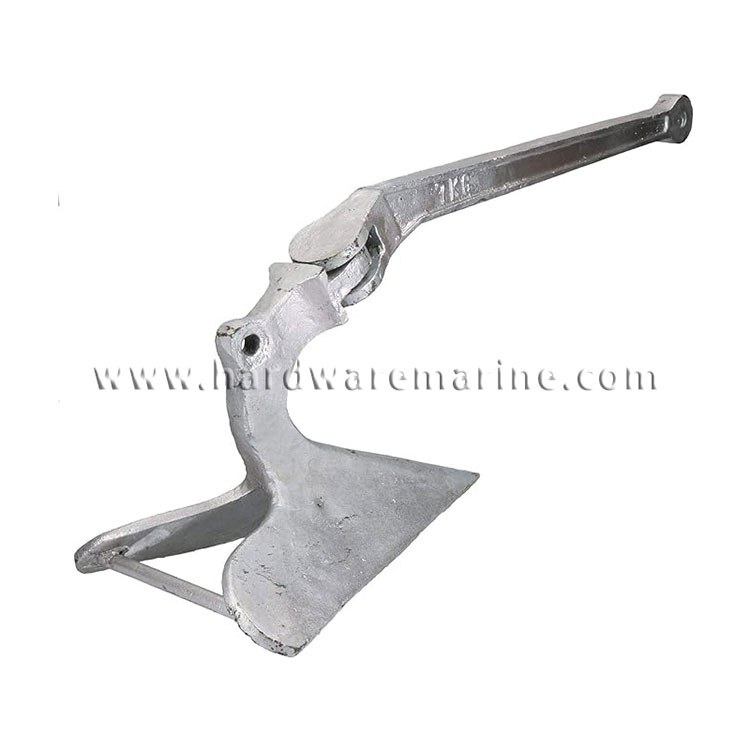
Shandong Power Industry and Trade Co., Ltd. does not just cast metal and ship it. Every Hot Dip Galvanized Plough Anchor is subjected to a series of checks before it earns the company’s stamp. The raw steel is verified for composition and tensile strength. After forming and welding, each anchor is visually inspected for cracks, porosity, and dimensional accuracy. A sample from every production batch undergoes destructive testing to confirm the weld strength exceeds the expected loads by a wide margin. The hot dip galvanizing process is monitored for zinc bath temperature and immersion time, and coating thickness is measured at multiple points to ensure it meets international standards such as ASTM A153.
This rigorous approach means a product that behaves consistently. A customer in Norway and a customer in Australia will receive anchors that perform within the same parameters. The shank angle is consistent, the tip sharpness is uniform, and the galvanized layer is thick enough to survive years of hard use. For marine professionals who build their reputations on reliability, that consistency is non-negotiable.
Mounting the Hot Dip Galvanized Plough Anchor is straightforward. It fits most standard bow rollers designed for plough or CQR-type anchors. The shackle attaches through the hole at the top of the shank, and a short length of chain — typically at least the length of the boat — should be connected between the anchor and the rope or all-chain rode. The chain adds weight near the anchor, keeping the shank low and encouraging the tip to dig rather than lift. When deploying, lower the anchor to the bottom slowly, then pay out rode as the boat drifts back. Allow at least 3:1 scope for calm conditions and 5:1 to 7:1 scope for wind or waves. Once the desired scope is out, snub the line and gently reverse the engine to set the anchor. A properly set plough anchor will stop the boat with a firm, steady pull rather than a jerky drag.
Retrieval is equally simple. Motor forward while taking in the rode, and the anchor will break free when the shank is directly above it. The compact shape prevents it from tangling with bow gear, and the balanced weight makes it swing cleanly into the roller. Rinse with fresh water after use in salt water, and occasionally inspect the galvanized coating for deep gouges. If any bare steel is exposed, a spray-on cold galvanizing compound can touch up the spot, though the sacrificial zinc usually prevents rust anyway.
How do I know what size anchor to choose for my boat?
Start with the manufacturer’s recommended range, which is based on boat length and displacement. For a typical cruising monohull, a 10 kg plough anchor suits boats up to about 8 metres, while a 15 kg model covers 8–10 metres. If your boat is heavy for its length, you often anchor in strong tides, or you plan to leave the boat unattended frequently, choose one size larger. The penalty in extra weight is small compared to the cost of dragging. When in doubt, speak to a marine equipment specialist or consult the table above for a baseline.
Will this anchor reset itself if the wind changes direction during the night?
Yes, this is one of the plough design’s greatest strengths. When the boat swings with a wind or tide shift, the load on the anchor changes direction. Instead of pulling the anchor out, the sideways force causes the fluke to rotate within the seabed and bury itself in the new direction. The anchor remains set through most shifts of 180 degrees or more. In rare cases of very soft mud or loose sand, a short drag may occur before resetting, but this is usually only a few centimetres. Using adequate scope and a length of chain helps ensure a smooth reset.
Is the hot dip galvanized coating really better than painted or epoxy finishes?
For marine use, hot dip galvanizing is widely considered the most durable and practical finish. Unlike paint or epoxy, which sit on the surface and can chip away, the zinc bonds chemically with the steel. Even if the coating is scratched down to bare metal, the surrounding zinc corrodes first and protects the exposed area. This sacrificial protection means the anchor can withstand years of rock contact, sand abrasion, and general abuse without rusting through. Powder coating and paint look attractive initially but fail quickly once chipped, leaving exposed steel that corrodes rapidly.
What bottom types is this anchor suitable for?
The plough anchor performs well in sand, mud, clay, gravel, and moderate weed. In soft mud, the broad fluke area prevents excessive sinking, while in hard sand the weight and sharp tip allow penetration. It is not ideal for very rocky or coral bottoms because no anchor can reliably set in solid rock; in those conditions, boaters often use a grapnel or rely on mooring balls. For mixed cruising where you encounter several bottom types in one trip, the plough is the best all-round choice.
How long will a Hot Dip Galvanized Plough Anchor last in saltwater?
With normal use and basic maintenance, these anchors commonly last 10 to 20 years or more. The hot dip galvanized layer is thick, typically 70–100 microns, which is far greater than electroplated coatings. The galvanized finish does slowly wear down over decades of repeated deployment, especially if dragged across abrasive rock frequently. However, because the protection is sacrificial, the anchor remains structurally sound even after the zinc layer begins to thin. Many owners report their plough anchors outlasting two or three boats.
Can I use this anchor with an all-rope rode or do I need chain?
Chain is strongly recommended and should be used between the anchor and any rope rode. A length of chain equal to the boat’s length is a common minimum, with more chain in deeper water or stronger conditions. The chain’s weight holds the shank near the bottom, allowing the tip to dig in rather than being lifted by wave action. All-chain rodes are even better for heavy weather but cost more and require a windlass on larger boats. At least 5–10 metres of chain is advisable even for small vessels.
Will this anchor fit my existing bow roller?
Most plough anchors are designed to fit standard bow rollers built for CQR or plough shapes. The shank is straight and tapers slightly, and the fluke sits compactly against the roller. Check the roller width against the fluke width listed in the specifications. Because the anchor has no protruding side plates or wide wings, it fits more rollers than a Bruce or Danforth. If your roller is unusually narrow, a smaller model or a different mounting bracket may be required.
What kind of maintenance is required after each trip?
Minimal. Rinse the anchor with fresh water after use in saltwater to remove salt crystals and sand. Let it dry before stowing if possible. Once or twice a season, inspect the galvanized coating for deep scratches that expose bare steel. If any are found, a quick spray with cold galvanizing zinc paint from a hardware store will restore protection. Check the shackle and connecting hardware for wear and replace as needed. No painting, sanding, or specialized care is required.
Behind every reliable anchor is a company that takes pride in its work. Shandong Power Industry and Trade Co., Ltd. is not a faceless trading operation. The company specializes in marine hardware and industrial products, with a focus on durable, high-performance anchoring solutions. Their engineers study real-world anchoring failures and continuously refine designs to eliminate weak points. The Hot Dip Galvanized Plough Anchor is one of their signature products, exported to marinas, chandleries, and commercial fleets around the world.
What sets this manufacturer apart is their willingness to stand behind the product. Each anchor is marked with the company name and weight, so there is no confusion about the source. Their quality control team performs random batch testing and maintains detailed records for traceability. If a customer reports an issue, the company investigates thoroughly and works to make it right. That level of accountability is rare in the marine hardware industry and gives buyers confidence that they are purchasing more than just a piece of shaped steel — they are buying a relationship with a team that cares about their safety at sea.
Imagine a solo sailor reaching a new anchorage after a long passage, tired and ready for rest. The sun is already low, and the bottom is unfamiliar. With a lesser anchor, the sailor might spend an hour testing the bottom, re-anchoring, and worrying. With the Hot Dip Galvanized Plough Anchor, the process is simple: drop it, pay out chain, back down once, and feel the anchor set solid. Ten minutes later, the cabin light is glowing and dinner is on the stove. That saved time and reduced stress is the product’s real value.
Consider a commercial crab fisherman working in a strong tidal inlet. The boat must stay precisely over a string of pots while the crew hauls gear. Any drag means lost time and tangled lines. The plough anchor’s deep set and quick reset mean the boat stays on station even when the tide reverses. The galvanized coating shrugs off the constant salt spray and occasional scrape against the gunwale. At the end of the season, the anchor still looks and performs like new, ready for the next year’s work.
Think of a family with a small pocket cruiser exploring a lake that has a mix of sandbars and weedy patches. The kids want to swim from a sandbar, but the boat must stay put. The plough anchor bites into the sandy edge and holds through the afternoon breeze. When a thunderstorm rolls in, the boat swings but does not drag. The family gets back aboard safely, and the anchor comes up cleanly with a firm pull. The day ends with tired, happy children and one less thing to worry about.
An anchor is not a place to cut corners. It is an insurance policy that works silently while you sleep, swim, or work. The Hot Dip Galvanized Plough Anchor from Shandong Power Industry and Trade Co., Ltd. represents a sensible balance of performance, durability, and value. It does not rely on gimmicks or unproven materials. It uses a time-tested shape, heavy-duty steel, and a protective coating that has proven itself in marine environments for over a century.
When you compare the cost of a drag incident — scratched hull, damaged rudder, tangled mooring, or worse — the price of a quality anchor seems small. This plough anchor will not need to be replaced every few seasons. It will not fail when the forecast turns ugly. It will simply do its job, trip after trip, year after year. That is the quiet promise Shandong Power Industry and Trade Co., Ltd. makes with every Hot Dip Galvanized Plough Anchor, and it is a promise they have kept for customers on every ocean.
