Imagine the quiet confidence of knowing your lines will hold fast, no matter what the sea decides to throw at you. On deck, every second counts, and a secure, reliable hold is non-negotiable. This isn't just hardware; it’s the trusty companion that keeps your vessel safe in a sudden squall or a gentle tide at the dock. When you reach for a cleat, you need immediate, unshakable grip without the fuss of threading or tying knots in the heat of the moment.
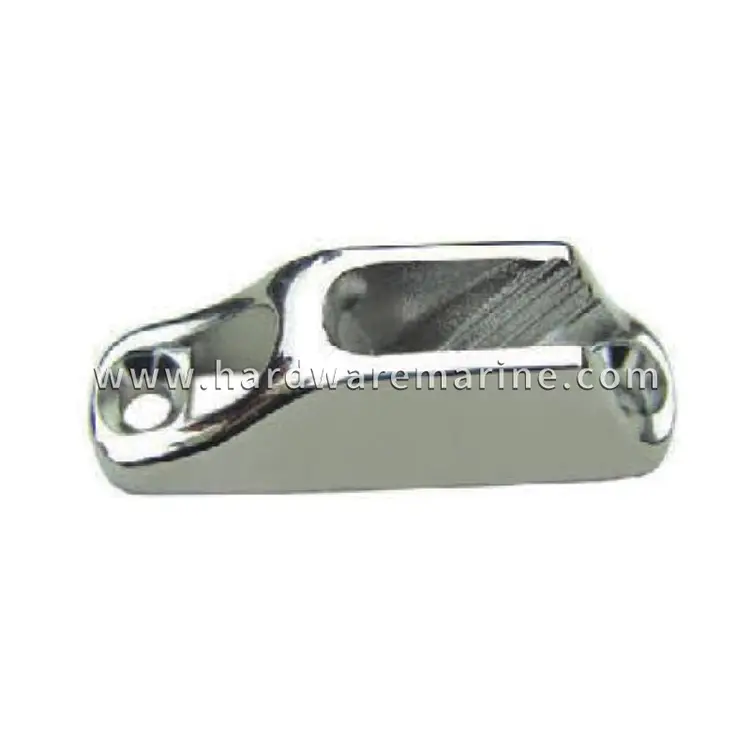
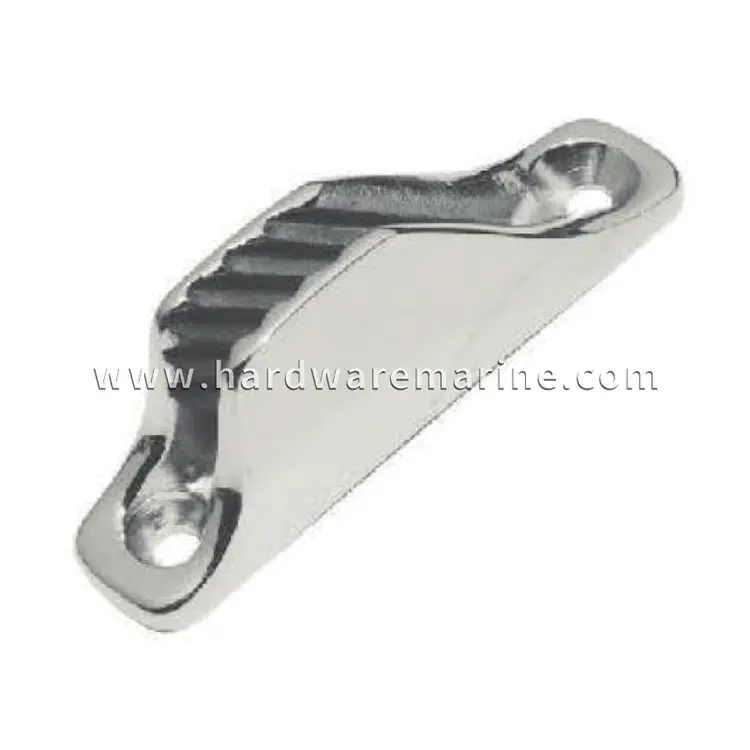
 316 Stainless Steel Marine Rope Clam Cleat holding a rope securely on a polished wooden deck">
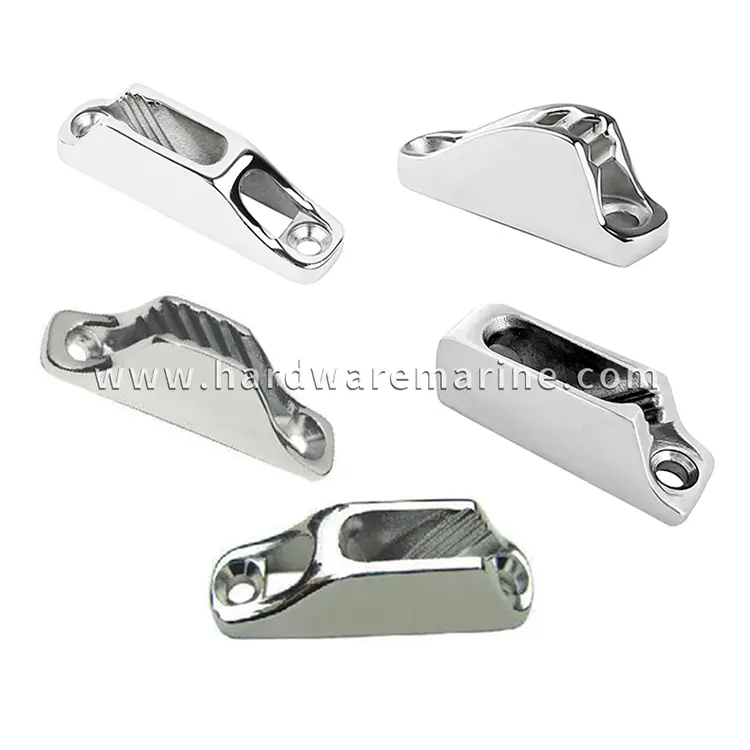
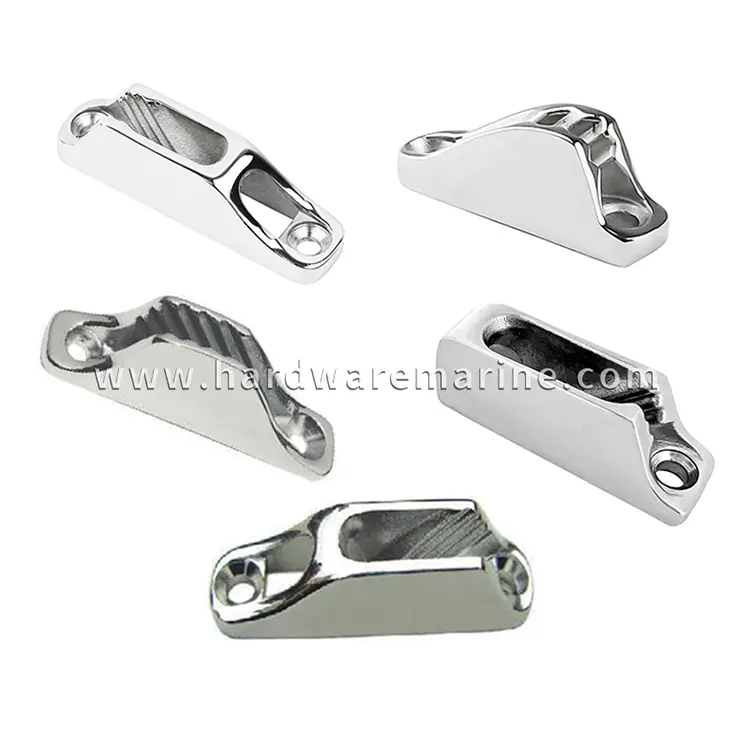
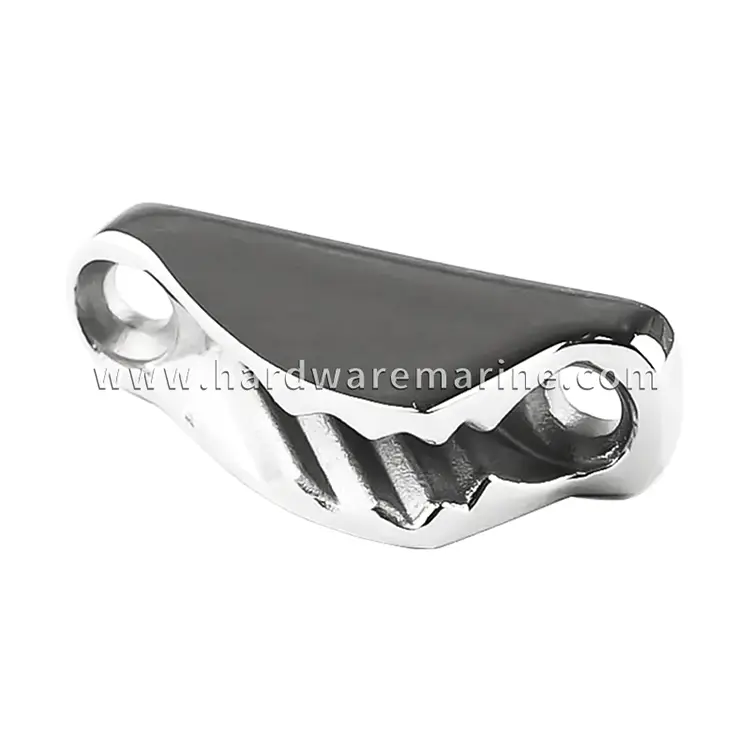
Meet the 316 Stainless Steel Marine Rope Clam Cleat, precision engineered by Shandong Power Industry and Trade Co., Ltd. to transform the way you secure lines. With just a swift pull, the rope slides into the self-locking jaws and grabs immediately. No slipping, no complicated maneuvers. It’s designed for sailors, anglers, and boaters who demand peak performance from their gear—because out there, compromise simply isn't an option.
The heart of this cleat lies in its premium 316 marine grade stainless steel construction. While standard cleats may pit and weaken under constant saltwater attack, this material is infused with molybdenum, giving it exceptional resistance to chlorides and corrosion. It stands up to endless cycles of spray, sun, and shock loads, emerging season after season with its polished gleam intact. You’ll spend more time on the water and less on maintenance, a promise backed by thousands of satisfied mariners.
Flawless Grip, Effortless Release
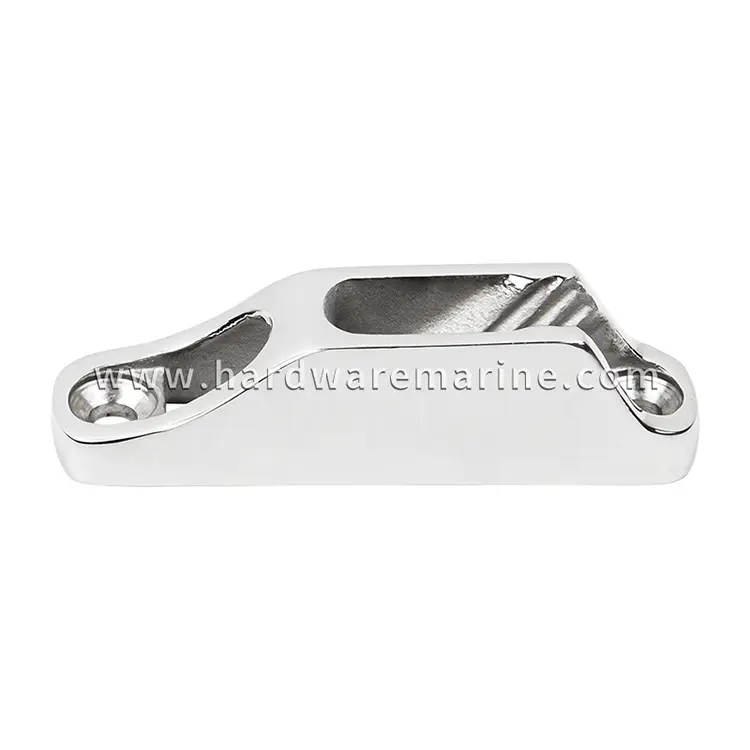
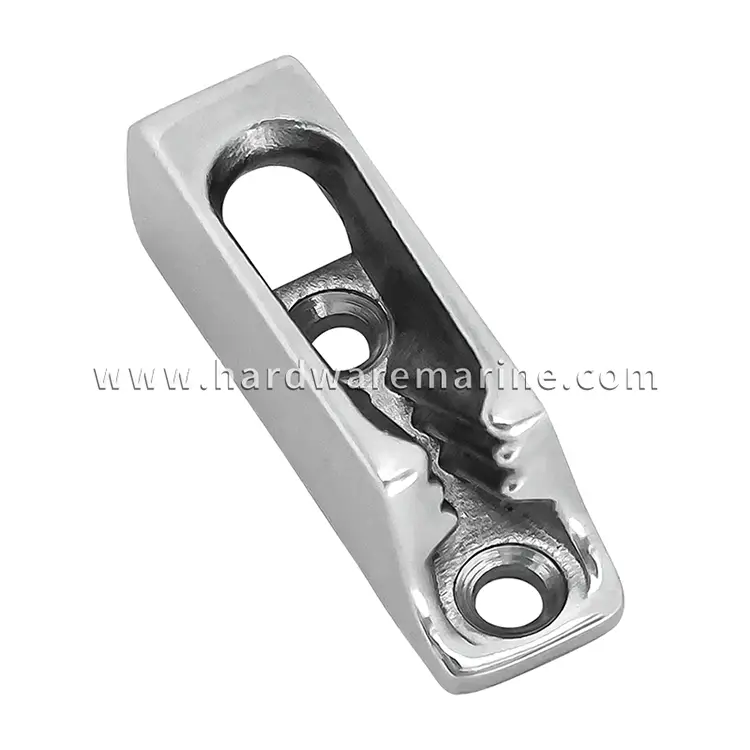
The secret behind this cleat’s legendary performance is the patented asymmetric tooth profile. Each V-shaped notch is calibrated to accept a specific range of line diameters from 1/8 inch to 5/8 inch, biting down with progressive tension as load increases. The rope glides in smoothly from the top but resists backward pull—no levers, no springs, just clever geometry that physics loves. When it’s time to cast off, a simple downward flick frees the line in a single motion. It’s so intuitive that even a novice crew member can operate it without instruction in the dark.
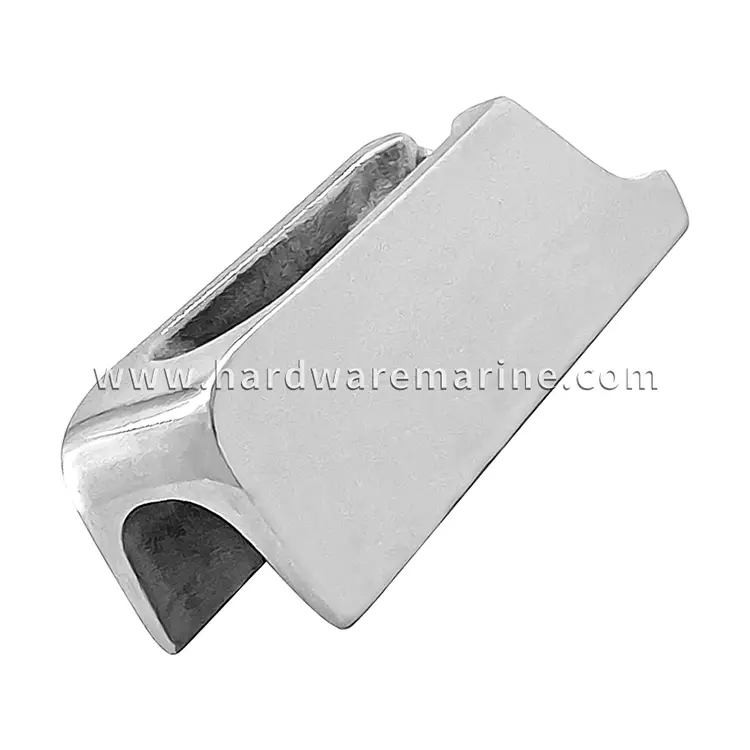
Shandong Power Industry and Trade Co., Ltd. applies a multi-stage electropolishing process that not only enhances the mirror-like luster but also passivates the surface at a molecular level. The result is a cleat that actively repels salt, grime, and oxidation. Run your finger along its edges—there are no sharp burrs, only rounded, rope-friendly contours that preserve your expensive braided lines from chafe and fray. This attention to detail stems from decades of marine manufacturing expertise, ensuring each unit leaving our facility meets the same exacting standards.
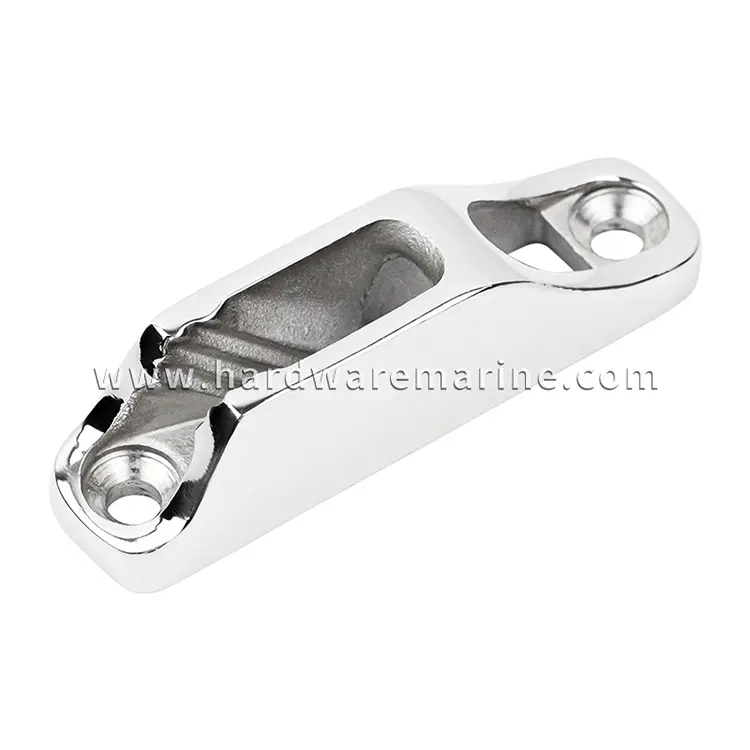
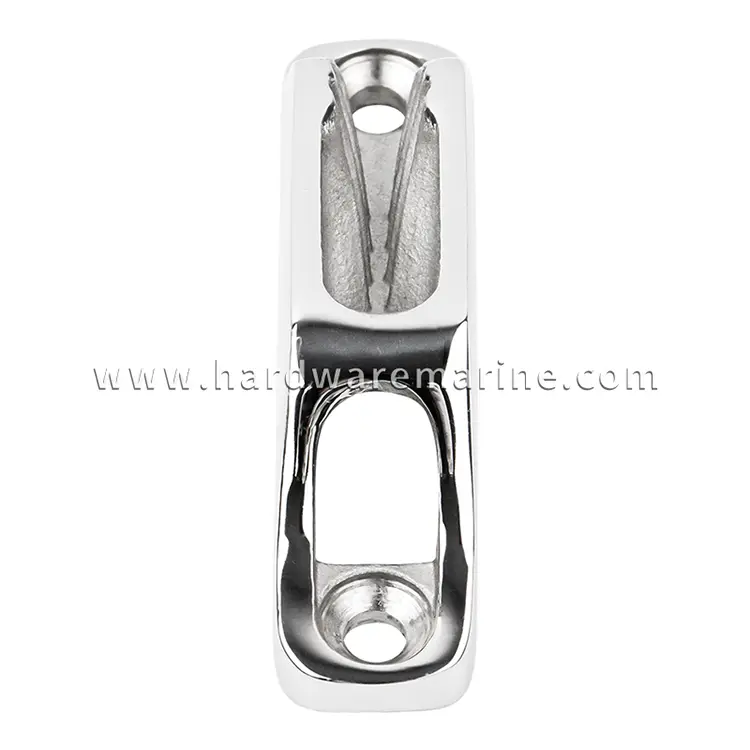
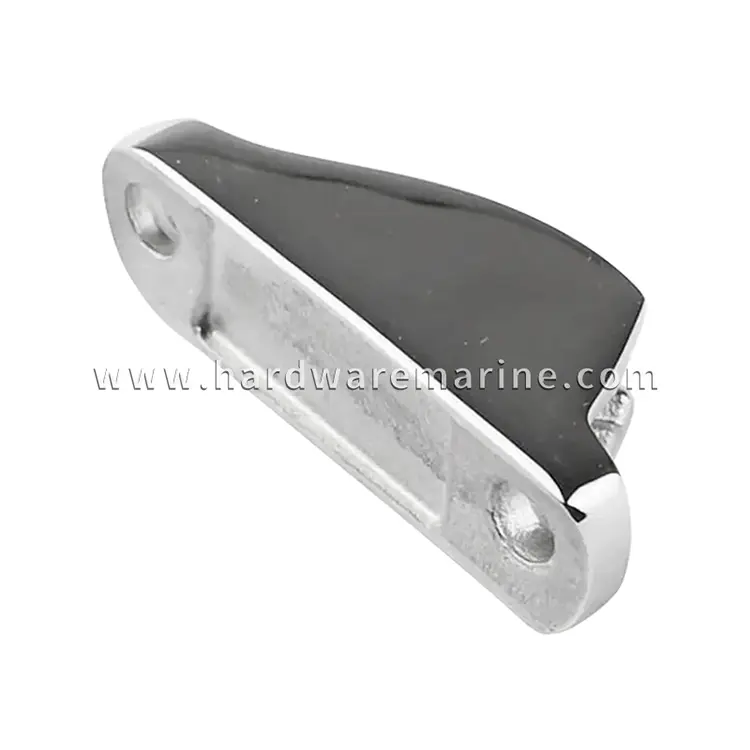
Installation is refreshingly simple. Two countersunk mounting holes accept standard fasteners (not included) and the flat base sits flush against any surface—fiberglass, wood, aluminum, or composite. A faint bead of marine sealant is all you need to create a watertight barrier. With no moving parts to corrode or jam, it’s a set-it-and-forget-it upgrade. Whether you’re rigging a dinghy, a center console fishing boat, or a bluewater cruising yacht, this cleat adapts silently to your deck layout.
Where Precision Meets the Elements
Picture yourself solo-sailing into a crowded anchorage as the wind shifts. With one hand on the tiller, you need to quickly secure a spring line. The clam cleat mounted on your toe rail accepts the line with a confident “click,” holding fast as you adjust power and steer clear of neighboring boats. There’s no panic, no fumbling for a traditional horn cleat and wrapping figure-eights. The line is set, and you breathe easy.
On a fishing charter, time is money. When a big tuna hits and you need to drop the anchor rapidly to hold position, every deckhand knows the drill: free the anchor rode from its cleat instantly. The instant-release feature means one deliberate tug downwards releases the line completely. No jammed ropes, no damaged coatings. This peace of mind transforms a chaotic moment into a smooth, professional maneuver that impresses clients.
Even at the family lake house, the pontoon boat lives tied to the dock through thunderstorms. Traditional cleats can loosen under constant wave action, but the positive locking action of this 316 Stainless Steel Marine Rope Clam Cleat maintains constant tension. Wake from a passing ski boat merely tightens the grip further. There’s a quiet satisfaction in watching your boat stay exactly where you left it, stern perfectly aligned without chafing the fenders.
Countersunk Perfection: Problem Solved
Many boaters grapple with cleats that stick out too far, cracking fiberglass under heavy strain or catching toes and lines on a cluttered deck. Others deal with mystery metal that rusts within weeks. Here is how our design answers these pains directly:
| Common Frustration | Shandong Power Industry and Trade Co., Ltd. Solution | Technical Specification |
|---|---|---|
| Corrosion staining the deck after one season in saltwater | True 316 stainless steel with molybdenum for unmatched chloride resistance; electropolished to remove surface impurities | AISI 316 alloy, 2.5% minimum molybdenum content, passivated per ASTM A967 |
| Rope slippage under shock loads causing gear loss | Asymmetric teeth with progressive bite geometry, holding up to 90% of the line's breaking strength when sized correctly | Working load limit (WLL): 1,500 lbs for 5/8" line; 800 lbs for 3/8" line |
| Difficult one-handed operation in rough seas | Snap-in, flick-out action designed for rapid engagement/disengagement without looking | Engagement angle: 35° entry, release angle: 20° downward flick |
| Base cracks around mounting holes | Thick 5mm base plate with reinforced counterbores distributes stress evenly | Overall dimensions: 4.72" L x 1.57" W x 1.18" H; mounting holes spaced 3.15" on center |
| Line chafe and premature wear | Hand-polished throat and teeth edges with radiused profiles | Minimum edge radius 0.5mm, hand-finished to 600 grit equivalent smoothness |
This table represents just a snapshot of the engineering behind each cleat. For personalized load calculations, feel free to reach out—our support team includes seasoned naval architects.
Material that Defines Longevity
The choice of 316 over 304 stainless steel is deliberate and critical. In marine environments, the chloride ions in saltwater attack the passive layer of standard stainless. By adding 2-3% molybdenum, 316 creates an armor-like oxide film that self-repairs when scratched. This cleat laughs at tropical humidity, coastal spray, and even acidic rain. Laboratory salt-spray tests exceeding 1,000 hours produced zero red rust, only a slight darkening that buffed away instantly. You’re not buying a cleat; you’re investing in a lifetime of reliability.
Casting is another area where Shandong Power Industry and Trade Co., Ltd. refuses shortcuts. We use the lost-wax investment casting method, achieving near-net shape with exceptional dimensional accuracy. This process yields a dense, porosity-free structure that far outlasts sand-cast alternatives. Every batch undergoes spectrographic analysis to verify alloy composition, ensuring no substituted metals ever reach your deck. The result is a cleat that feels heavy, solid, and purposeful in your hand—no hollow rings, just quiet substance.
Five-Minute Fit for Any Deck
You don’t need a shipyard to upgrade your mooring setup. The cleat’s base is predrilled and countersunk to accept 1/4-inch flathead machine screws or bolts. Position it on the desired surface, mark the holes, drill with a 17/64-inch bit, and apply a generous dab of 3M 5200 or similar marine sealant. Tighten down evenly until the base is snug—overtightening is unnecessary and could strain the gelcoat. The flush profile leaves no sharp corners exposed, so bare feet and dock lines stay safe. Within minutes, you’ve added a bulletproof fastening point to your vessel.
For through-bolting applications, use a backing plate of marine plywood or G10 composite on thin decks. This distributes the load over a larger area and prevents cracking. The mounting holes are spaced at a standard 3.15 inches (80mm), matching many existing cleat patterns, making retrofitting a breeze. Full installation instructions with torque recommendations are included in every box.
Built for Your Journey
Who truly needs this level of engineering? Anyone who trusts ropes to keep their boat, gear, or life secure. The 316 Stainless Steel Marine Rope Clam Cleat is a favorite among offshore racers who need to trim sails in microseconds, kayak anglers who anchor in rocky rivers, and liveaboard couples who call the marina home. Powerboaters appreciate the instant-release when docking solo; commercial operators value the zero-maintenance toughness in gritty harbors. If water is part of your world, this cleat deserves a place on your deck.
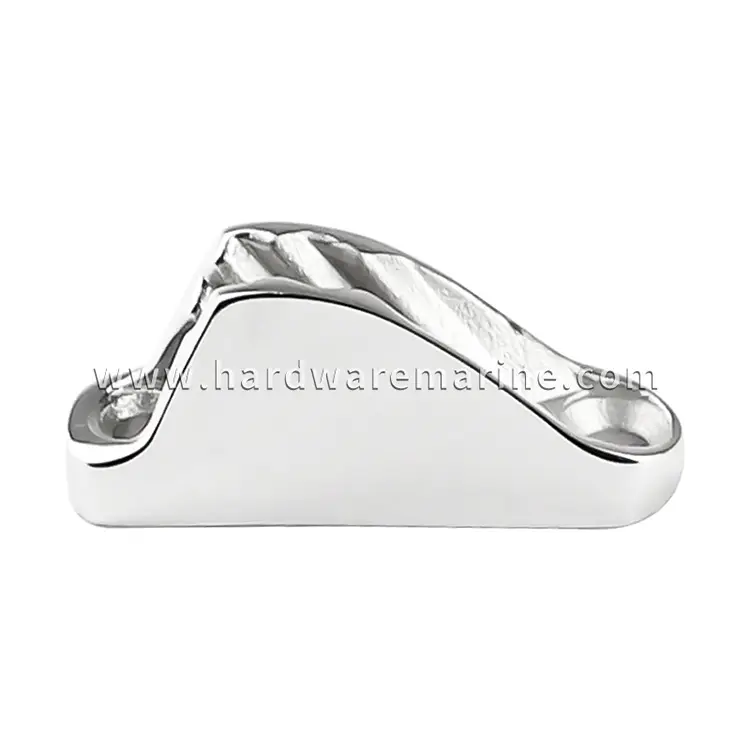
Small craft benefit immensely. On a stand-up paddleboard or canoe, a tiny cleat controls the anchor line without taking up precious deck space. Clip in, paddle out, and when you drift over a fishing spot, one tug locks your position. It’s liberation from tangled ropes and half-hearted hitches that slip at the worst moment. The polished stainless even adds a touch of elegance to wooden gunwales.
The Sound of Security
There’s a distinct, satisfying “thunk” when the line seats fully into the jaws. It’s not just a noise; it’s confirmation. Confirmation that your home-on-water is safe for the night, that your children playing on the bow won’t drift into danger, that the hard work of planning a voyage won’t be undone by faulty hardware. Our customers tell us this sound becomes part of their routine, a small moment of reassurance before stepping ashore. With every 316 Stainless Steel Marine Rope Clam Cleat from Shandong Power Industry and Trade Co., Ltd., you’re securing more than a boat—you’re anchoring peace of mind.
Consider the emotional weight of a rope dragging over the stern because a lesser cleat let go. The frantic scramble, the lost gear, the potential injuries. It’s a nightmare that haunts skippers. Choosing superior equipment erases that scenario. Your hands stay calm, your commands measured, because the hardware has already proven itself. That confidence radiates to your crew and guests, turning anxious moments into stories told over sunset cocktails.
Why This Cleat Stands Alone
The market is crowded with imitations cast from mystery alloys or molded from brittle plastics. Here’s what sets our offering apart: First, full traceability. Each cleat is laser-etched with a batch code that links to its chemical composition report and production date. No guesswork, no inflated claims. Second, the towing washers we include (optional) are also 316 stainless, not zinc-plated steel that rots away. Third, our tooth profile is derived from computational fluid dynamics modeling of rope behavior under dynamic loads, refined through real-world Atlantic crossings and Pacific typhoon encounters.
Furthermore, Shandong Power Industry and Trade Co., Ltd. operates a dedicated marine division that hand-assembles and inspects every unit. The human eye catches what automated cameras miss: a micro pit, a slightly dulled edge, a packaging flaw. This pride of craftsmanship is palpable. When you open the box, the cleat is nestled in protective foam alongside a small card signed by the inspector. It’s an experience that large, anonymous OEMs cannot replicate.
Frequently Asked Questions
What rope materials work best with this cleat?
The cleat performs excellently with double-braid polyester, nylon, Dyneema, and polypropylene lines. For ultra-slippery UHMWPE ropes like Dyneema, we recommend using a polyester cover or adding a small figure-eight knot behind the cleat as a backstop in highly dynamic conditions to prevent any potential creep. The teeth are gentle enough to avoid abrading delicate 12-strand single-braid lines, but we suggest inspecting the rope jacket periodically, as with any friction cleat.
Can it be mounted on a vertical surface, like a bulkhead or mast?
Absolutely. The cleat works in any orientation—horizontal, vertical, or even upside down. Just ensure the rope enters from above the teeth so gravity and pull direction naturally seat the line. Many catamaran owners mount them vertically on the coachroof for lazy jacks and reefing lines. As long as the mounting surface is flat and can accept the fasteners, the grip remains consistent.
How do I choose the right size cleat for my line diameter?
Our cleat is designed to accommodate ropes from 1/8 inch (3mm) to 5/8 inch (16mm). For optimal performance, select a cleat that matches your working line. The 1/8"-3/8" range handles most dinghy and small sailboat sheets, while the 3/8"-5/8" range is ideal for larger anchor rodes and dock lines. If in doubt, use the smaller range for maximum grip on thin lines, but you’ll sacrifice some ease of release. Contact our support team with your exact line size; we’ll confirm compatibility.
Will the stainless steel react with aluminum masts?
Direct contact between 316 stainless and aluminum can lead to galvanic corrosion in a wet environment. Always insulate the cleat with a non-conductive barrier such as a thin polypropylene washer or a zinc chromate paste. Use stainless steel mounting hardware, but ensure the bolts pass through nylon isolation bushings. This preserves both the cleat and the spar over the long term.
Is the cleat repairable if the teeth wear down over decades?
The hardened 316 teeth are exceptionally durable and we’ve yet to see a unit worn beyond functionality under normal pleasure boat use. However, the cleat is designed as a single piece; individual teeth cannot be replaced. Should you ever experience a problem, contact Shandong Power Industry and Trade Co., Ltd. with your batch code. We stand behind our product with a limited lifetime warranty against manufacturing defects and will assess each case individually. In the rare event of an issue, we often offer a discounted replacement.
Does it come with mounting screws?
Mounting screws are not included because the appropriate length and type depend on your specific deck thickness and core material. We recommend 1/4-inch 316 stainless steel flathead machine screws with nylon lock nuts for through-bolting, or self-tapping screws with marine sealant for cored decks. Detailed fastener selection guidance is included in the manual, and you can purchase marine-grade screw kits from our official distributors.
How do I clean and maintain the cleat?
Maintenance is minimal. Rinse with fresh water after exposure to saltwater to remove salt deposits. Heavy grime can be cleared with a soft cloth and mild soap. Every few years, apply a quality stainless steel polish to restore the mirror shine. Avoid harsh abrasives or steel wool, which can embed particles and cause surface rust stains. Properly cared for, your cleat will maintain its performance and appearance indefinitely.

Every voyage begins with secure lines. From the bustling marinas of Miami to the remote anchorages of the South Pacific, the 316 Stainless Steel Marine Rope Clam Cleat from Shandong Power Industry and Trade Co., Ltd. has earned its place as a silent sentinel on countless decks. It doesn’t demand attention; it simply works, every time, without faltering. That’s the kind of reliability that turns first-time buyers into lifelong enthusiasts.
The materials, the finish, the thoughtful engineering—they all culminate in a product that feels less like a purchase and more like a partnership. Add this essential piece of marine hardware to your kit today, and experience firsthand the difference that genuine quality makes. The sea challenges everything you attach to your boat; ensure your cleat is the one thing you never have to worry about.