Marine Anchor,Boat Bollard,Thru-Hull,Boat Cleat,Boat Seat,R&D Customized Marine Products,Seawater Strainers,Pull Rings,Marine Steering Wheel,Deck Filler,Pipe Stanchion,Hinge,BIMINI Fitting,Bow Chock,Boat Anchor Roller,Marine Ladder,Fishing Rod Holder,Deck Plate,Antenna Base,Cockpit Drain,Turning Lock,OEM/ODM Marine Hardware,Chain Stopper,Anchor Connector,Tank Vent,Boat Anchor,Copper Plated Marine Hardware,Brass Bronze Parts,Anchor Chain


 316 Stainless Steel Hinged Plough Anchor gleaming on deck" style="max-width:100%;">
There is a moment every mariner knows intimately. The engine drops to a gentle idle, the bow swings into the breeze, and the world narrows to a single question: will the anchor set? When you trust your vessel, your crew, and your peace of mind to a piece of underwater tackle, only the finest will do. The 316 Stainless Steel Hinged Plough Anchor, crafted with precision by Shandong Power Industry and Trade Co., Ltd., changes that moment from anxious calculation into confident ritual. In the salt-laden air of a coastal anchorage, under the press of a shifting tide, ordinary metals surrender to corrosion and compromise. This anchor refuses. Its mirror‑bright finish is a promise—that no matter how many sunrises you watch from the hook, the metal beneath will remain as strong and true as the day it first dropped.
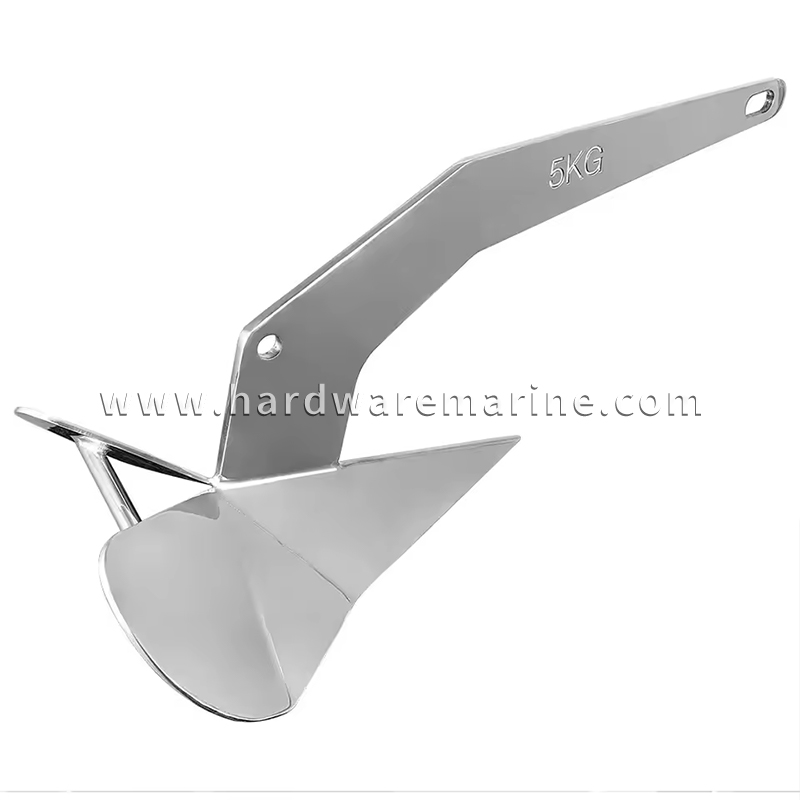
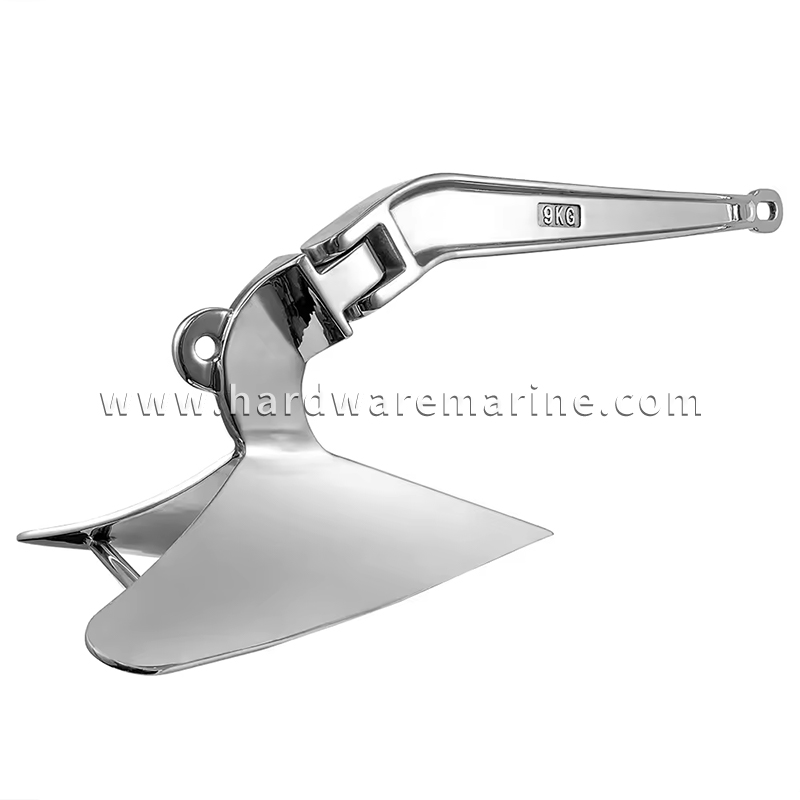
Like a well-found ship, an anchor must marry strength with elegance. The hinged plough design—also known as a CQR‑style—has long been celebrated by bluewater sailors for its ability to bury deep and reset reliably when wind or current swing the boat. But legacy steel anchors carry a hidden cost: the unrelenting creep of rust. The solution, perfected by Shandong Power Industry and Trade Co., Ltd., is to cast the entire geometry from marine‑grade 316 stainless steel. This is not cosmetic stainless that glistens for a season then pits. It is austenitic chromium‑nickel alloy fortified with molybdenum, engineered specifically for the chloride‑rich environment of the world’s oceans. The hinge mechanism, the precisely radiused flukes, the weight‑distribution that makes the anchor plummet and roll upright on the seabed—every element exists in a singular, corrosion‑resistant body.
Walk any dock where serious cruisers tie up and you will spot the telltale glow of a stainless plough on the bow roller. It speaks a quiet language: the owner has planned for a decade of landfalls, not just a weekends. Whether you are gunkholing in a tidal creek or setting a stern anchor off a coral cay, you need tackle that delivers every single time. The 316 Stainless Steel Hinged Plough Anchor combines a century of anchoring wisdom with modern metallurgy to give you exactly that.
Imagine a calm, indigo bay on the lee side of an island. The chart plotter shows a bottom of sand and weed. You drift into position, release the clutch, and feel the rode run out. Below the surface, the anchor descends, its weighted tip oriented by the hinge to strike the bottom at the optimum angle. As the boat falls back, the fluke slices into the substrate, the plough shape forcing it deeper with every foot of chain pulled tight. Within seconds, the shank aligns, the fluke buries completely, and the boat snubs to a stop. That solid, immediate jerk is not just physics—it is the voice of good design.
Too many boaters have learned to distrust that feeling because cheap or ill‑designed anchors can break out without warning. A granite‑hard mud bottom, a sudden 180‑degree windshift, a tangled kelp patch—each is a test. The hinged plough was born to pass those tests. Its articulated shank allows the fluke to maintain a constant angle of attack even as the pull direction changes. And thanks to the 316 stainless construction by Shandong Power Industry and Trade Co., Ltd., the hinge pin and pivot surfaces stay smooth, corrosion‑free, and absolutely reliable season after season.

The choice of 316 over 304 stainless is not marketing jargon—it is a decision that extends the working life of your ground tackle by years. 316 stainless steel contains between 2% and 3% molybdenum, which dramatically increases resistance to pitting and crevice corrosion in warm, salty, low‑oxygen environments. An anchor often sits in a damp anchor locker, covered in salt‑laden mud, and then plunges into seawater. In these conditions, 304 can develop surface rust and eventually structural weakening. 316, however, remains virtually immune. The team at Shandong Power Industry and Trade Co., Ltd. sources certified 316 plate and bar stock, then shapes each anchor through a combination of precision laser cutting, hot forging, and meticulous hand welding. The result is a ground tackle tool that looks as impressive as it works.
Each component—the main fluke blade, the heavy‑section shank, the toggles, the hinge pin—shares the same metallurgical fingerprint. There are no hidden mild‑steel pins waiting to rust and seize. That means when you need to break down the anchor for compact stowage, or when you lash it securely on the bow roller, every surface is uniformly resistant to the elements. Polished to a mirror finish, the anchor also reduces marine growth adhesion, making it easier to clean and less likely to introduce invasive species when you cruise between regions.
The plough anchor owes its heritage to the agricultural world, where a curved blade turns soil. Adapted for marine use by Sir Geoffrey Ingram Taylor in the 1930s, the concept has proven itself on every ocean. What elevates the 316 Stainless Steel Hinged Plough Anchor by Shandong Power Industry and Trade Co., Ltd. is the precision of execution. Today’s computer‑modeled hydrodynamics allow for refined fluke areas, optimized center of gravity, and a shank‑to‑fluke angle that promotes rapid burial without sacrificing holding power.
The hinge is the heart of the system. Unlike a fixed‑shank anchor that can be levered out when the pull direction shifts, the hinged plough articulates to follow the angle of the rode. This articulation also makes the anchor more tolerant of uneven bottoms. When the fluke encounters a rock or a hard patch, it can pivot slightly and slide over the obstruction rather than trip. Once clear, it will resume burying. Sailors who use hinged ploughs in mixed bottoms—gravel, shell, weed—report fewer false sets and dramatically less dragging than with scoop‑type alternatives.
Every 316 Stainless Steel Hinged Plough Anchor bearing the name of Shandong Power Industry and Trade Co., Ltd. represents a fusion of global maritime standards and rigorous in‑house quality control. The company’s engineers draw on decades of marine hardware experience, using state‑of‑the‑art tensile testing machines, spectrographic analysis, and salt‑spray chambers to validate every production batch. Weld seams are inspected with dye penetrant techniques. Hinge assemblies are cycled thousands of times under load to ensure they will never bind in the field. This obsessive attention to detail means that when you pull an anchor from its packaging, it is ready for the real thing—right now.
Beyond the product, the company fosters a network of knowledgeable distributors and service points. If you ever have a question about sizing, about matching your anchor to a particular windlass, or about maintenance of the stainless surface, expert assistance is just a message away. This is not anonymous manufacturing; it is a craft, scaled to serve a global community of boaters.
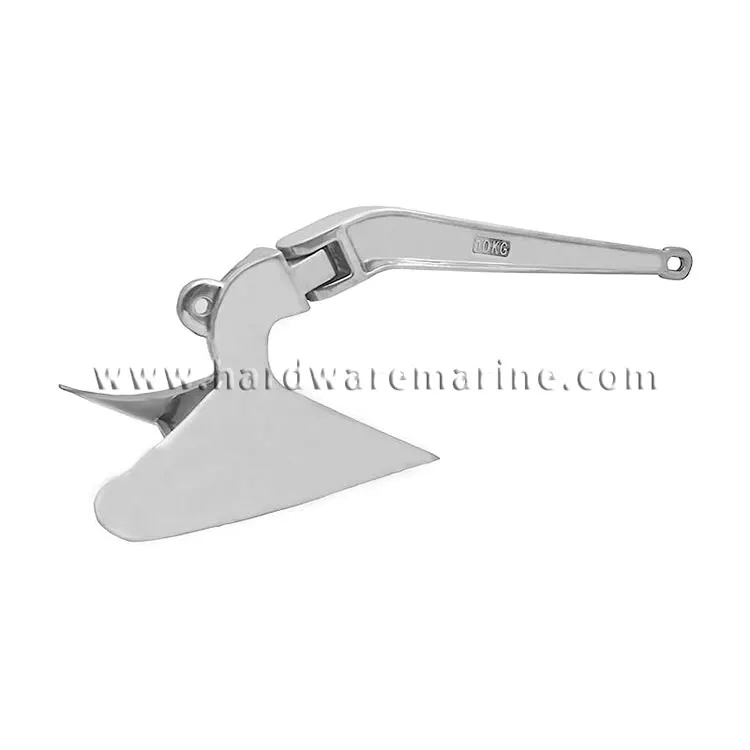
An undersized anchor is an all‑too‑common source of midnight anxiety. An oversized anchor is heavy, cumbersome, and strains windlass motors. The table below provides a straightforward sizing reference based on vessel length and displacement, developed through thousands of field installations guided by Shandong Power Industry and Trade Co., Ltd. These recommendations assume a bower anchor for a monohull sailboat or power cruiser, used in normal coastal conditions. If you expect to weather tropical storms on the hook, or if you have a high‑windage powerboat, consider moving up one size.
| Anchor Weight (kg) | Boat Length (ft / m) | Displacement (approx.) | Holding Power (hard sand, kg) |
|---|---|---|---|
| 6 kg | 20‑26 ft / 6‑8 m | Up to 2 tonnes | 600 |
| 9 kg | 26‑32 ft / 8‑10 m | 2‑4 tonnes | 900 |
| 12 kg | 32‑38 ft / 10‑12 m | 4‑7 tonnes | 1200 |
| 16 kg | 38‑44 ft / 12‑14 m | 7‑12 tonnes | 1600 |
| 20 kg | 44‑52 ft / 14‑16 m | 12‑18 tonnes | 2000 |
| 25 kg | 52‑60 ft / 16‑18 m | 18‑25 tonnes | 2500 |
Holding power figures are conservative estimates based on sea‑bed testing in well‑set sand. Real‑world holding in soft mud, weed, or thin sand can vary and may require additional scope or a larger anchor size. Always carry adequate chain and scope—a 5:1 scope in moderate conditions, increasing to 7:1 or more when squalls threaten. The 316 Stainless Steel Hinged Plough Anchor thrives with chain, as the weight of the chain helps maintain a low angle of pull even in gusting winds.

The anchor market is crowded with claims, but few match the practical versatility of the hinged plough. Flat‑blade Danforth‑style anchors deliver great holding in soft mud but can clog with grass and refuse to reset once dislodged. New‑generation scoop anchors offer tremendous holding in a narrow range of bottoms but can be cantankerous when switching from sand to rock, and they often require heavily engineered bow rollers to stow. The 316 Stainless Steel Hinged Plough Anchor hits a sweet spot—high holding power across many bottom types, self‑clearing fluke geometry, and an ability to set quickly without elaborate technique.
Corrosion resistance is the glaring differentiator. Galvanized steel anchors chip and flake, inviting rust blooms within a year. Aluminum anchors are light but suffer galvanic corrosion issues and can be damaged by rocky bottoms. A fully 316 stainless steel plough anchor eliminates these concerns. The entire unit, from the chape to the tip, ages gracefully, retaining its structural integrity and good looks. When you haul the anchor up from a deep anchorage, you do not shudder at a spread of orange rust on your white foredeck. Instead, you see a glint of polished metal that rinses spotless with a quick freshwater splash.
Setting a hinged plough demands little more than patience and a steady hand. Motor into the wind or current, come to a gentle stop, and lower the anchor until it touches the bottom. Pay out rode slowly as the boat drifts back. With the hinge pivoting freely, the tip will engage the substrate. Once about twice the depth is out, snub the line slightly to encourage the fluke to bite. Then continue paying out chain to your desired scope. A quick burst in reverse—1,000 to 1,500 RPM for a typical cruiser—will test the set. If the boat stops abruptly and the rode goes bar‑tight with a rising hum, you’re home. If there is any doubt, power up slowly while watching shore transits. A well‑set plough anchor will bury so deep that only the top of the shank is visible upon dive inspection.
In grass or weed, the plough’s weight and sharp tip help penetrate the mat layer. If you feel the anchor sliding without biting, it may be collecting a ball of weed. A quick jog forward, a pause, and a lower‑speed set attempt often clear the fluke. Because the hinge allows the shank to drop, lifting and resetting the anchor by hand is straightforward. The generous pivot makes it impossible for the anchor to foul its own chain, a common annoyance with some rigid designs.

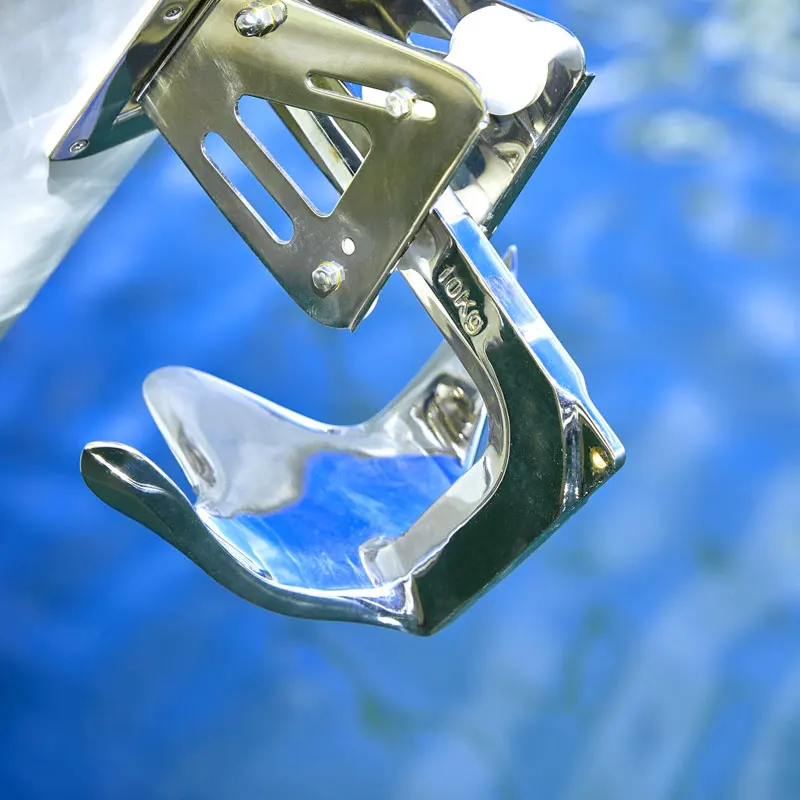
Aesthetics matter on a boat. The 316 Stainless Steel Hinged Plough Anchor from Shandong Power Industry and Trade Co., Ltd. rides on the bow roller like a piece of nautical jewelry—polished, symmetrical, purposeful. The hinged shank allows the anchor to fold over itself, hugging the roller profile more tightly than a fixed shank. This reduces overhang and minimizes the risk of the anchor snagging dock lines or anchors of neighboring boats in a crowded marina. Many owners choose to pair the anchor with a stainless swivel and a few meters of matching chain to complete the look. The result is a foredeck ensemble that draws admiring glances and practical nods in equal measure.
Handling the anchor on a pitching foredeck is safer because of the stainless smoothness. There are no sharp galvanized edges to slice skin, and the surface is easy to grip even when wet. The different weight classes are balanced so that a single person can manage sizing up to 16 kg with reasonable ease. For larger sizes, the hinged nature facilitates breaking the anchor down into shank and fluke halves—simply tap out the pivot pin—allowing compact stowage belowdecks during a long passage or when you swap out for a storm anchor.
A couple aboard a 38-foot sloop spent three months exploring the rocky coves of the Balearics. Their previous galvanized CQR had been heavily pitted after just two seasons, and they lived with constant worry that the shank might snap in a strong meltemi. After switching to the 316 Stainless Steel Hinged Plough Anchor from Shandong Power Industry and Trade Co., Ltd., they noticed an immediate improvement in setting consistency in hard sand over rock. Morning checks revealed the anchor had pivoted with a 90‑degree windshift and simply reburied itself without dragging. The owner later wrote, “We sleep better now. And every time we weigh anchor, it comes up gleaming like a trophy.”
Another captain, running a charter fishing boat in tropical Queensland, needed an anchor that could withstand repeated daily use in coral and limestone. Steel anchors would start rusting at the welds after a few months, leaving ugly stains inside the anchor locker. The 316 stainless plough solved both problems. It holds fast in marl and coral rubble, and even after hundreds of deployments, the hinge remains free of corrosion. He no longer spends Sunday afternoons grinding rust and repainting—time that now goes to fishing.
Perhaps the most profound gift an anchor gives is not found in specifications tables. It is the stillness at 3 a.m. when a squall line marches across the anchorage. The wind howls, the rigging keens, and the boat surges back on the chain. In those moments, you do not doubt your ground tackle—you listen to the deep thrum of the stretched nylon and steel, and you know the anchor holds. The 316 Stainless Steel Hinged Plough Anchor becomes part of your boat’s character, a silent crew member that never tires. Its weight and geometry conspire to keep you safe while the world above blusters.
This psychological shift—from worry to trust—is what transforms a holiday cruise into a genuine voyage. You anchor in places you might have avoided, exploring deeper bays, getting closer to shore. You stop for a swim in a bight where the bottom is uncharted but looks promisingly dark on the depth sounder. You accept that last‑minute invitation to raft up because you know your anchor will not silently surrender its grip. This is the true value of a superior anchor: it expands your world.

Behind every 316 Stainless Steel Hinged Plough Anchor lies a manufacturing story worth telling. Shandong Power Industry and Trade Co., Ltd. operates a dedicated production facility where raw stainless steel arrives as certified plate and billet. Computer‑controlled plasma cutters trace the exact profiles of flukes and shanks from solid sheet. These blanks then move to hydraulic presses that impart the three‑dimensional plough curve with immense force, ensuring consistent symmetry. Welders with decades of experience join the components using TIG processes under argon shielding, creating fusion bonds that are stronger than the parent metal.
After welding, each anchor undergoes solution annealing—a heat treatment that restores the corrosion‑resistant microstructure of the 316 alloy. This step is often skipped by budget manufacturers, resulting in sensitized steel that will rust along the welds. Shandong Power Industry and Trade Co., Ltd. makes no such compromises. The final stages include multiple grades of polishing, from coarse grinding to fine buffing that yields the signature mirror shine. The pivot pin is machined from 316 bar and precisely fitted to a reamed hole, ensuring a lifetime of smooth operation. Only after passing a multi‑point quality check does the anchor receive its laser‑etched brand mark.
While 316 stainless is exceptionally durable, a few simple habits will keep your anchor performing and looking its finest for decades. After each cruise, rinse the anchor with fresh water to remove salt deposits. If you operate in particularly polluted or mineral‑rich waters, a periodic wash with mild soap and a soft brush prevents staining. Avoid using steel wool or abrasive pads that could embed carbon steel particles in the stainless surface, as these can create tiny rust spots. For those who desire an even brighter finish, non‑abrasive stainless steel polish applied with a microfiber cloth will restore the original luster.
The hinge pin does not require lubrication under normal circumstances, but in extremely silty conditions a flush with fresh water and a drop of marine‑grade silicone lubricant can keep articulation effortless. Inspect the pin retaining mechanism periodically to ensure it is secure, especially after severe weather. Should the pin ever need replacement, Shandong Power Industry and Trade Co., Ltd. supplies genuine spare parts through its dealer network.

Imagine pulling into an unfamiliar cove just as the sun melts into the horizon. The depthsounder shows a gentle slope of sand, a perfect shelf. You ease the throttle, and the 316 Stainless Steel Hinged Plough Anchor descends silently through the crystalline water. You hear the chain rattle over the roller, then the soft thud of steel meeting seabed. Backing down, you feel the anchor take hold with an authority that transmits straight through the hull. You switch off the engine. Silence. In the morning, you will wake to the same view, the same position, and that same unshakeable confidence.
This anchor does not merely connect your boat to the bottom—it becomes the foundation of your cruising lifestyle. It is the partner that lets you explore further, stay longer, and sleep deeper. It is a piece of essential gear that you will polish when you want, rely on when you must, and take pride in every day. The 316 Stainless Steel Hinged Plough Anchor, brought to you by Shandong Power Industry and Trade Co., Ltd., is an investment in unshakeable serenity on the water. Choose the size that matches your dreams, and make every anchorage a home.